
Towards Self-Driving Codebases
Detail
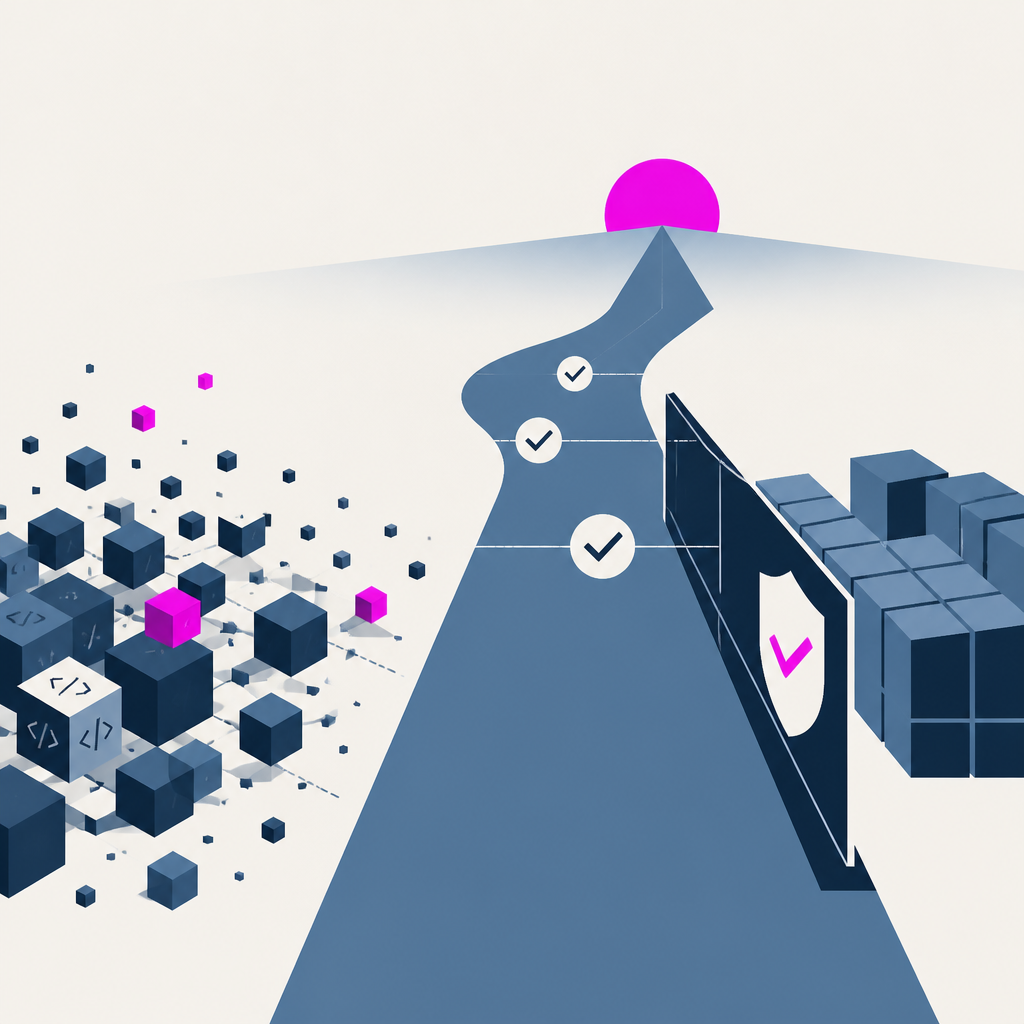
Agents can rewrite big codebases, but most real software work still needs humans in the loop. The bottleneck isn’t the model anymore; it’s the dev stack around it.
Based on reporting by Detail — read the original for the full story.
Summary, retelling and take written by AI under human oversight; images are AI-generated illustrations. How we work · Report an error
Agents have already shown they can do the flashy stuff: one-shot games, big migrations, even rewrites in new languages. But the day-to-day reality in software shops is a lot less magical. Teams spent the first half of the year throwing agents and adversarial loops at codebases, and what came back was often a pile of questionable code instead of a surge of genuinely better software.
That gap is the whole story here. The argument isn’t that agents are useless. It’s that they’re still stuck in the wrong part of the job. The author thinks the next phase won’t be humans writing more prompts and babysitting more loops. It’ll be humans deciding what matters: finding the right feature ideas, choosing the right simplifications, and designing the architecture that saves pain later. Cursor Tab, Descript’s transcript editing, and OpenRouter’s vendor abstraction are held up as examples of the kind of sharp, company-making ideas that still come from people who know the problem deeply.
Everything else, in this view, should move toward the machine. Bug fixing. Production debugging. Agent prompt optimization. Frontend consistency. Basic UI polish. Growth experiments. The pitch is simple: if the semantics are obvious, the agent should catch the bug; if the app throws a 500, the agent should trace it; if a form conversion test can run, the agent should run it. GitHub Copilot was autocomplete for lines. Agents should become autocomplete for products.
But that only works if the rest of the stack grows up. The source keeps coming back to agent-legible dev environments, global memory, and rot prevention. If agents can’t see the third-party integration, the browser, the data shape, or the correction from last week’s code review, they’ll keep making the same mistakes. And that means the real job right now is not model hype, but making cloud dev setups, test data, CI, APM, and merge queues understandable to machines. The author’s bet is that once teams can mine bugs, fix them, and use those traces to measure what slows agents down, they can start pushing more and more work onto GPUs instead of humans.
My take — AI-written commentary, not fact-checked reporting
This is the least sexy part of AI coding, which is how you know it matters. Everybody wants autonomous software factories; almost nobody wants to pay for the boring plumbing that keeps them from spewing defensive nonsense and repeat bugs. The winners won’t be the loudest believers or the biggest closed-model fan clubs, but the teams that treat agent readiness like engineering, not religion.
Read more about this at: Detail