
This AI entrepreneur is developing agents that can plan ahead for the unexpected
MIT Technology Review Mat Honan
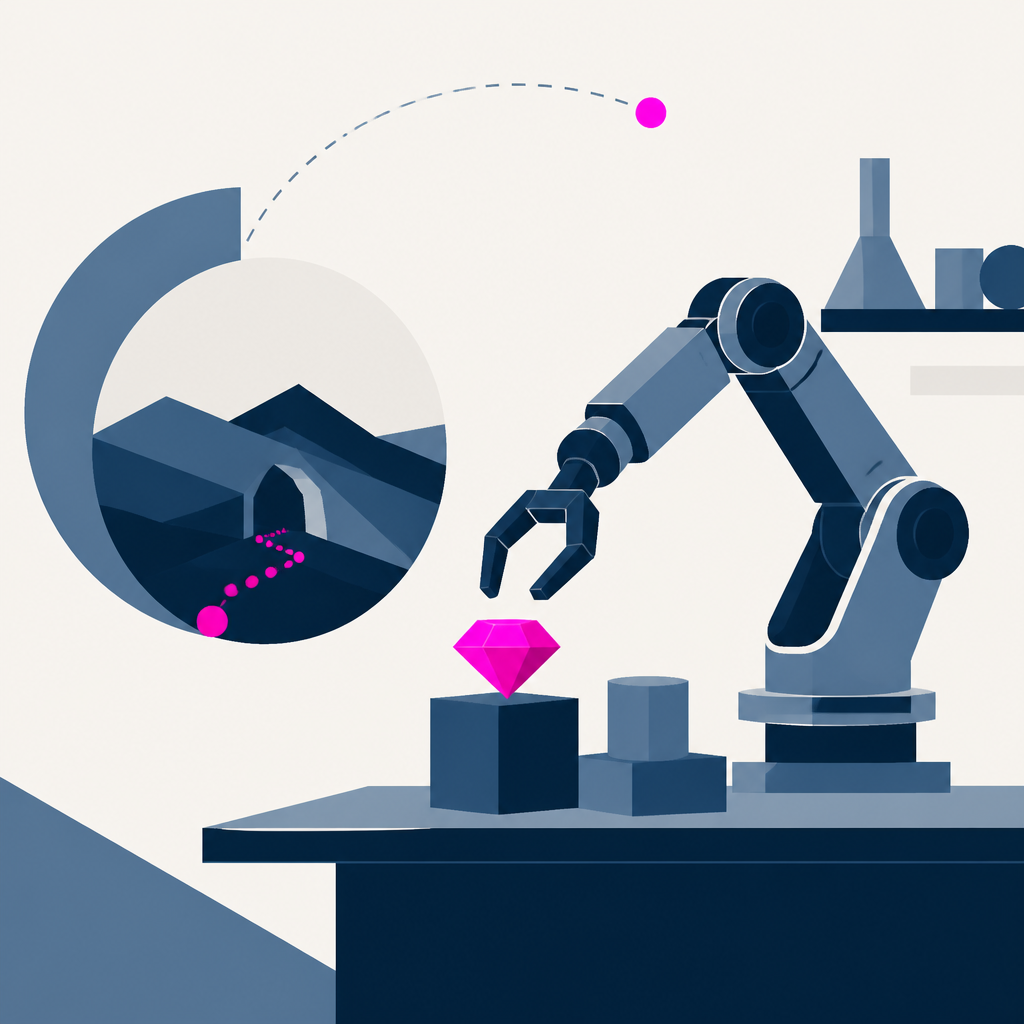
Danijar Hafner’s new startup is building AI agents that plan ahead for weird, unseen situations. The pitch: robots that can handle a home they’ve never learned before.
Based on reporting by MIT Technology Review, Mat Honan — read the original for the full story.
Summary, retelling and take written by AI under human oversight; images are AI-generated illustrations. How we work · Report an error
Danijar Hafner’s new office in San Francisco’s SoMa is almost bare. The startup is still in stealth, there’s no name on the door, and on the day of the visit only one other person is there. The room does have one obvious theme, though: robots. Humanoids of different shapes and sizes hang from racks down the middle of the space, looking more like props than products for now.
Hafner, 31, isn’t saying much about the company yet, but the direction is familiar. He has spent years trying to get AI to deal with environments it did not see during training. That is the whole trick if you want robots in human spaces. A home is messy in the way labs aren’t. Floors, furniture, obstacles — all the stuff that makes real life real — won’t match what a robot has already practiced on.
His answer is model-based reinforcement learning. He builds world models that imitate physical reality, then trains agents inside them. The agent treats that model like a simulation, learns how to act there, and uses those experiences to predict what might happen next. Hafner likes to describe that as dreaming or imagining ahead. The result is an agent, or a robot carrying one, that can handle unfamiliar situations without relying on endless real-world trial and error.
That approach has already been tested in games, where Hafner’s work has built a clear track record. PlaNet let agents plan ahead. Dreamer 2 reached human-level performance in Atari 2600 games using a world model. Dreamer 3 solved the Minecraft Diamond challenge. Dreamer 4 went further by learning to mine diamonds from offline gameplay videos without directly playing the game at all.
He has also pushed the same idea into physical robots. DayDreamer used the Dreamer algorithm so robots could operate themselves in new environments and react to surprises like being pushed over, without specific training for that moment. Now Hafner has left Google DeepMind to launch this startup in the fall of 2025, and he’s still hinting rather than explaining. But the target is obvious enough: robots that can cope before the script runs out.
My take — AI-written commentary, not fact-checked reporting
This is the rare robotics pitch that doesn’t sound like marketing confetti. Training for surprises is the point, not the garnish, and that matters more than another demo that works only on the clean floor of a lab. The industry still loves showing machines that collapse when reality touches them; Hafner is betting on the opposite, which is the only serious way forward.
Read more about this at: MIT Technology Review