The Roomba Guy's Second Act: A Robot You'll Want to Snuggle
The Wall Street Journal
Roomba's co-creator has a new robot, and it's furry, not vacuuming. Colin Angle's startup built an emotionally reactive companion bot that keeps an eye on your loved ones — and it runs its AI locally, no cloud required.
Based on reporting by The Wall Street Journal — read the original for the full story.
Summary, retelling and take written by AI under human oversight; images are AI-generated illustrations. How we work · Report an error
Colin Angle spent almost thirty years turning iRobot into the company that made robots boring in the best way — useful little disks that quietly cleaned floors while nobody thought twice about them. Now he's back with something that wants the opposite reaction. His new company, Familiar Machines & Magic, has built a robot called the Familiar, and its entire pitch rests on making you feel something when you look at it.
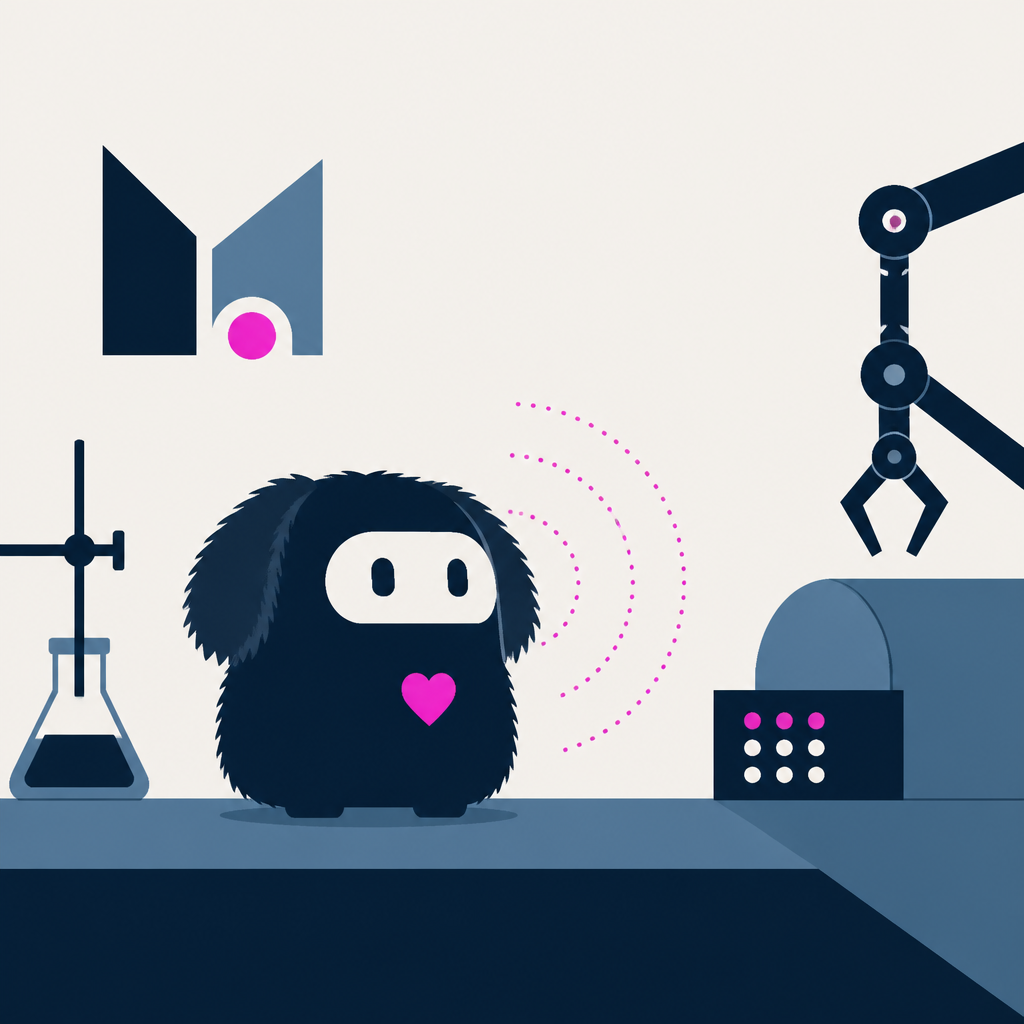
The Familiar is covered in fur, sized somewhere between a house pet and a plush toy, and designed to read the room. It reacts to what people around it are doing and, notably, how they seem to be feeling, adjusting its behavior in real time rather than running through a fixed script. That's a meaningful departure from the Roomba playbook, where the whole point was a machine that ignored your emotional state and just did its job.
The stated use case is watching over people you care about, particularly aging parents or anyone living alone who might need a second set of eyes. Instead of a camera feed you have to actively monitor, the idea is a presence in the room that notices things and can flag when something seems off. Angle is betting that a soft, expressive object earns more trust in a bedroom or living room than a straightforward monitoring device ever could.
The technical detail that matters most here isn't the fur — it's what's running underneath it. Familiar Machines & Magic built the Familiar around small AI models that run locally on the device, so the footage and behavioral data from someone's home never has to leave it and hit a cloud server. Given how much scrutiny in-home cameras and smart speakers have gotten over the past decade, that's not a minor engineering choice. It's the entire argument for why anyone would let this thing watch their mother.
Whether it works commercially depends on something iRobot never really had to prove: that people will bond with a machine enough to invite it into an intimate, often anxious part of their lives. Vacuuming floors is a chore nobody misses. Monitoring aging relatives is loaded with guilt, love, and distrust of technology in equal measure. Angle built his first fortune on convincing people a robot could handle the mundane. This time he's asking them to believe a robot can handle the emotional.
My take — AI-written commentary, not fact-checked reporting
I like the local-processing angle more than the cute fur — that's the part that actually determines whether this succeeds, since eldercare monitoring is exactly the category where a cloud breach becomes a genuine tragedy, not just a headline. The furry-companion framing feels like a trust hack more than a technical necessity, and I'd rather see the industry be upfront that emotional design is being used deliberately to lower people's guard around surveillance-adjacent hardware.
Read more about this at: The Wall Street Journal