
The End of Privacy Is Here (with Kashmir Hill)
404 Media Joseph Cox
Facial recognition is now being used to name strangers from clips online. That makes doxxing feel less like a stunt and more like the default.
Based on reporting by 404 Media, Joseph Cox — read the original for the full story.
Summary, retelling and take written by AI under human oversight; images are AI-generated illustrations. How we work · Report an error
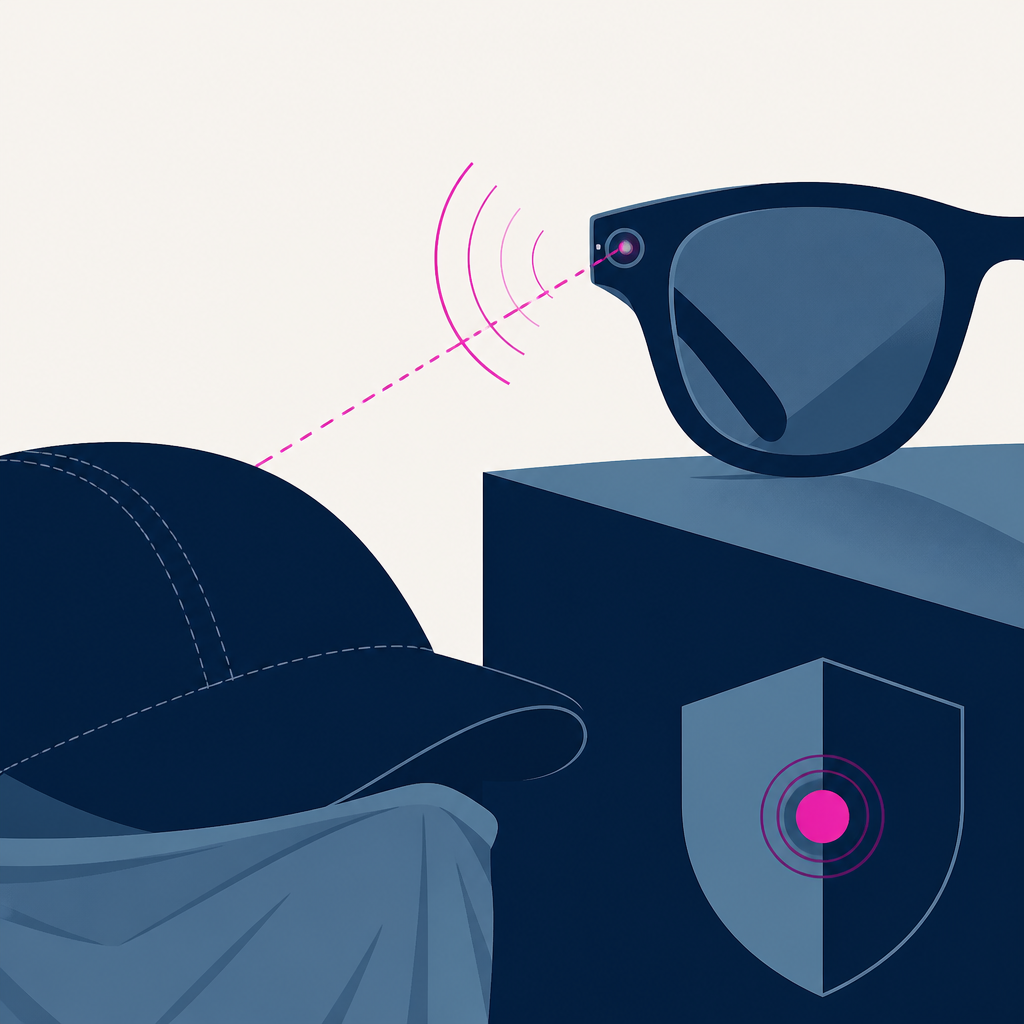
Facial recognition has moved well beyond the lab and into ordinary life. It’s in surveillance cameras, and the source says it’s heading for Meta’s RayBan pervert glasses, while some students have already used it that way. That shift matters because the technology is no longer just about identifying faces in a controlled setting. It’s become a tool that can be pointed at other people almost anywhere.
The ugly part is how social media has made the whole thing scale. Viral accounts can take a clip of someone, run it through facial recognition software, and then post that person’s name and other personal details for the world to see. What used to take effort and intent now takes very little. The result is a world where anyone can basically dox anyone else.
That’s the tension Joseph and Kashmir Hill are discussing in the podcast. Hill, who reports for The New York Times and wrote Your Face Belongs to Us: A Tale of AI, a Secretive Startup, and the End of Privacy, has been tracking this shift closely. Her book title is blunt for a reason: privacy is no longer the default assumption. It has to survive in a system where faces are becoming searchable data.
The episode is part of 404 Media’s weekly podcast, which listeners can hear on Apple Podcasts, Spotify, or YouTube. Paid subscribers get early access, plus a subscribers-only feed and an unlisted extended video version. That extra access is a nice perk, but the bigger story is harder to ignore: the tools that identify people are spreading faster than the norms that might restrain them.
My take — AI-written commentary, not fact-checked reporting
Facial recognition keeps being sold like a convenience feature, which is a neat trick for something that can turn a passing clip into a public ID check. The open web has turned into a petty detective agency, and the bill is privacy. Anyone still treating this as a niche issue is missing the part where the nuisance is the point.
Read more about this at: 404 Media
Related stories
 People are going to extreme lengths to stop themselves from being filmed through Meta’s ‘pervert glasses’
Fortune ·
36
The Future of Deepfakes and the Decline of Reality (With Hany Farid)
404 Media · 1 month ago ·
6
People are going to extreme lengths to stop themselves from being filmed through Meta’s ‘pervert glasses’
Fortune ·
36
The Future of Deepfakes and the Decline of Reality (With Hany Farid)
404 Media · 1 month ago ·
6
 As demand for Meta AI glasses explodes, it’s harder to avoid creepy recordings
Ars Technica · 1 month ago ·
27
As demand for Meta AI glasses explodes, it’s harder to avoid creepy recordings
Ars Technica · 1 month ago ·
27