
Tencent Cloud Open-Sources TencentDB Agent Memory v2.0: A Team-Level Memory Hub for AI Coding Agents
MarkTechPost Michal Sutter
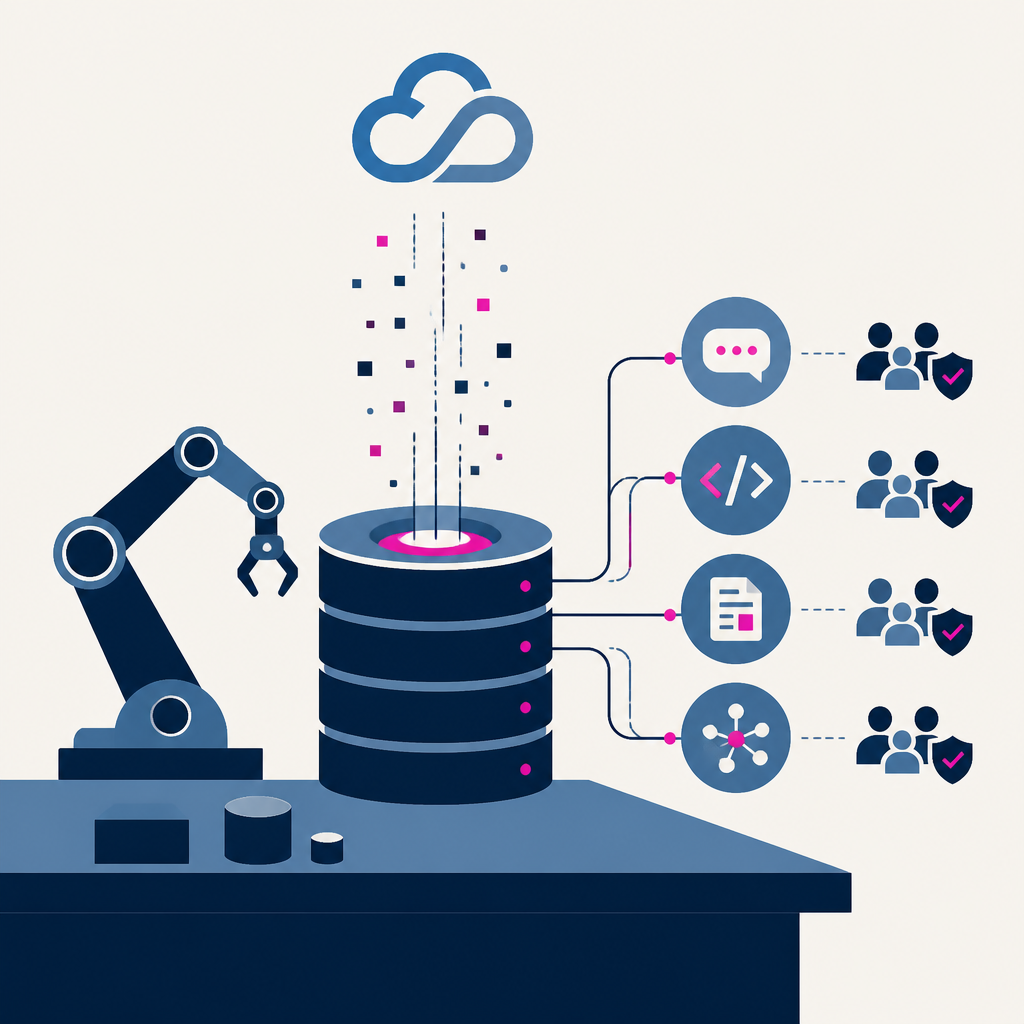
Tencent open-sourced a shared memory system so your coding AI agents stop forgetting what teammates already taught theirs. It's the ACL-style permissions layer that's actually new, not the memory idea itself.
Based on reporting by MarkTechPost, Michal Sutter — read the original for the full story.
Summary, retelling and take written by AI under human oversight; images are AI-generated illustrations. How we work · Report an error
Tencent Cloud just released version 2.0 of TencentDB Agent Memory, and the pitch is refreshingly unglamorous: stop making your AI agent relearn the codebase every single session. If someone already explained the deploy process, the release checklist, or why that one module is cursed, the next agent — yours, a teammate's, whoever's — should just know. The system packages this knowledge into four asset types: Chat Memory for decisions and preferences, Skill for distilled procedures, a Wiki built from documents (an approach the project credits to Andrej Karpathy's idea of an LLM-maintained knowledge base), and CodeGraph for symbols, files, and call relationships.
Single-agent memory has been done before. What's genuinely different here is the governance layer sitting on top. Visibility comes in three flavors — private, team, and restricted — and private really means private, invisible even to team admins, not just hidden from other users in a UI. New Chat Memories and Skills default to private too, so sharing is something you opt into rather than something that happens by accident. Underneath that, Chat Memory isn't just a flat log; it gets distilled asynchronously from raw L0 conversation into L1 Atom, L2 Scenario, and L3 Core/Persona layers, with retrieval starting fast at the top and falling back to BM25-plus-vector search only when specifics are needed, all capped so it doesn't swallow the context window.
Deployment is about as friction-free as these things get: MIT-licensed, self-hosted, three Docker images on Docker Hub, one command, multi-arch support for amd64 and arm64. SDKs exist for TypeScript and Python, and it plugs into Claude Code, OpenClaw, Hermes, and CodeBuddy, with a proxy that speaks both Anthropic and OpenAI protocols. Tencent is clearly aiming this at solo developers and small teams first — the README explicitly name-checks the one-person company — with mid-size engineering orgs as the next tier and large regulated enterprises told, essentially, to pilot cautiously rather than bet the farm, since private-repo CodeGraph handling and automated memory routing are still rough edges.
The headline number — PersonaMem accuracy jumping from 48% to 76% — is Tencent's own benchmark, not something anyone outside the company has verified yet. That doesn't make it fake, but it's worth treating as a claim rather than a fact until someone reproduces it. The stable 2.0.0 build also adds forced Skill archiving, scheduled CodeGraph syncing, and a Cost Guard feature that routes cheaper models to lower-stakes agents, which is a small but telling sign this is meant to run continuously in production, not just as a demo.
My take — AI-written commentary, not fact-checked reporting
The governance layer is the actual news here, not the memory trick — every AI lab has been bolting memory onto agents for a year now, but almost nobody has bothered building proper access control for it, probably because it's boring and doesn't demo well. Self-hosted and MIT-licensed also means no company gets locked into a vendor's memory silo, which is exactly the kind of infrastructure open source should be handling instead of leaving it to whoever ships the flashiest cloud API. Just don't trust the 76% number until someone outside Shenzhen runs the benchmark themselves.
Read more about this at: MarkTechPost
Related stories
 Google Cloud’s Always-On Memory Agent Replaces RAG and Embeddings With Continuous LLM Consolidation on Gemini 3.1 Flash-Lite
MarkTechPost · 2 months ago ·
21
Claude Code relaunches Projects to manage multiple AI agents in the cloud
The Verge · 4 days ago ·
39
Yugabyte targets the missing memory and knowledge layer for enterprise AI agents
SiliconANGLE · 1 month ago ·
51
Google Cloud’s Always-On Memory Agent Replaces RAG and Embeddings With Continuous LLM Consolidation on Gemini 3.1 Flash-Lite
MarkTechPost · 2 months ago ·
21
Claude Code relaunches Projects to manage multiple AI agents in the cloud
The Verge · 4 days ago ·
39
Yugabyte targets the missing memory and knowledge layer for enterprise AI agents
SiliconANGLE · 1 month ago ·
51