
Speed Racer Browser Game Achieves 18+ Hours of Opus 5 Iteration
speed-racer-ten.vercel.app
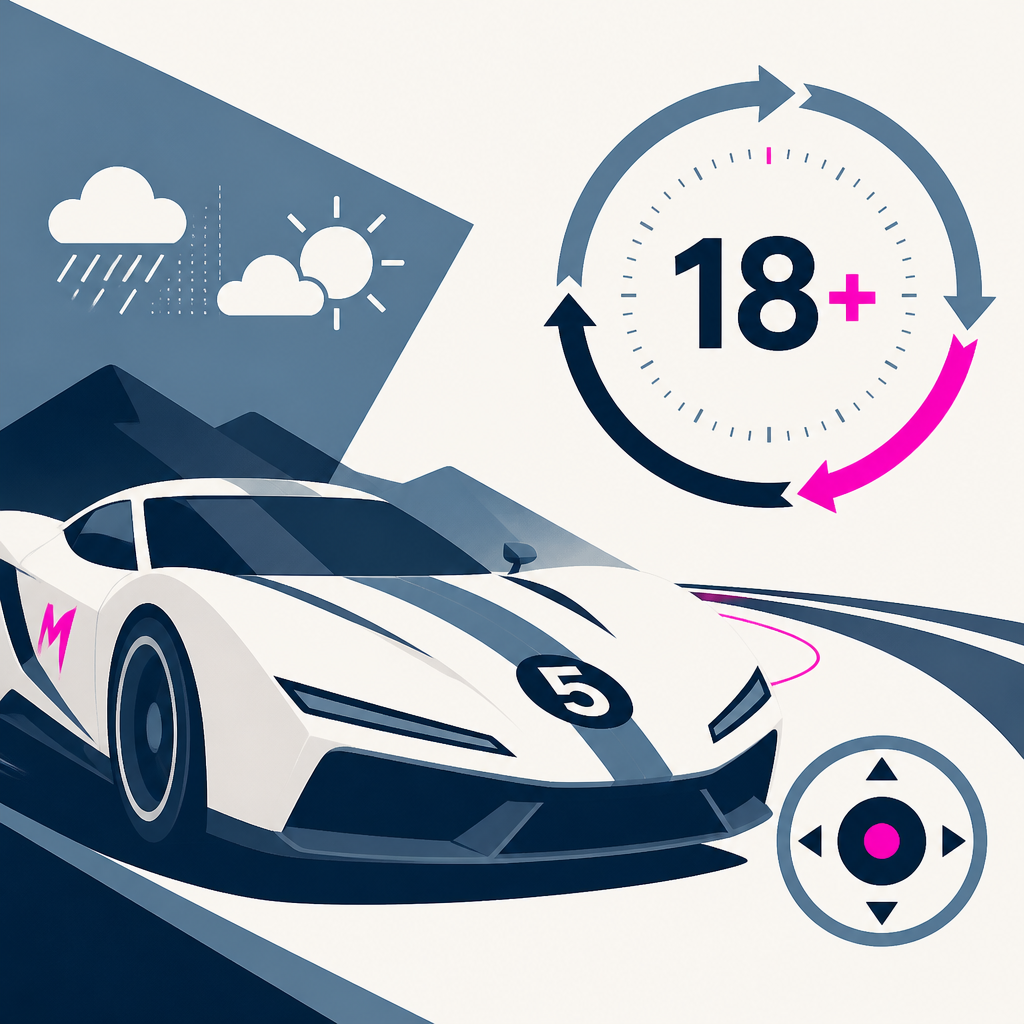
A browser racing game called Speed Racer got 18+ hours of nonstop tweaking from Anthropic's Opus 5 model. It's a live example of AI grinding out real feature work, not just one-shot demos.
Based on reporting by speed-racer-ten.vercel.app — read the original for the full story.
Summary, retelling and take written by AI under human oversight; images are AI-generated illustrations. How we work · Report an error
Most AI coding demos last about as long as a coffee break. Speed Racer, a browser-based driving game, just blew past that with over 18 hours of continuous iteration powered by Claude Opus 5. That's not a typo or a marketing exaggeration — the developers behind the project used something they're calling the Gauntlet Loop method, a structured process for feeding the model repeated rounds of feedback and letting it refine the game bit by bit.
The results are visible in the feature list. Weather effects, dynamic lighting, and camera controls all got added during this marathon session, the kind of polish that usually takes a small team days or weeks to bolt onto a browser game. What makes this notable isn't any single feature — it's the duration. Most AI-assisted coding sessions people show off online run for a few minutes, maybe an hour if someone's feeling ambitious. Eighteen-plus hours of sustained, apparently productive iteration is a different order of magnitude.
The Gauntlet Loop approach seems designed specifically to test whether a model can keep improving without drifting into repetitive or broken output over long stretches. That's historically been one of the weak points of long-running AI coding sessions: quality degrades, the model starts contradicting earlier decisions, or it just loops on the same fix. If Speed Racer's development held together for 18 hours straight, that's a meaningful data point for anyone betting on AI models handling extended, semi-autonomous development work rather than quick one-off snippets.
It's worth remembering this is one project, one game, one testing method. But as a proof of concept for sustained iteration, Speed Racer gives developers something concrete to point to when arguing that current-generation models can hold a thread of work far longer than the demo reels usually suggest.
My take — AI-written commentary, not fact-checked reporting
Eighteen hours of iteration sounds impressive until someone asks what actually shipped versus what just got rewritten in circles — engagement metrics for AI coding sessions are notoriously easy to inflate. Long-duration demos like this are useful mainly as stress tests, not proof of production readiness, and the industry would do well to stop treating
Read more about this at: speed-racer-ten.vercel.app