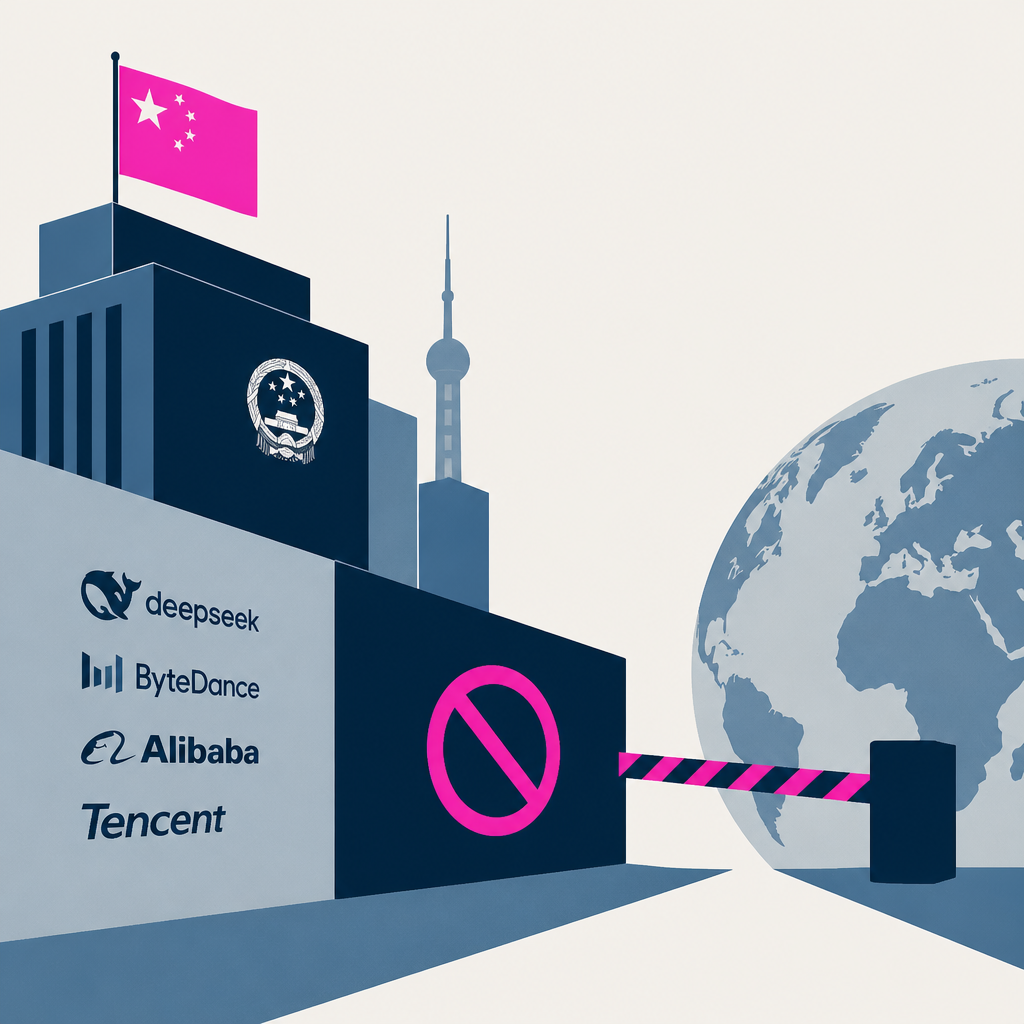
Silicon Valley Splits Over Closing the Borders to Chinese AI
The New York Times ● Covered by 33 sources
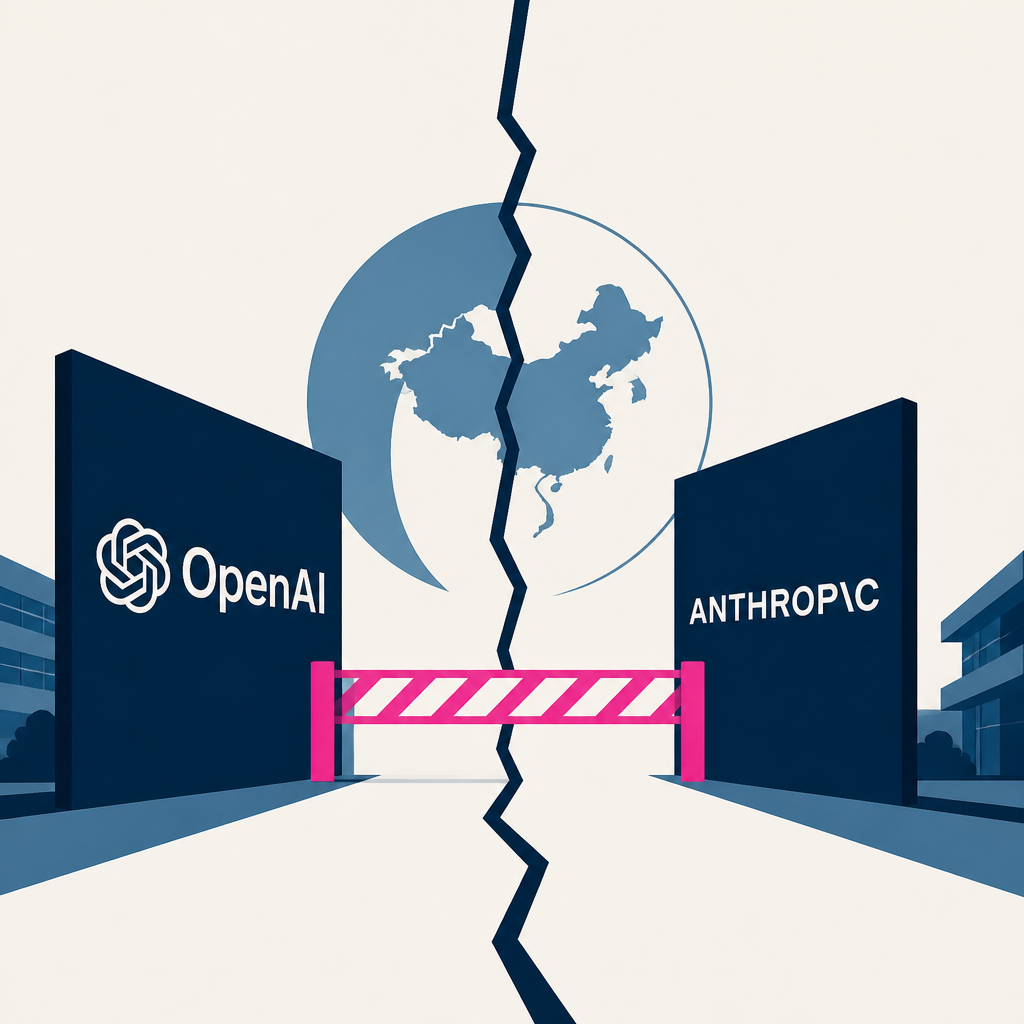
Anthropic and OpenAI want limits on open AI models over safety fears — and some of those limits target Chinese developers. Silicon Valley's own people are fighting over whether that's smart policy or protectionism in a lab coat.
Based on reporting by The New York Times — read the original for the full story.
Summary, retelling and take written by AI under human oversight; images are AI-generated illustrations. How we work · Report an error
There's a fight breaking out in Silicon Valley, and it's not the usual one about whose model scores higher on a benchmark. This one is about borders — specifically, whether American AI labs should help build a wall between their technology and Chinese researchers.
Anthropic and OpenAI have been the loudest voices arguing that certain frontier models are simply too risky to release openly, and that risk gets sharper when you factor in who might get their hands on the weights. The subtext, and sometimes the text, is China. Restrict exports, restrict open-weight releases, keep the most capable systems in American hands, or so the argument goes. It's a stance dressed in the language of safety, but it lands squarely in the middle of a geopolitical rivalry.
Not everyone in the industry buys it. Plenty of researchers and executives see this as a convenient way for well-funded incumbents to choke off competition while waving a safety flag. Open models from Chinese labs like DeepSeek have already shown they can match or beat American systems on cost and performance, which undercuts the idea that closing the door actually slows anyone down. If the talent and the compute exist elsewhere, restricting exports mostly just changes who controls the frontier, not whether frontier work happens at all.
The split isn't tidy either. It's not simply open-source purists against safety-focused labs. Some of the same people who champion open weights domestically are fine with restricting them internationally, and some safety advocates think export controls are security theater that does nothing to stop misuse while handing China a talking point about American protectionism. Meanwhile lawmakers in Washington are watching this debate and deciding how much of it to turn into actual policy, which is the part that should worry everyone regardless of where they land on the openness question.
What's really at stake is who gets to define what counts as dangerous, and who benefits when that definition gets written into law. Right now the loudest definitions are coming from the labs with the most to gain from restricted competition. That alone deserves more scrutiny than it's getting.
My take — AI-written commentary, not fact-checked reporting
I run TLDRocket because I think readers deserve straight talk instead of press-release spin, and this is a textbook case of safety rhetoric doubling as competitive strategy. Anthropic and OpenAI aren't wrong that frontier models carry risk, but funny how the proposed fix always seems to leave them on top. If DeepSeek keeps shipping competitive open models on a fraction of the budget, no amount of American export control changes that reality — it just makes us slower to respond to it.
Read more about this at: The New York Times