Should promotion depend on how workers use AI?
BBC News
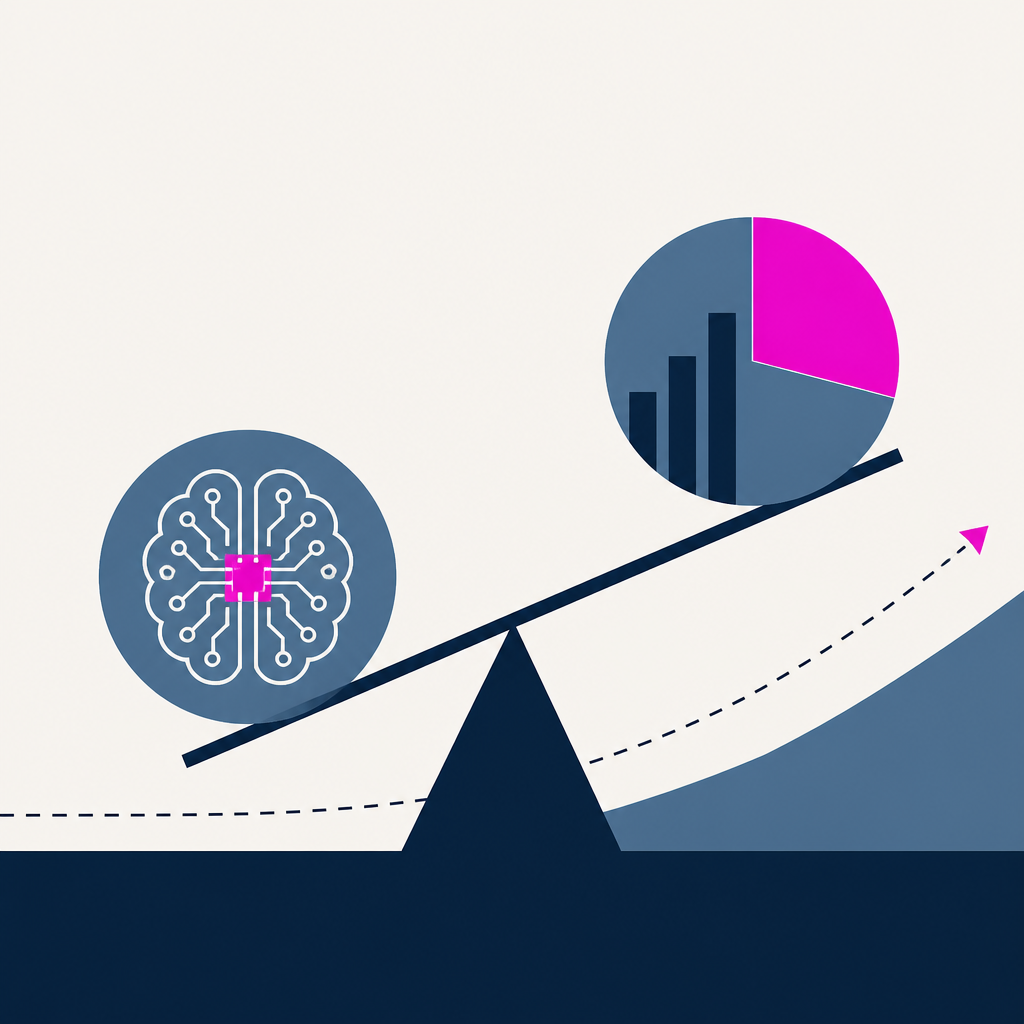
Companies are ranking workers on AI use for bonuses and promotions. That can reward speed, but it also turns better output into proof a job needs less staff.
Based on reporting by BBC News — read the original for the full story.
Summary, retelling and take written by AI under human oversight; images are AI-generated illustrations. How we work · Report an error
Duncan Trevithick likes the idea of getting paid for being faster with AI. But he’s not convinced the deal is as generous as it sounds. The Spain-based marketing worker at an AI training data company says that if AI lets him clear two days of work in a week, he doesn’t get two extra days off or a 40% raise. The output just becomes the new normal.
That worry is showing up far beyond one office. Accenture’s Julie Sweet has said that if people want to get promoted there, they need to do the work in the way Accenture does it, with AI built into the process. Disney, Meta, JP Morgan and KPMG have also introduced AI leaderboards, according to media reports, while Coinbase has fired engineers who didn’t complete AI training when asked to do so by chief executive Brian Armstrong.
The pressure is coming from the business side too. McKinsey says 94% of companies have yet to see significant value from AI, so leaders are clearly keen to show some return. And the jobs market is hardly giving workers much room to push back: UK vacancies are at a five-year low. In a July poll of 1,881 UK jobseekers by recruiter Gi Group, 75% said AI being added to performance reviews would not put them off applying, while around 22% said it would.
But people on the inside are picking up a different message. Pamela, a US-based senior executive at a large consultancy whose name has been changed, says AI is quietly deciding who gets rewarded and who gets left behind. In her view, it’s creating a two-tier workforce, where fluency with the tools counts for more than years on the clock. Tina Chander, an employment lawyer at Weightmans, says bosses are legally in the clear, but the fairness question is obvious: if AI makes someone more productive, should that mean more pay, or just more work?
There’s also a risk that the whole thing becomes theatre. Kamila Miller, an applied AI researcher at Henley Business School, says turning AI use into a KPI can push people to log pointless chatbot activity just to hit targets. Some firms have already backed away. Duolingo’s Luis von Ahn said the company stopped using AI use in performance reviews, and Amazon reportedly shut down an internal AI leaderboard after staff started inventing needless tasks to climb it.
My take — AI-written commentary, not fact-checked reporting
This is what happens when management mistakes visible tool use for actual judgment. AI is being sold as a productivity miracle, but the incentive structure mostly looks like a tidy way to squeeze more work out of the same people. The cleanest policy may be the boring one: reward outcomes, not chatbot theatre.
Read more about this at: BBC News