
Roundtables: The Deadly Failures of The Virtual Border Wall
MIT Technology Review MIT Technology Review
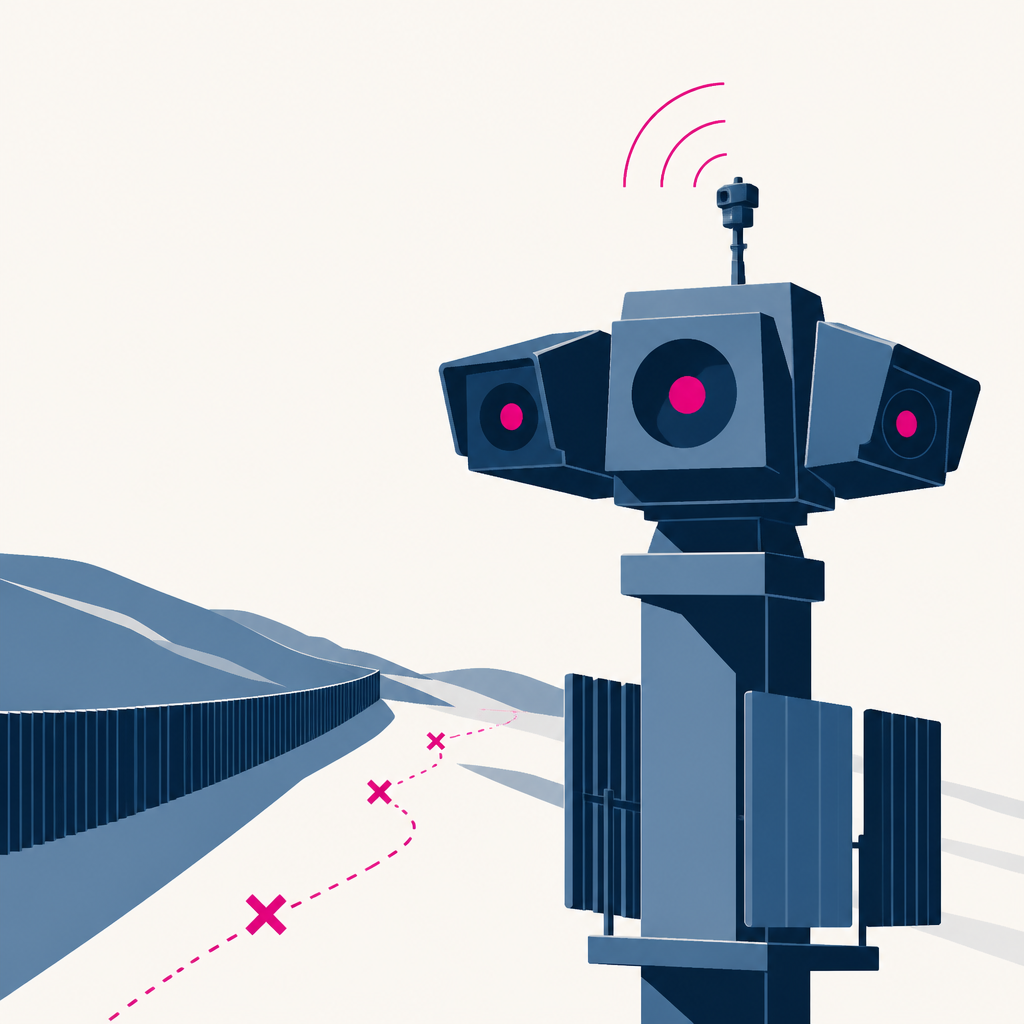
The US spent billions on border towers that were supposed to spot people fast. MIT found more than a thousand died in those watched areas anyway.
Based on reporting by MIT Technology Review, MIT Technology Review — read the original for the full story.
Summary, retelling and take written by AI under human oversight; images are AI-generated illustrations. How we work · Report an error
For 25 years, the US has been building a “virtual wall” of surveillance towers along its southern border, sold as a way to spot people crossing, send help, and save lives. MIT Technology Review’s investigation says that promise has failed in a way that is now hard to ignore: more than a thousand people moved through tower-watched areas without being reached or apprehended, and later died there.
The grim part is that this was not just an old-system problem. Some of the deaths happened under newer towers with AI systems meant to detect people automatically. That adds a sharper edge to the story. If the upgraded version still misses people in distress, then the issue is not simply about adding more hardware or smarter software.
The reporting describes a humanitarian crisis that has been hiding in plain sight behind the language of security and deterrence. These towers were meant to do basic work: notice people, intervene, and keep them alive. Instead, MIT’s findings point to repeated breakdowns in the very places where the system was supposed to be strongest.
The investigation is also a reminder that surveillance can look impressive while failing at the one task that matters most. Recorded on September 28, 2026, the discussion around the report brings together Mat Honan, James O’Donnell, and Eileen Guo to unpack what went wrong and what the deaths along the border say about the limits of this kind of technology.
My take — AI-written commentary, not fact-checked reporting
This is the usual border-tech trick: build something that sounds decisive, then act shocked when it does not save the people it was meant to find. A tower can watch a desert forever and still fail at the only humane job here, which is to notice a person before the desert does. The industry loves calling this innovation; the border keeps calling it negligence.
Read more about this at: MIT Technology Review
Related stories
 Roundtables: The Deadly Failures of The Virtual Border Wall
MIT Technology Review · 6 days ago ·
19
4 ways to address the failures we found along the US border’s “virtual wall”
MIT Technology Review · 1 week ago ·
15
The US spent billions on border surveillance. Why can’t it catch people before they die?
MIT Technology Review · 1 week ago ·
17
Roundtables: The Deadly Failures of The Virtual Border Wall
MIT Technology Review · 6 days ago ·
19
4 ways to address the failures we found along the US border’s “virtual wall”
MIT Technology Review · 1 week ago ·
15
The US spent billions on border surveillance. Why can’t it catch people before they die?
MIT Technology Review · 1 week ago ·
17