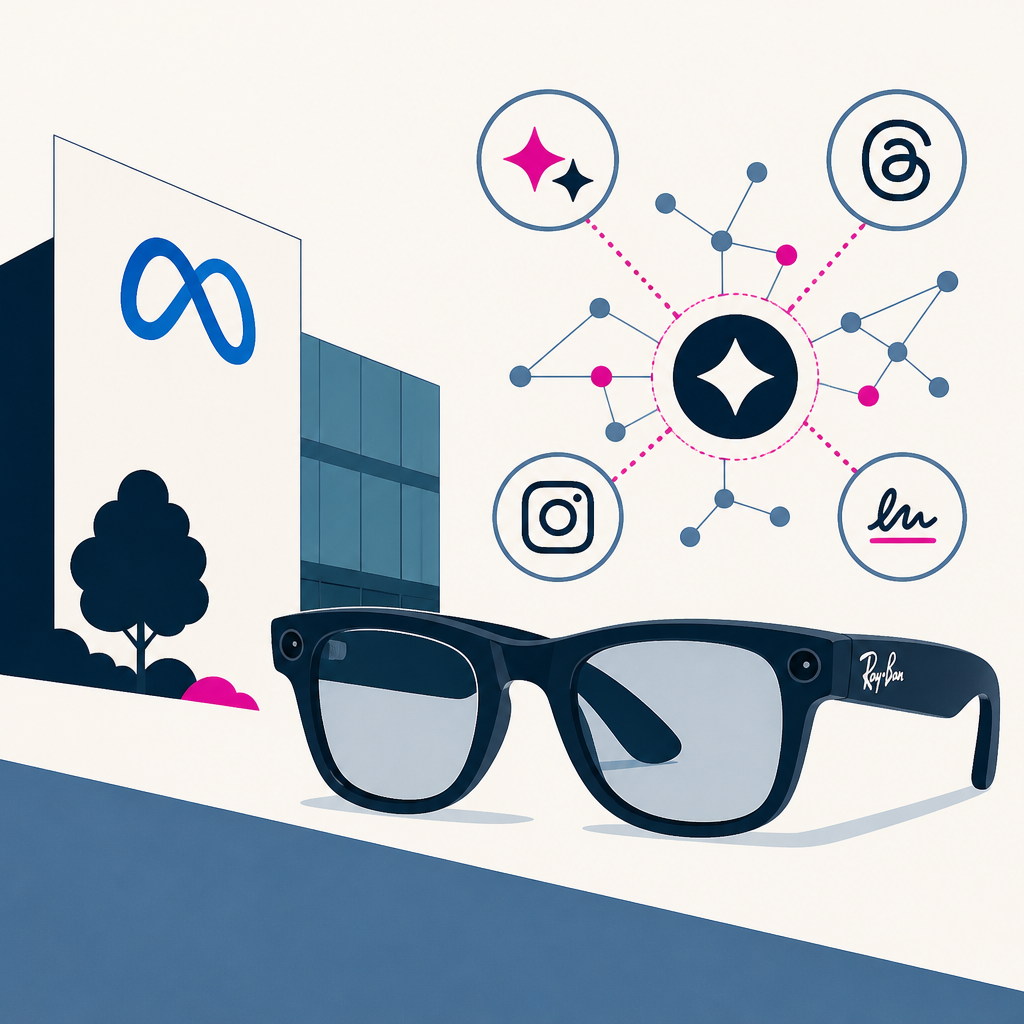
Ray-Ban Meta Audio glasses shipping Oct. 13
Meta Newsroom ● Covered by 13 sources
Meta announced its first audio glasses and says they ship Oct. 13, starting at $349. They’re its lightest pair yet, with AI, calls, and all-day battery in Ray-Ban frames.
Based on reporting by Meta Newsroom — read the original for the full story.
Summary, retelling and take written by AI under human oversight; images are AI-generated illustrations. How we work · Report an error
Meta used Connect to push its glasses line harder than ever, with Ray-Ban Meta Audio at the center. The new pair is the company’s first audio-only glasses, and Meta says they’re its lightest and slimmest AI glasses so far. Pre-orders are open now at $349, with shipping set for October 13.
The pitch is simple: build glasses people will actually wear, then stuff in enough tech to make them useful. Ray-Ban Meta Audio weighs 43 grams, comes with adjustable temple tips and nose pads, and is rated for up to 12 hours of use on a charge, plus another 48 hours from the case. Meta says the glasses can handle music, podcasts, calls, and hands-free chats with its AI assistant, while keeping the user connected to the world instead of sealed off by earbuds.
Two new styles, Clubmaster and Burbank, arrive in 23 color and lens combinations, and both support a range of prescriptions. Meta also says the glasses are meant to work with its personal AI agent from Muse, which can help with things like sports scores, restaurant suggestions, live translation, and day-to-day planning.
Ray-Ban Meta (Gen 3) is getting its own update too. The company says it now has up to nine hours of battery life, a new customizable action button, a 6-mic array that cuts more than 90% of background noise, and a 12 MP camera that records 3K Ultra HD video. It’s available today starting at $449.
And Meta isn’t stopping at Ray-Ban. It’s widening its broader glasses lineup with more than 100 options by the end of the year across Ray-Ban, Oakley, and Meta Glasses, plus new styles, new markets, and more customization. The strategy is obvious: make AI glasses less like a demo and more like a product wall.
My take — AI-written commentary, not fact-checked reporting
Meta clearly wants AI glasses to feel normal before they feel magical, and that’s the right order. The real story isn’t the AI fluff; it’s the company treating glasses like a consumer platform instead of a one-off gadget. Everyone else can keep arguing about avatars and moonshots while Meta keeps shipping frames people might actually put on their face.
Read more about this at: Meta Newsroom