
Quoting Nilay Patel
Simon Willison's Weblog Simon Willison
Nilay Patel argues AR glasses can't work without constant camera recording streamed to the cloud. That's a privacy trade-off he thinks might just be too big to accept.
Based on reporting by Simon Willison's Weblog, Simon Willison — read the original for the full story.
Summary, retelling and take written by AI under human oversight; images are AI-generated illustrations. How we work · Report an error
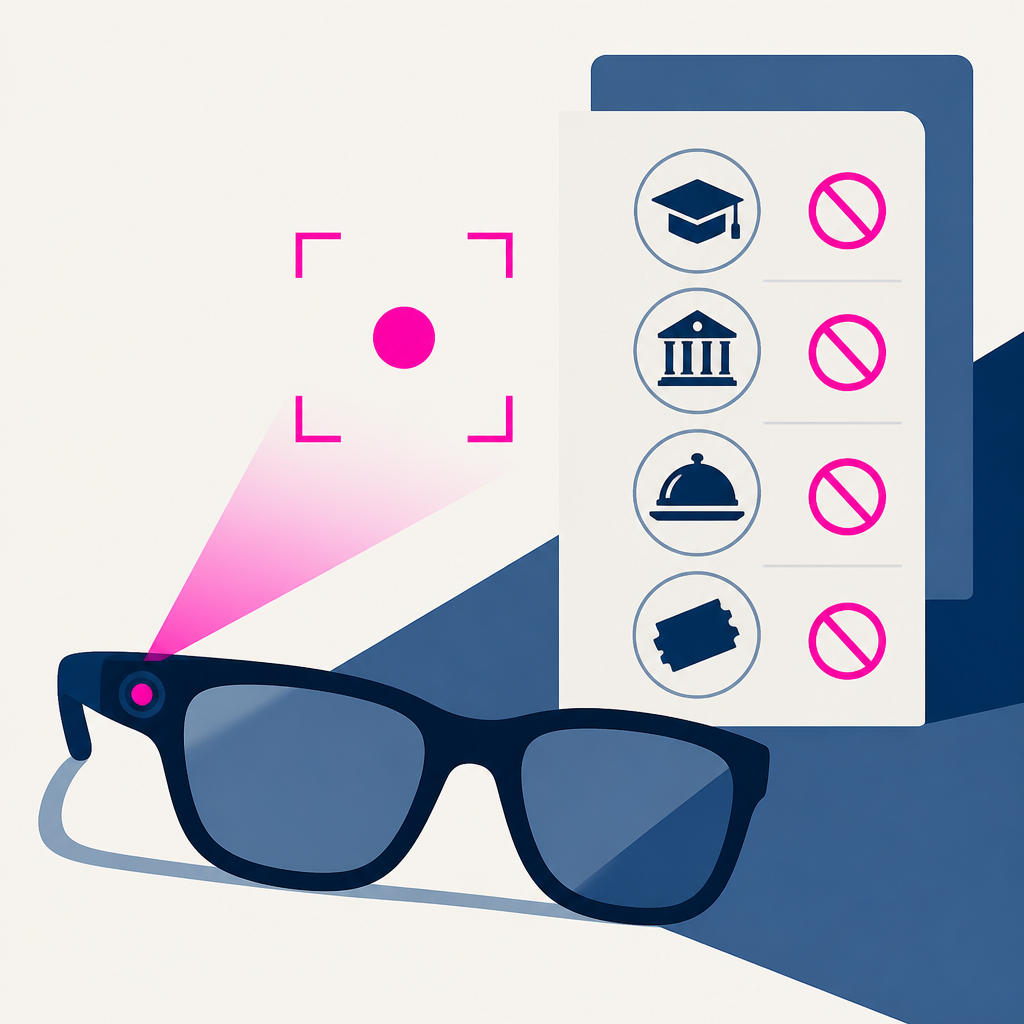
Nilay Patel laid out a blunt technical argument on The Vergecast recently, and it's one that's hard to shake once you hear it. Smart glasses that overlay information on the world need a camera positioned right next to your eyes, capturing everything you look at, all the time. There's no clever engineering trick that avoids this. The alternative — cramming a chip into a glasses stem that's both powerful enough to process real-time vision and frugal enough on power to last a day — simply doesn't exist yet, according to Patel.
So the data has to go somewhere. Cloud processing becomes not a choice but a requirement, he argues, unless you're willing to go the Vision Pro route: strap on a bulky headset with a battery pack tethered elsewhere. Neither path is particularly appealing if you're trying to build the sleek, all-day wearable that companies from Meta to Google keep teasing as the inevitable successor to the smartphone.
What makes Patel's framing sharp is that he doesn't just describe the tradeoff, he questions whether it's worth making at all. Continuous recording of everything a person sees, funneled to corporate servers, is a genuinely different category of surveillance than anything a phone in your pocket does. Patel doesn't pretend there's a middle ground where you get the augmented-reality magic without the privacy cost. He says outright there's a strong case that society should just say no to this category of product, full stop.
That's a notably pessimistic take from someone who covers this industry for a living, and it cuts against years of breathless coverage treating AR glasses as the next inevitable platform shift. Patel isn't arguing the tech won't get built. He's arguing that maybe it shouldn't be, given what it demands from everyone standing near the person wearing it.
My take — AI-written commentary, not fact-checked reporting
I think Patel's onto something that the AR hype cycle keeps burying: this isn't a battery problem waiting on next year's chip, it's a structural privacy problem baked into the product category itself. Companies love framing surveillance concerns as solvable engineering challenges because that lets them keep shipping. Sometimes the honest answer is that a product's core requirement is bad for the world, and this looks like one of those times.
Read more about this at: Simon Willison's Weblog
Related stories
 As demand for Meta AI glasses explodes, it’s harder to avoid creepy recordings
Ars Technica · 3 weeks ago ·
27
As demand for Meta AI glasses explodes, it’s harder to avoid creepy recordings
Ars Technica · 3 weeks ago ·
27