
Quoting Bruce Schneier
Simon Willison's Weblog Simon Willison ● Covered by 2 sources
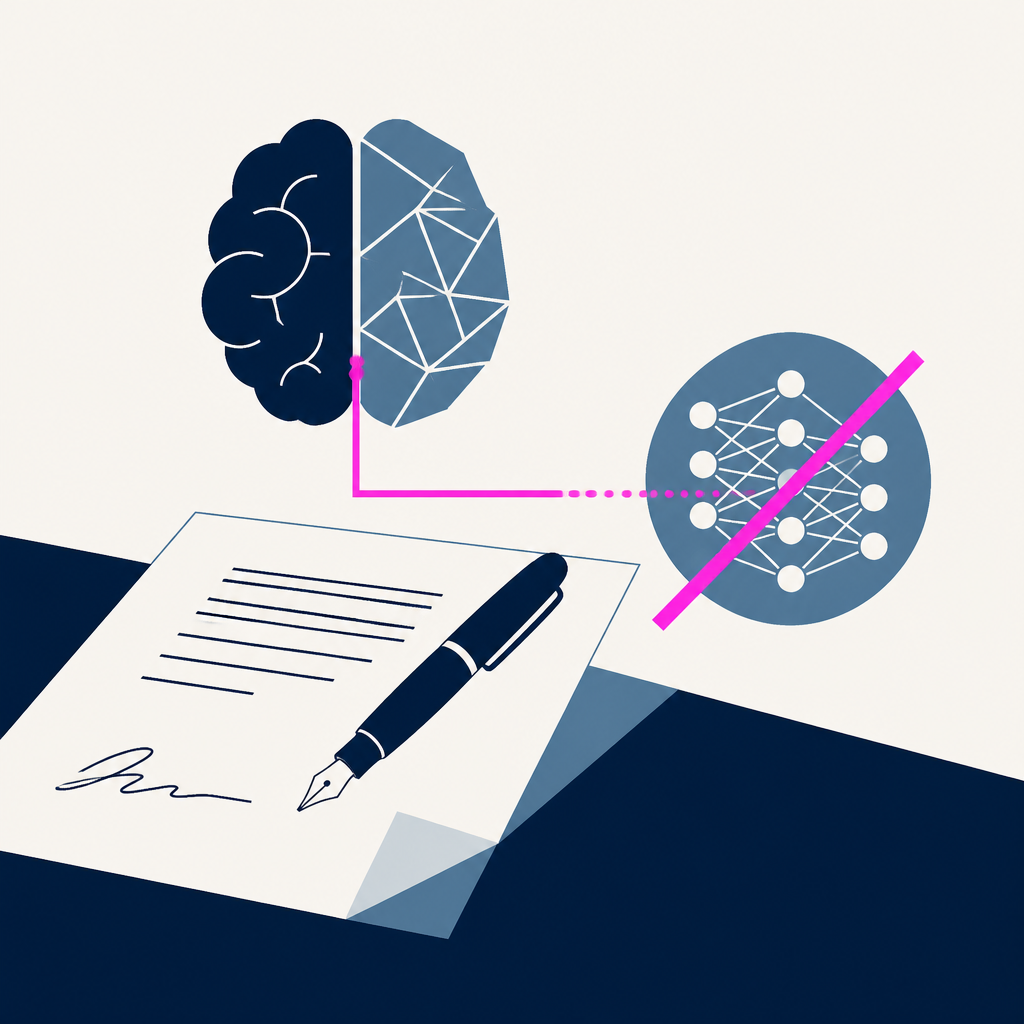
Bruce Schneier says student essays are brain workouts, not busywork. Skip the writing, skip the thinking muscles you'll need later.
Based on reporting by Simon Willison's Weblog, Simon Willison — read the original for the full story.
Summary, retelling and take written by AI under human oversight; images are AI-generated illustrations. How we work · Report an error
Bruce Schneier has a simple way of explaining why he still makes students write policy memos nobody will ever read outside a classroom. It's not about the memo. It's about the gym.
He compares the assignment to lifting weights: nobody needs another rep of a bicep curl, but the rep builds the muscle you'll need later. Writing, in his framing, is the same. The outlining, the drafting, the arguing with your own paragraph until it says what you actually mean — that whole messy process is what trains critical thinking. Skip it, and the thinking skill doesn't just stay flat. It atrophies, like a limb in a cast.
This lands differently now than it would have five years ago, because the shortcut is sitting right there. A student can ask an AI model to produce a competent policy memo in about eleven seconds, and increasingly they do. Schneier's point is that outsourcing the labor also outsources the exercise, and the exercise was the actual assignment all along, even if the syllabus never said so.
He adds that employers are already picking up on the gap. People who leaned on AI through school are showing up in jobs without the reasoning stamina that used to come bundled with a diploma. That's a harder problem than plagiarism ever was, because there's no obvious line to police. You can catch a copied paragraph. You can't easily catch an unbuilt muscle until someone asks it to lift something heavy.
My take — AI-written commentary, not fact-checked reporting
I think Schneier's gym analogy is the cleanest defense of 'pointless' schoolwork I've seen since AI made cheating frictionless, and it applies well past the classroom — plenty of professionals are quietly letting a model do their thinking reps too, and they won't notice the weakness until a moment that actually matters.
Read more about this at: Simon Willison's Weblog