
Prompt Mastery tutorial on directing AI video with layered shot technique
YouTube
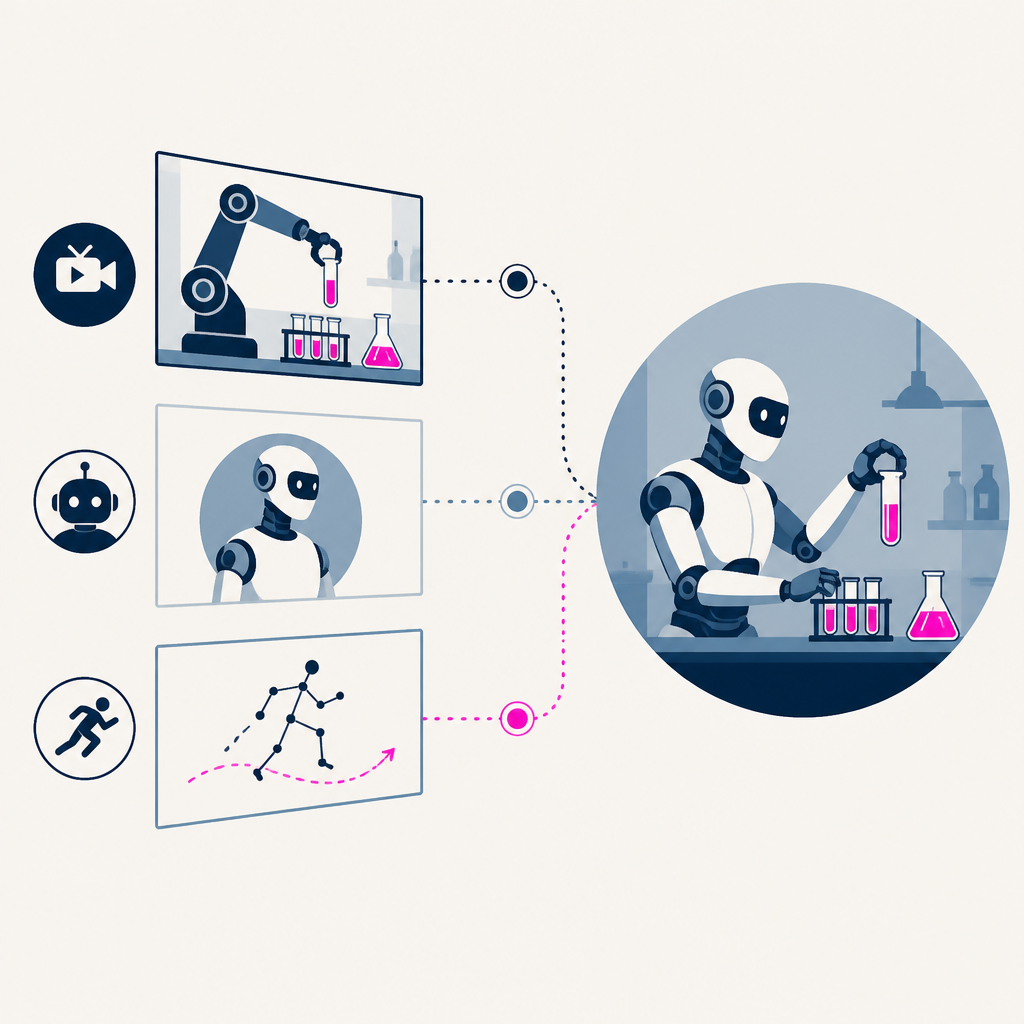
A new tutorial breaks down AI video creation into layers: real actor, AI character swap, then motion transfer to keep it all synced. It's a workaround for the biggest AI video problem — movement that looks fake or off-sync with speech.
Based on reporting by YouTube — read the original for the full story.
Summary, retelling and take written by AI under human oversight; images are AI-generated illustrations. How we work · Report an error
Anyone who's messed around with AI video generators knows the tell: characters that gesture like marionettes with tangled strings, mouths that drift out of sync with their own words. A tutorial making the rounds this week tackles that problem head-on, and the method is refreshingly low-tech in concept even if the execution leans on some fairly advanced tools.
The approach works in layers. First, you film or source a real human actor performing the scene — their actual movements, their actual timing, their actual line delivery. That footage becomes a driving reference, essentially a skeleton of realistic motion. Then an AI-generated character gets swapped in over that human performance. The final step is motion transfer, which maps the original actor's movements onto the new AI face and body so gestures land where they should and dialogue stays glued to lip movement.
What's notable here isn't any single technique — motion transfer and face-swapping have been kicking around in AI video circles for a while. It's the layering itself, treating a shot like a construction project instead of a single prompt-and-pray generation. That mirrors how visual effects houses have worked for decades, using performance capture and reference plates to ground CGI in something physically believable. AI video tools are essentially catching up to a workflow Hollywood already trusted.
The practical upshot is that creators chasing realism don't need to wait for the next model update to fix motion coherence. They can sidestep the issue now by feeding real human performance into the pipeline rather than hoping a text-to-video model nails timing and physics on its own. It's a workaround, not a fix, but workarounds are often what indie creators run on while the big labs iron out the harder problems.
My take — AI-written commentary, not fact-checked reporting
This is exactly the kind of scrappy, unglamorous technique that never gets a keynote slide but ends up in every serious creator's toolkit — proof that solving AI video's uncanny-valley problem right now is less about bigger models and more about smarter pipelines. I'd bet the labs eventually bake this kind of layering into the models themselves, and when they do, it'll get marketed as some brand-new breakthrough instead of the workaround tutorial creators figured out first.
Read more about this at: YouTube