
PolyAI Releases Dialog-RSN-1: An Audio-Native Dialog Model That Fuses Turn-Taking, Speech Recognition, Function Calling, And Response
MarkTechPost Michal Sutter
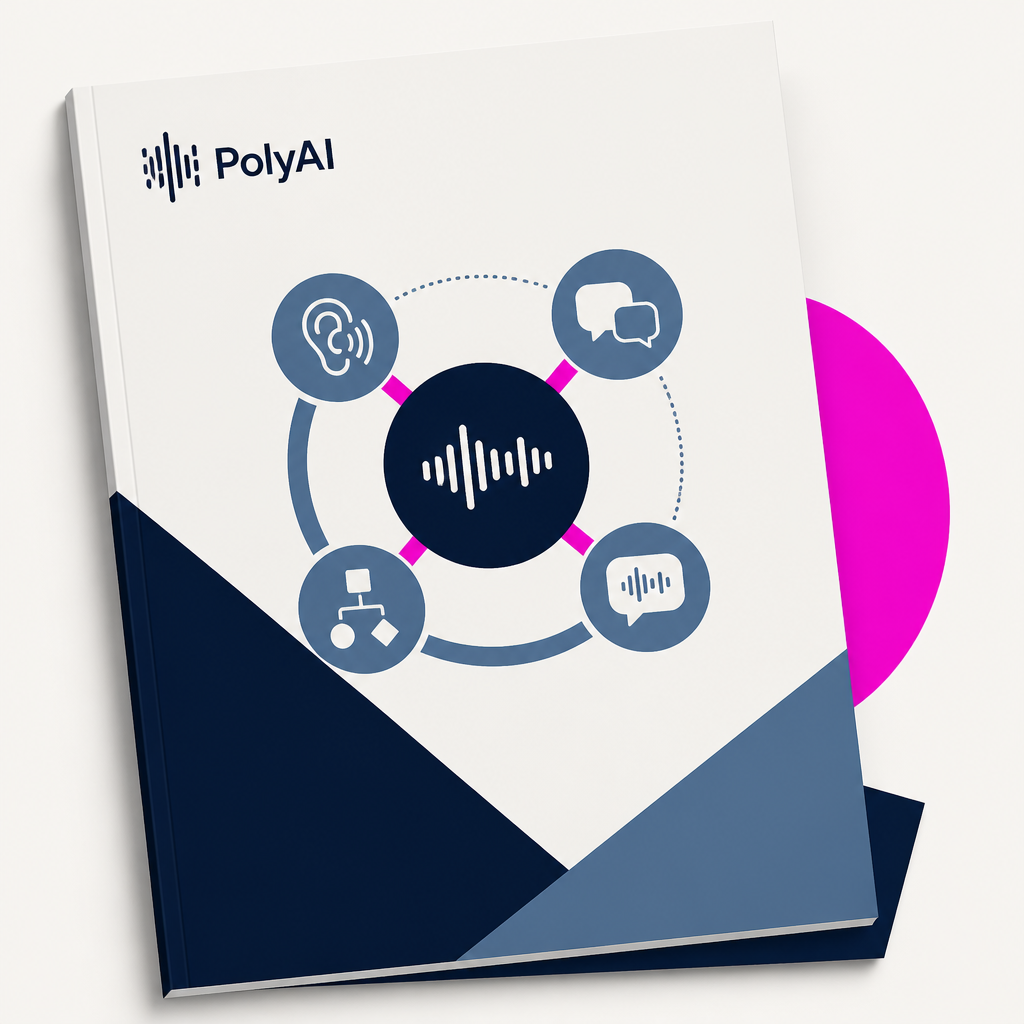
PolyAI built a phone-bot brain that listens to raw audio instead of reading text transcripts. It cuts call latency and awkward interruptions, and it's already answering real customer calls.
Based on reporting by MarkTechPost, Michal Sutter — read the original for the full story.
Summary, retelling and take written by AI under human oversight; images are AI-generated illustrations. How we work · Report an error
Most voice AI still works like a game of telephone: audio gets converted to text, the text goes to an LLM, and everything about how something was said—hesitation, tone, that half-second pause before someone changes their mind—gets thrown away before the model ever sees it. PolyAI's new Dialog-RSN-1 skips that step. It listens to the actual audio, decides whether the caller has finished talking, generates a response or triggers a function call, and only afterward runs transcription in parallel with speech generation. Transcription becomes a byproduct rather than the bottleneck.
The turn-taking trick is clever. The model's very first output token is one of three states: EMPTY, ONGOING, or COMPLETE. Rather than running constantly and burning GPU time on every call like a full-duplex streaming model, Dialog-RSN-1 sits idle until a lightweight voice-activity detector and a couple of timers flag that something worth checking just happened. Cheap signals decide when to ask; the model, with full context, decides what to do about it. That's a meaningfully different architecture than the always-on speech-to-speech systems from Google and OpenAI, which pin a GPU for an entire call and bake the output voice into the model itself, limiting how much control you get over pronunciation.
PolyAI kept text-to-speech separate on purpose, which sounds like a small detail but isn't. It means enterprises can still control exactly how the agent sounds while getting the benefits of audio-native understanding on the input side. The company post-trained open-weight multimodal models—testing Gemma, GPT-OSS, Qwen, and Mistral—with supervised and reinforcement finetuning on its own call data, landing on models in the 8B-dense-to-30B-sparse range to hit sub-300ms response times on A100s. The engineering underneath includes prefilling attention caches while the caller is still speaking, an append-only prompt format to avoid cache invalidation, and a speculative drafter that accepts an average of 3.9 tokens at a time.
The numbers PolyAI is citing are specific enough to take seriously: an 11% relative bump in containment for a restaurant chain, a 37% latency drop for an insurer, and internal benchmarking (on a self-built eval called Dialog-Eval, which PolyAI says it'll open-source) showing Dialog-RSN-1 outscoring cascaded pipelines that top out around 77 on an audio-awareness score. Transcription quality also improved as a side effect—gpt-4o-transcribe's word error rate dropped from 7.8% to 6.9% with added context, and PolyAI says its own model does better still.
None of this is available as open weights or a public API, though. It's English-only for now, and it ships exclusively through PolyAI's platform to existing enterprise customers, with early access available to new ones. This is squarely built for large call-center operations in insurance, healthcare, hotels, and similar high-volume industries—not for a developer who wants to bolt voice AI onto a side project. PolyAI closed an $86 million Series D in December, and it says it already has more than 100 enterprise customers running 2,000-plus live deployments, so the audience for this was never really in question.
My take — AI-written commentary, not fact-checked reporting
Audio-native input without audio-native output is the right trade-off, honestly—enterprises don't want a mystery voice they can't control, they want predictable brand-safe TTS wrapped around a model that actually understands hesitation and tone. My bigger gripe is the closed-platform-only distribution: PolyAI is proving cascaded ASR pipelines are worse, then locking the fix behind an enterprise sales process. That's a smart business move and a mildly annoying one for anyone hoping this trickles down to smaller teams anytime soon.
Read more about this at: MarkTechPost
Related stories
 NVIDIA Releases NemotronLabs VoiceChat 11B: An Open Full-Duplex Speech-to-Speech Model with ~450 ms Turn-Taking and Live Tool Calling
MarkTechPost · 1 month ago ·
29
How OpenAI delivers low-latency voice AI at scale
OpenAI · 4 months ago ·
23
Deepgram speech-to-text and voice models now available natively on Together AI
Together AI · 5 months ago ·
34
NVIDIA Releases NemotronLabs VoiceChat 11B: An Open Full-Duplex Speech-to-Speech Model with ~450 ms Turn-Taking and Live Tool Calling
MarkTechPost · 1 month ago ·
29
How OpenAI delivers low-latency voice AI at scale
OpenAI · 4 months ago ·
23
Deepgram speech-to-text and voice models now available natively on Together AI
Together AI · 5 months ago ·
34