
Peter Sarlin’s NestAI wants to help Europe reduce reliance on foreign models for defence
Sifted
NestAI just launched its first military-focused AI models, built to cut Europe's reliance on foreign defence tech. Founder Peter Sarlin says recent US export limits on Anthropic's models prove why Europe needs to own its own AI stack.
Based on reporting by Sifted — read the original for the full story.
Summary, retelling and take written by AI under human oversight; images are AI-generated illustrations. How we work · Report an error
Peter Sarlin has a habit of building companies right as the ground shifts beneath an industry. He sold his last AI lab, Silo, to AMD in 2024 in what was then Europe's biggest AI acquisition. Now, barely a year after founding Nest, he's put out the company's first models — and they're aimed squarely at the battlefield.
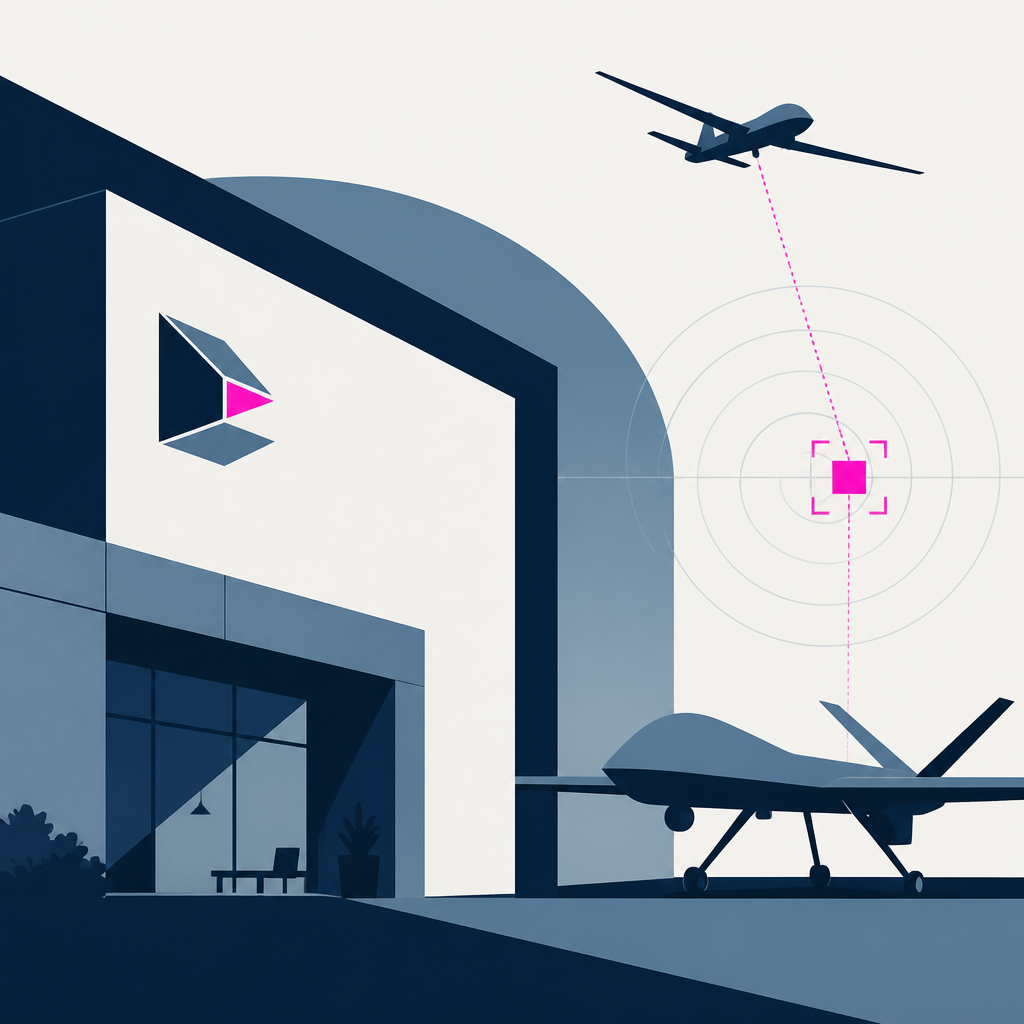
The pitch is narrow by design. Nest isn't trying to out-build OpenAI or Anthropic on general-purpose reasoning. Instead it's chasing two specific jobs: foundational models that let drones operate autonomously at the edge, and orchestration models that let armed forces plan and run entire missions through its NestOS platform. Sarlin trains these on a mix of synthetic and real-world data, and he argues that domain focus, not scale, is how a European player competes with the giants.
The timing isn't accidental. Weeks before Nest's launch, the US government suspended exports of Anthropic's top models, a move that rattled European buyers who suddenly realized how exposed they are when the tech underpinning their defence systems sits under someone else's export controls. Sarlin points to that episode as proof of exactly the problem Nest exists to solve — owning the model layer, not renting it.
His framing of the technical challenge borrows from self-driving cars: a battlefield, like a road network, looks different in summer than winter, except here the adversary is actively trying to make the map wrong. Bomb a stretch of terrain and the maps built for autonomy stop matching reality. Nest's answer, per Sarlin, is a base model paired with a platform built to keep adapting to whatever the environment throws at it next.
That adaptability argument leans hard on Ukraine. Sarlin cites Ukrainian Air Force data showing roughly 13,300 combined drone, missile and cruise-missile attacks on civilian targets in 2024, a number that jumped to around 56,700 in 2025 as drone use surged. He says most of Europe's defence sector is still operating on peacetime assumptions, while Ukraine has built R&D infrastructure wired directly into the front line — and that's the tempo Nest is trying to match, not the slower cadence most European militaries are used to.
The company backs this up with real deployments and real money. It's running pilots with Estonian and Finnish armed forces, letting them execute drone missions end-to-end and plan operations through the orchestration layer. Nest has grown to 200 staff pulled from Tesla, Nokia, Intel and Silo, and raised €100m from Nokia and Finnish state investor Tesi in November. On the infrastructure side, it's leaning on AMD for compute, Finland's LUMI supercomputer for training, and a partnership with quantum startup Qutwo — another Sarlin cofounding effort — to compress models small enough to run on affordable edge hardware.
My take — AI-written commentary, not fact-checked reporting
Europe keeps discovering its dependencies the hard way — first cloud, then chips, now apparently the AI models sitting inside its own weapons systems. Nest's bet is smart precisely because it doesn't try to beat Anthropic or OpenAI at their own game; it picks the one lane where being European and being domain-specific is an actual advantage rather than a consolation prize. Whether that's enough to matter strategically depends on scale nobody outside Estonia and Finland has tested yet, but the instinct to stop renting your defence AI from whoever controls the export licence is correct, and it's a lesson the rest of the continent should have learned years ago.
Read more about this at: Sifted
Related stories
 Small AI models let drones autonomously identify and attack battlefield targets
Ars Technica · 12 hours ago ·
15
Small AI models let drones autonomously identify and attack battlefield targets
Ars Technica · 12 hours ago ·
15
 Europe’s AI sovereignty is under threat. Could Mistral be the answer?
Fortune ·
36
From Danish military intelligence to Meta’s data centres: Velatir just raised €5M to fix Europe’s biggest AI blind spot
Tech Funding News · 4 weeks ago ·
33
Europe’s AI sovereignty is under threat. Could Mistral be the answer?
Fortune ·
36
From Danish military intelligence to Meta’s data centres: Velatir just raised €5M to fix Europe’s biggest AI blind spot
Tech Funding News · 4 weeks ago ·
33