Operation “Uncle Spam”: US polarization influence activity
OpenAI ● Covered by 5 sources
OpenAI just banned a network of China-linked accounts caught using ChatGPT to churn out US political content and dig into activist groups. They called it 'Operation Uncle Spam' — and yes, it's as messy as it sounds.
Based on reporting by OpenAI — read the original for the full story.
Summary, retelling and take written by AI under human oversight; images are AI-generated illustrations. How we work · Report an error
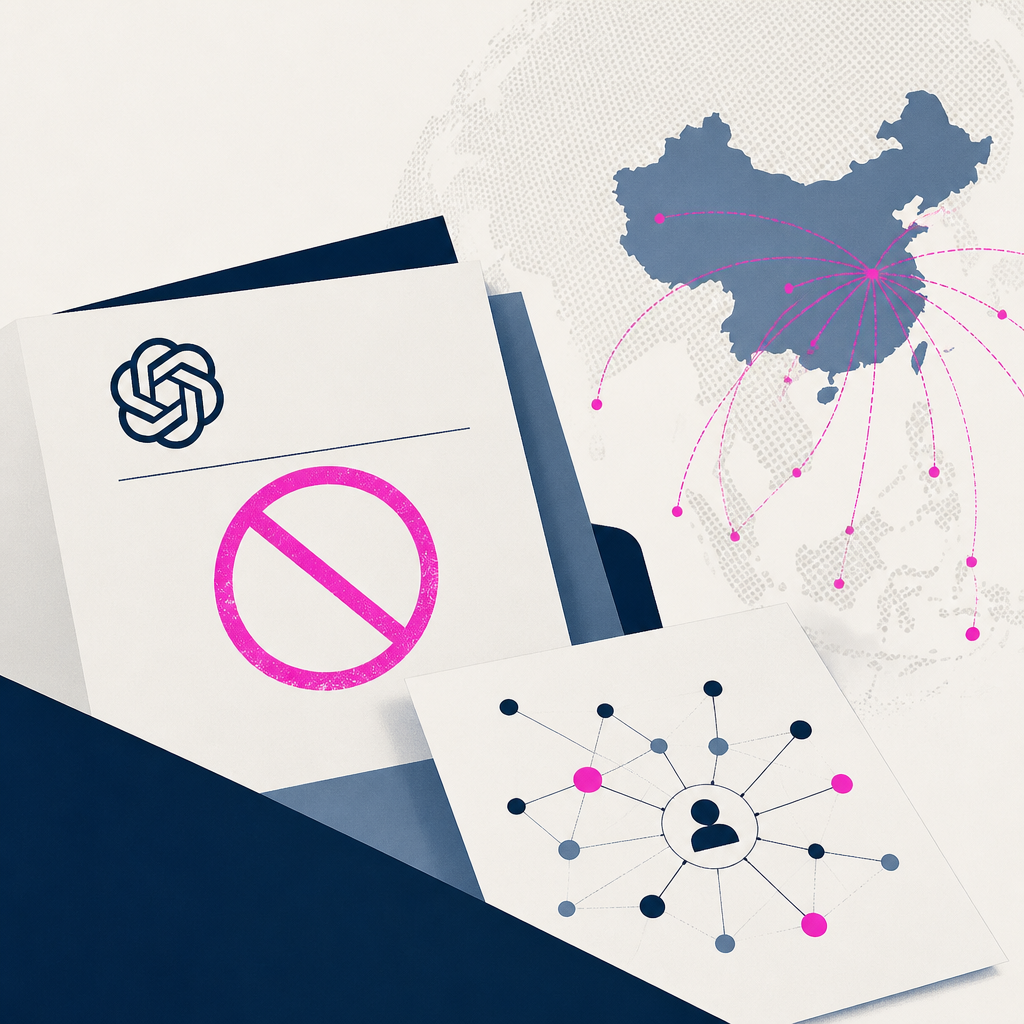
OpenAI's latest threat report reads less like a corporate blog post and more like a counterintelligence memo. The company says it shut down a cluster of accounts, originating in China, that were using its models to generate polarizing political content aimed at US audiences. This wasn't casual trolling. The operation, which OpenAI internally tagged Operation Uncle Spam, involved researching specific American movements, online communities, and individuals — the kind of groundwork you'd expect from an influence campaign trying to figure out which buttons to push.
What makes this notable isn't the existence of foreign influence ops targeting US politics — that's old news at this point, going back well before generative AI showed up. It's the tooling. Instead of hiring armies of content farms or paying for translation services, the operators leaned on ChatGPT to draft material, presumably because it's faster, cheaper, and produces fluent, native-sounding English without needing a human who actually speaks it. OpenAI didn't publish granular numbers on scale in what's been shared, but the fact that they gave the operation its own codename suggests this was organized enough to track as a distinct campaign, not just scattered misuse.
OpenAI has been publishing these takedown reports periodically, and the pattern keeps repeating: state-linked or state-adjacent actors probing whether AI can shortcut the expensive parts of influence operations — content generation, persona building, audience research. Banning accounts is the easy part. The harder question, one OpenAI's report doesn't fully answer, is how much of this activity ever got seen by real people before the accounts were caught, and whether the ban happened before or after the content did its job.
There's also a quieter implication here about the research angle. Generating spammy political posts is one thing; systematically profiling specific communities and individuals is another, and it points toward targeting rather than just broad-spectrum content flooding. That's the part worth sitting with, more than the ban itself.
My take — AI-written commentary, not fact-checked reporting
I'll say the obvious thing nobody likes hearing: banning accounts after the fact is a press release, not a defense. If China-linked operators are using ChatGPT to profile American activist groups, the real story is that AI didn't invent influence ops — it just made the research-and-content pipeline cheaper for everyone, including the actors we'd rather not arm. OpenAI gets credit for disclosing this instead of burying it, but I want to see harm data, not just a cool codename.
Read more about this at: OpenAI