Operation “STORM-2035”: Iran-origin influence activity
OpenAI ● Covered by 4 sources
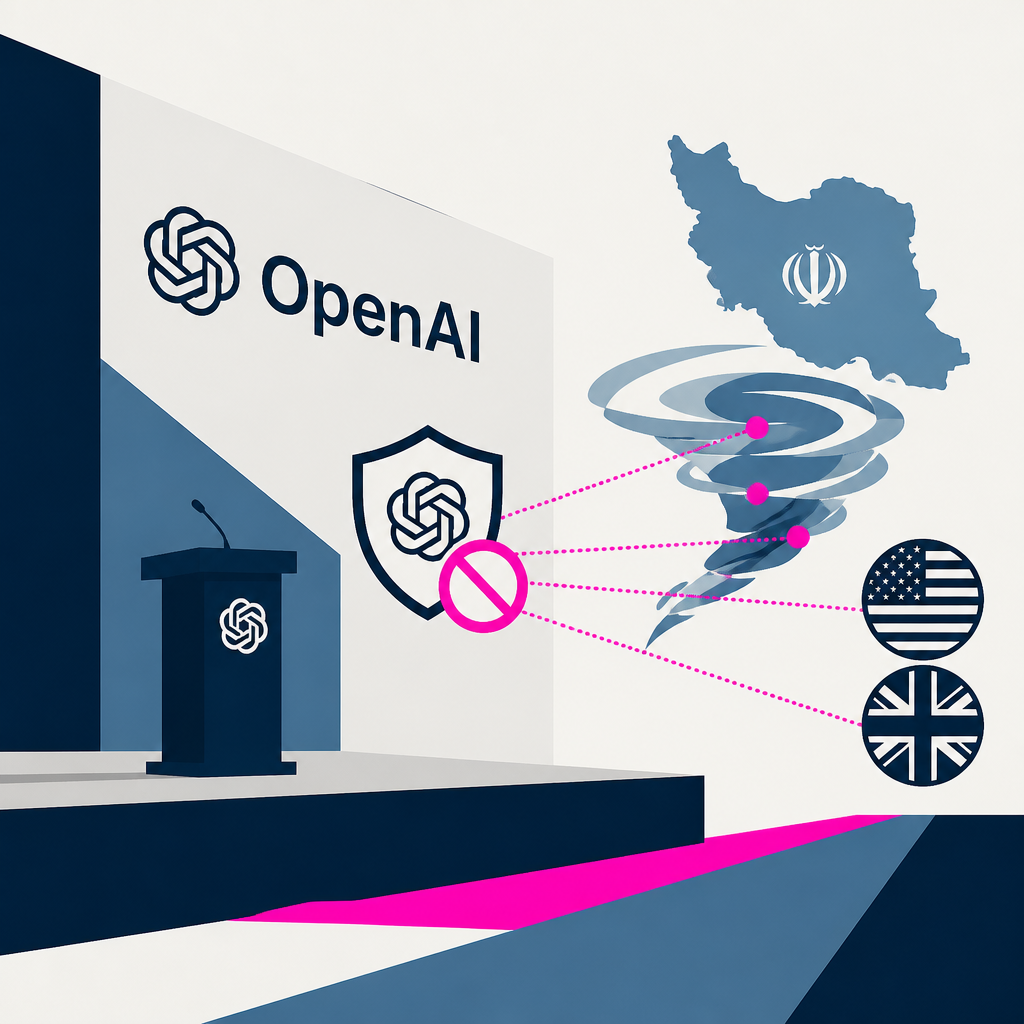
OpenAI shut down an Iran-linked network called STORM-2035 that used ChatGPT to churn out political content aimed at US and UK voters. It's another sign AI is now a standard tool in influence campaigns, not a novelty.
Based on reporting by OpenAI — read the original for the full story.
Summary, retelling and take written by AI under human oversight; images are AI-generated illustrations. How we work · Report an error
OpenAI's latest takedown notice reads like a spy thriller with a dull code name: STORM-2035. Behind the jargon is a network of accounts, traced back to Iran, that had been using the company's models to mass-produce articles and social posts aimed at swaying opinion in the US and UK. The operation didn't just write generic propaganda — it generated content on hot-button election topics, then pushed it out across multiple websites and social platforms, apparently hoping the sheer volume would make the material look organic.
What's notable here isn't that a foreign influence operation exists. Those have been around since long before generative AI showed up. It's that the group leaned on OpenAI's own tools to do the writing, treating ChatGPT less like a chatbot and more like an outsourced content mill. That's the uncomfortable part for OpenAI: the same technology built to help students draft essays or coders debug scripts turns out to be equally useful for anyone trying to flood the internet with tailored political messaging at a fraction of the usual cost and effort.
OpenAI says it caught the activity through its own detection systems and banned the associated accounts, folding the findings into a broader threat-intelligence effort the company has been running alongside outside researchers. The company has now disrupted several such networks tied to different countries over the past year, each one testing whether AI-generated text can slip past both platform moderators and ordinary readers without raising suspicion.
The bigger story is the pattern, not the single incident. Election-focused influence campaigns are increasingly built around generative AI as a force multiplier — write once, republish everywhere, tweak the tone for each audience, repeat. STORM-2035 got caught. The question nobody can answer yet is how many similar operations haven't been.
My take — AI-written commentary, not fact-checked reporting
This is exactly the arms-race dynamic I expect from cheap generative text: bad actors will always find the lowest-cost way to scale propaganda, and right now that's a chatbot subscription. I'd rather OpenAI publish these takedowns loudly and often than pretend safety filters alone will stop state actors — transparency here is doing more work than any content policy.
Read more about this at: OpenAI