Operation “Nine–emdash Line”: Regional influence activity
OpenAI ● Covered by 2 sources
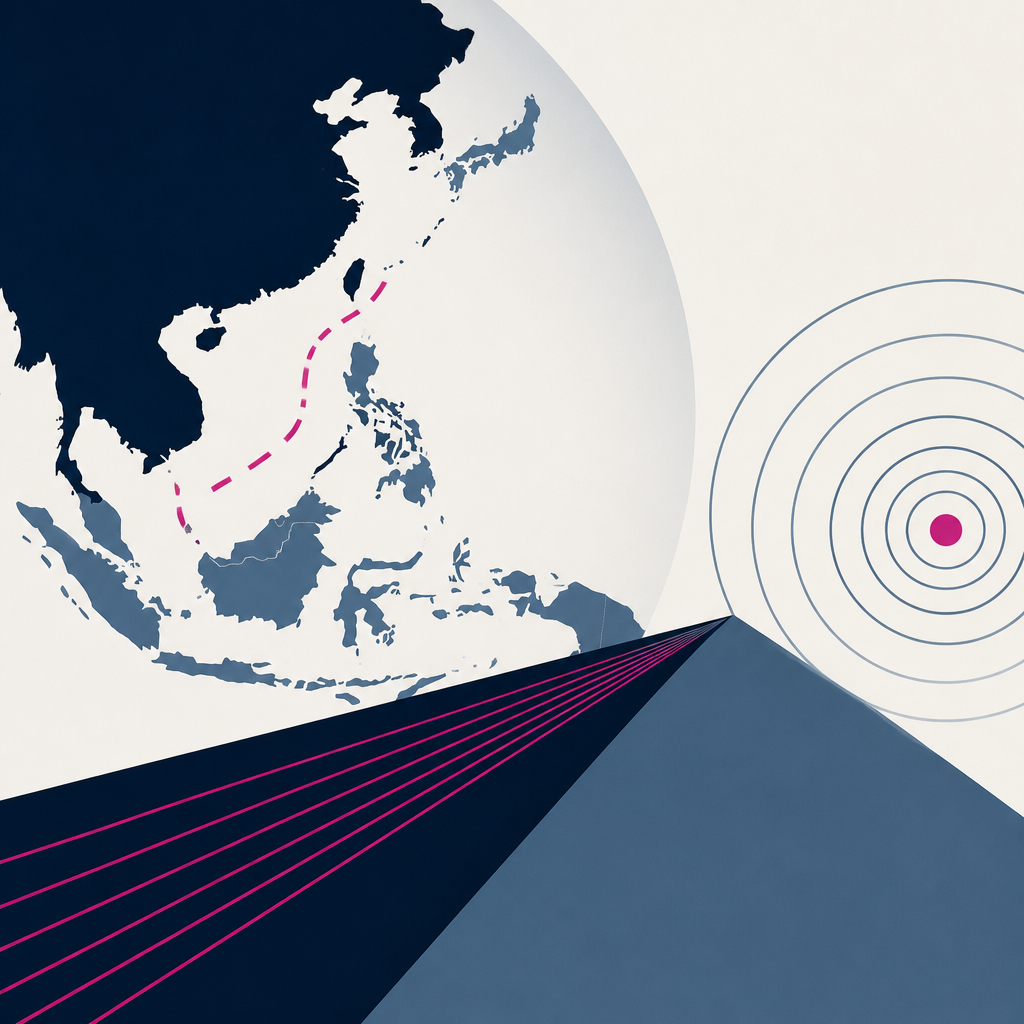
OpenAI shut down accounts tied to a Chinese influence campaign it's calling "Nine-emdash Line."
Based on reporting by OpenAI — read the original for the full story.
Summary, retelling and take written by AI under human oversight; images are AI-generated illustrations. How we work · Report an error
OpenAI dropped the hammer on a network of accounts it traced back to mainland China, part of what the company is calling, with a nod to Beijing's disputed maritime claims, "Nine-emdash Line." This one hadn't surfaced in any prior threat report. The operators were using OpenAI's own tools to churn out content pushing a particular line on the South China Sea, Hong Kong's politics, and American domestic disputes.
The playbook looks familiar if you've followed influence operations before: generate text at scale, spread it across platforms, try to shape opinion without leaving fingerprints. What's different is the tool doing the writing. Instead of a room full of paid commenters typing out talking points by hand, someone typed a prompt and got dozens of variations back in seconds. OpenAI didn't publish exact account numbers or platform names in this summary, but the pattern matches previous PRC-linked takedowns the company has flagged over the past year or so, most of which packaged geopolitical narratives for consumption on social media and forums outside China.
What should worry people isn't the existence of propaganda about the South China Sea, which nobody expects to vanish, but the throughput problem. A single operator with access to a capable language model can now produce what used to take a coordinated team. That changes the economics of influence work in a way platforms and governments haven't fully adjusted to. OpenAI says it caught this one through its own detection systems and banned the associated accounts, which is the company doing what it's contractually and reputationally obligated to do. It doesn't tell you how many similar operations are running undetected on rival platforms with looser enforcement.
OpenAI has been rolling out these threat reports periodically, partly as a transparency exercise and partly, one suspects, to demonstrate to regulators that it's policing its own platform before someone forces it to. The naming convention is almost cute, but the underlying dynamic is not: state-linked actors treating commercial AI models as a cheap, scalable propaganda printing press, and the model providers left playing whack-a-mole after the fact.
My take — AI-written commentary, not fact-checked reporting
This is the same story every quarter now: a state actor finds free labor in someone else's chatbot, gets caught, gets banned, repeat. What actually matters here isn't the ban, it's that detection is still reactive and after-the-fact, and that's true whether the model is OpenAI's or DeepSeek's or anyone else's. Open weights don't make this worse, by the way, that's a talking point closed labs love to repeat while quietly admitting their own systems get abused just as much.
Read more about this at: OpenAI