
Nvidia Seeks to Make Humanoid AI Robots Safer Around Humans
Bloomberg
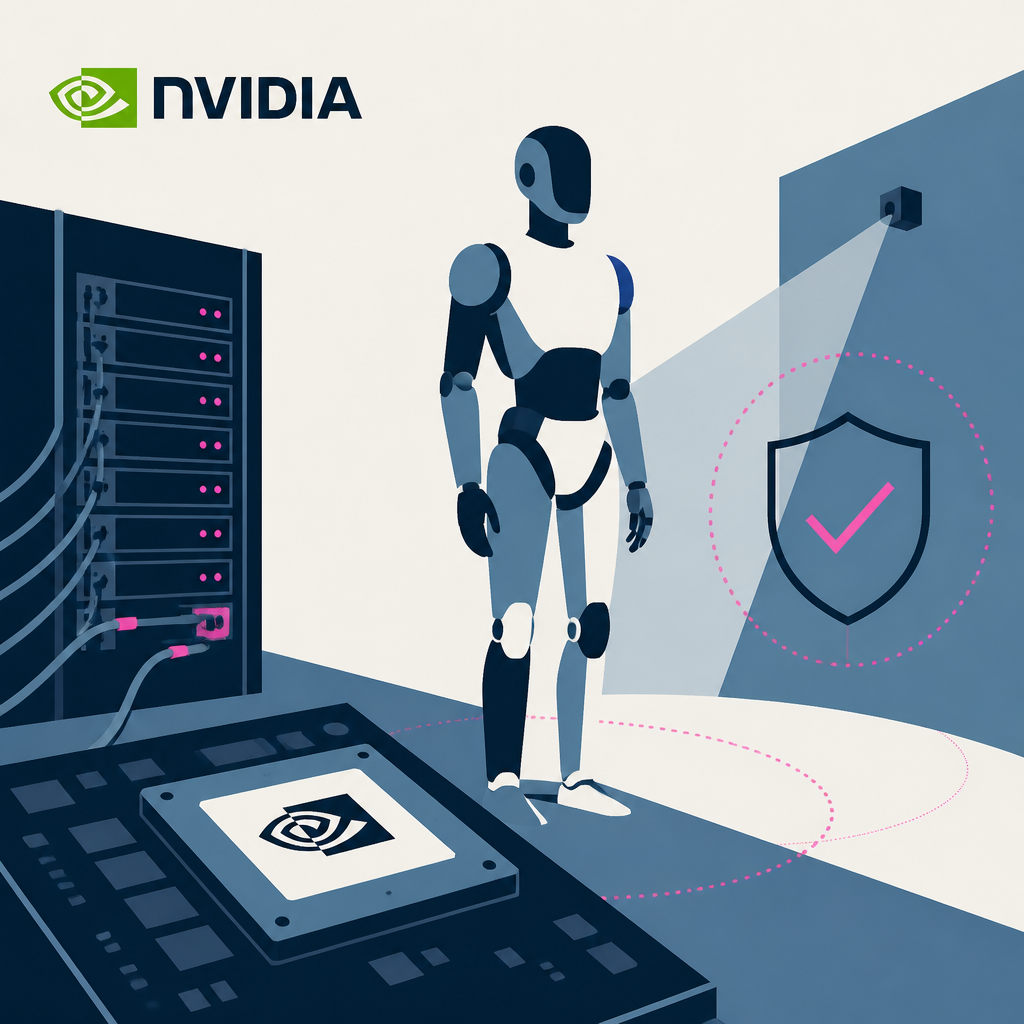
Nvidia built a lab to safety-test humanoid robots before they hit the real world. Robots have to judge what to touch, move, or push against — way messier than self-driving car rules.
Based on reporting by Bloomberg — read the original for the full story.
Summary, retelling and take written by AI under human oversight; images are AI-generated illustrations. How we work · Report an error
Nvidia is opening up a testing ground where robot builders and their customers can put humanoid machines through safety trials before ever facing a regulator. Think of it as a dress rehearsal for certification, minus the risk of a robot crushing something it shouldn't in front of an actual inspector.
The reasoning behind this move comes down to how uniquely hard robot safety is compared to something like autonomous vehicles. A self-driving car mostly has to answer one question over and over: should I stop, go, or turn. A humanoid robot working in a warehouse or a home has to figure out, moment to moment, what it's allowed to touch, how hard it can push, lift, or grip, and what happens if a person walks into its path mid-motion. That's a much messier problem, with far more variables and far less room for a clean rulebook.
Nvidia's pitch is that its lab lets companies iron out these physical interaction problems early, rather than discovering flaws only after regulators start asking hard questions. Robot makers can stress-test how their machines handle force, contact, and unexpected human movement in a controlled setting, then bring that data into the certification process instead of starting from scratch.
This fits into Nvidia's broader push to become the infrastructure layer for robotics, not just the chip supplier. If humanoid robots are going to work alongside people in factories, warehouses, and eventually homes, the safety testing step is going to matter as much as the AI models driving them.
My take — AI-written commentary, not fact-checked reporting
I like that Nvidia is treating physical safety as a real engineering problem instead of a compliance checkbox, because robots that misjudge force or contact aren't a hypothetical risk, they're an inevitability if this space scales as fast as everyone wants it to. That said, letting the chip vendor also run the pre-certification testing ground is a conflict of interest waiting to happen, and regulators should keep their own independent teeth rather than rubber-stamping whatever comes out of Nvidia's lab.
Read more about this at: Bloomberg