Nous Research Adds One-Click Local Model Setup to Hermes Desktop
MarkTechPost Michal Sutter
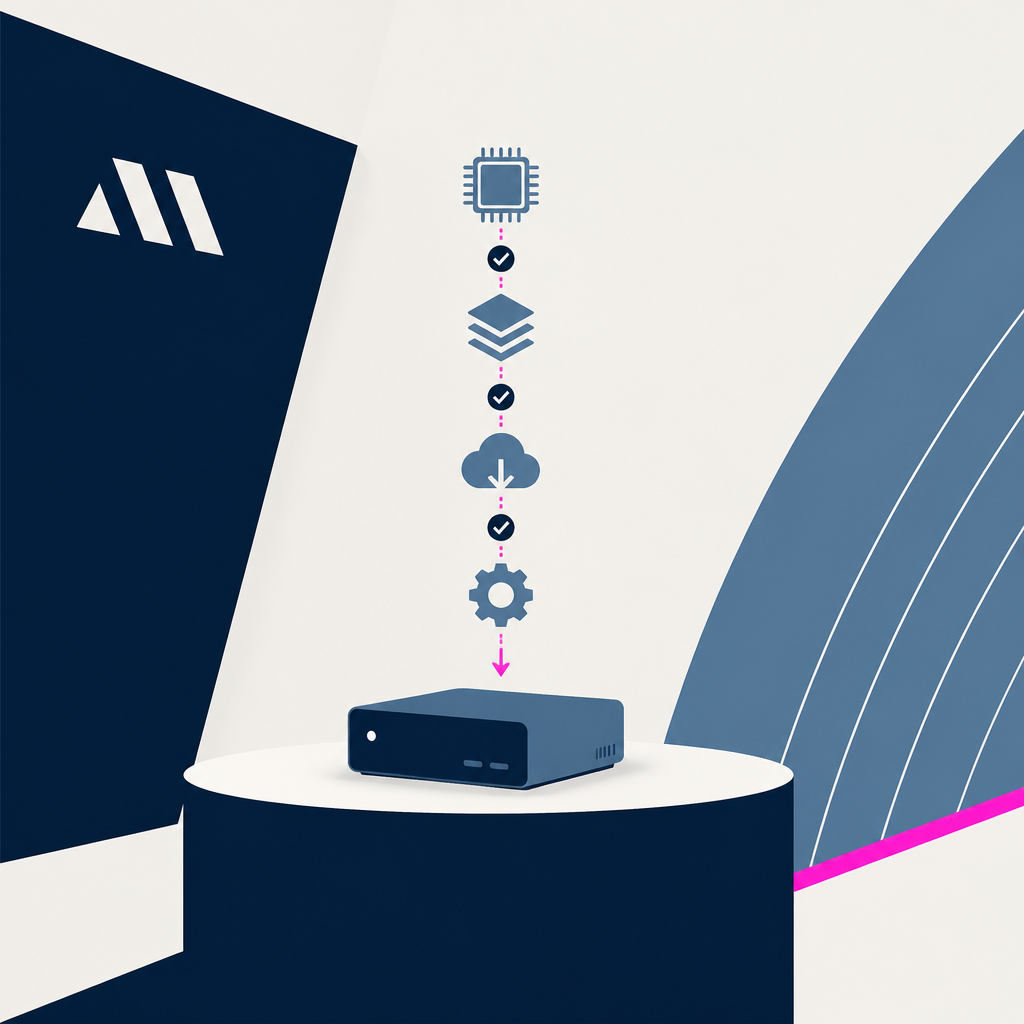
Nous Research put one-click local model setup into Hermes Desktop. It picks a model your machine can actually run, so the usual VRAM guessing goes away.
Based on reporting by MarkTechPost, Michal Sutter — read the original for the full story.
Summary, retelling and take written by AI under human oversight; images are AI-generated illustrations. How we work · Report an error
Running an open-weights model locally has usually meant a little detective work before anything useful happens: check VRAM, guess the quantization, set context limits and GPU layers, then discover the model file won’t fit after all. Nous Research is trying to remove that entire ritual with Hermes Desktop, where local setup now happens in one click.
On first launch, the app can read the machine, choose a model that fits, download the weights, and configure the inference runtime automatically. The same flow is available later from Settings → Providers → Local Models. Hermes Desktop is the free, MIT-licensed build of the open-source Hermes Agent, and it runs on macOS 12+, Windows 10/11, and Linux without requiring an account for local models.
The backend is also being handled for the user. Hermes pulls an official llama.cpp build matched to the machine, verifies it, keeps it updated, and writes the pinned release tag into the local_runtime block of config.yaml. The desktop UI does that for you, though headless users can set it by hand. Supported backends include CUDA, Metal, Vulkan, HIP, and CPU.
The model picker is opinionated. Every catalog entry is checked against the specific machine before download, then marked green if it fits entirely in GPU memory, amber if it spills into system RAM and slows down, or red if it is too large. Hermes also shows starting and maximum context windows, plus the download size for the build chosen for that hardware.
Quantization follows a hard line: Hermes chooses the highest-quality build that still runs fully on the GPU, with smaller builds used when memory is tighter, but never below 4-bit. If a model still won’t fit without spilling under that floor, the model is simply unavailable on that machine. Recommended models are guaranteed at least a 64K context window, and if memory runs short Hermes offloads overflow to system RAM in a fixed order that protects the attention cache. Idle models unload after 15 minutes and reload on demand.
My take — AI-written commentary, not fact-checked reporting
This is the right kind of simplification: fewer sliders, fewer excuses, fewer people pretending they enjoy wrestling with context windows at midnight. Local AI has been too fond of making users earn the right to run it. Hermes is basically saying the machine should do the boring part, which is refreshingly unfancy and exactly the point.
Read more about this at: MarkTechPost