Millow raises €2M to expand mycelium protein across Nordic foodservice
Tech.eu Tamara Djurickovic
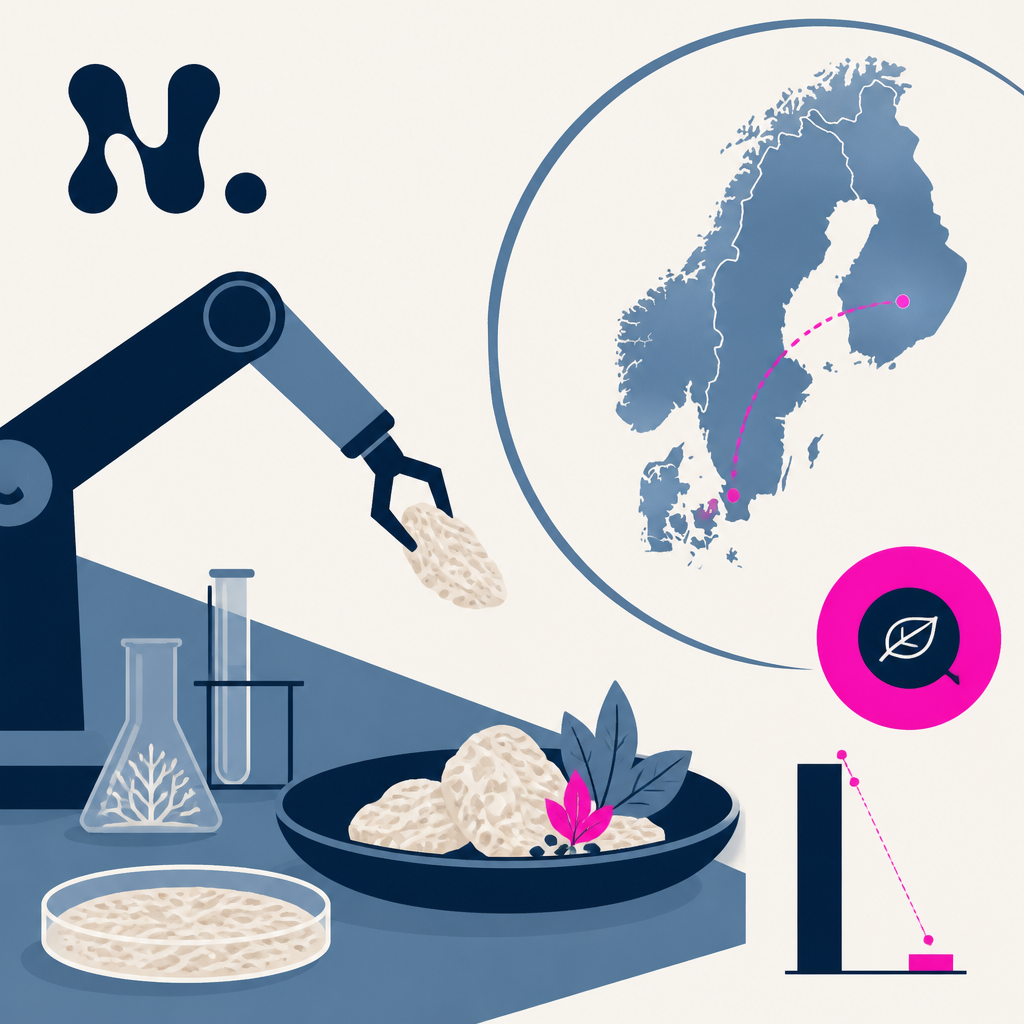
Sweden’s Millow just raised €2M to make more mycelium protein. The bet is on Nordic kitchens — and its patent just cleared a key challenge.
Based on reporting by Tech.eu, Tamara Djurickovic — read the original for the full story.
Summary, retelling and take written by AI under human oversight; images are AI-generated illustrations. How we work · Report an error
Swedish foodtech company Millow has picked up €2 million to push harder into Nordic foodservice and beef up the machinery around it: more production, more sales, more business development. The round was led by serial entrepreneur and angel investor Magnus Emilson, with Jan Enhager — co-founder of Vitamin Well, the group behind NOCCO and Barebells — also joining as a strategic adviser to CEO Fredrik Öhrn. Two co-founders of Swedish tech companies and several private investors from the Swedish food sector also came in.
Millow was founded in 2020, but its pitch rests on a much longer research trail. The company says its mycelium-based protein ingredients build on more than 25 years of work on fermentation and fungi proteins. Its process uses Swedish oats and mycelium in a patented solid-state fermentation setup, producing an ingredient made from two core ingredients, with no binders or additives.
The company is trying to stand apart from the usual plant-based story. Millow says its product is fungi-based, not plant-based, and is designed to slot into formats chefs already know how to use in the kitchen. That matters if the target isn’t a supermarket shelf but foodservice, where habits and speed matter more than slogans.
There’s also a sustainability claim attached to the funding news. Millow says it uses between three and four litres of water for each kilogram of product. An independent assessment from Swedish research institute RISE put the product’s carbon footprint at 0.32 kg CO₂e per kilogram, which the company says is about 98 per cent lower than Swedish beef.
The patent side also came through cleanly. The European Patent Office confirmed that the nine-month opposition period for Millow’s core patent ended without any oppositions filed. That patent covers the low-water production method behind the fermentation process, which is the sort of detail that can matter a lot once a food company starts trying to scale beyond the lab and into contracts.
Millow says the new money will go into capacity and commercial hires as it works the Nordic foodservice market, and it says it is already in talks with major operators and distributors across the region. International interest is also building, which is what always happens once a startup has a story that sounds good in a pitch deck and survives a patent review.
My take — AI-written commentary, not fact-checked reporting
Millow is doing the sensible thing here: stop talking like a consumer fad and get into kitchens where ingredients actually earn their keep. The patent win helps, because in foodtech, a nice story without defensible process is just expensive lunch. Europe still loves its protein reinvention, but only the companies with real production discipline will last longer than the press release.
Read more about this at: Tech.eu