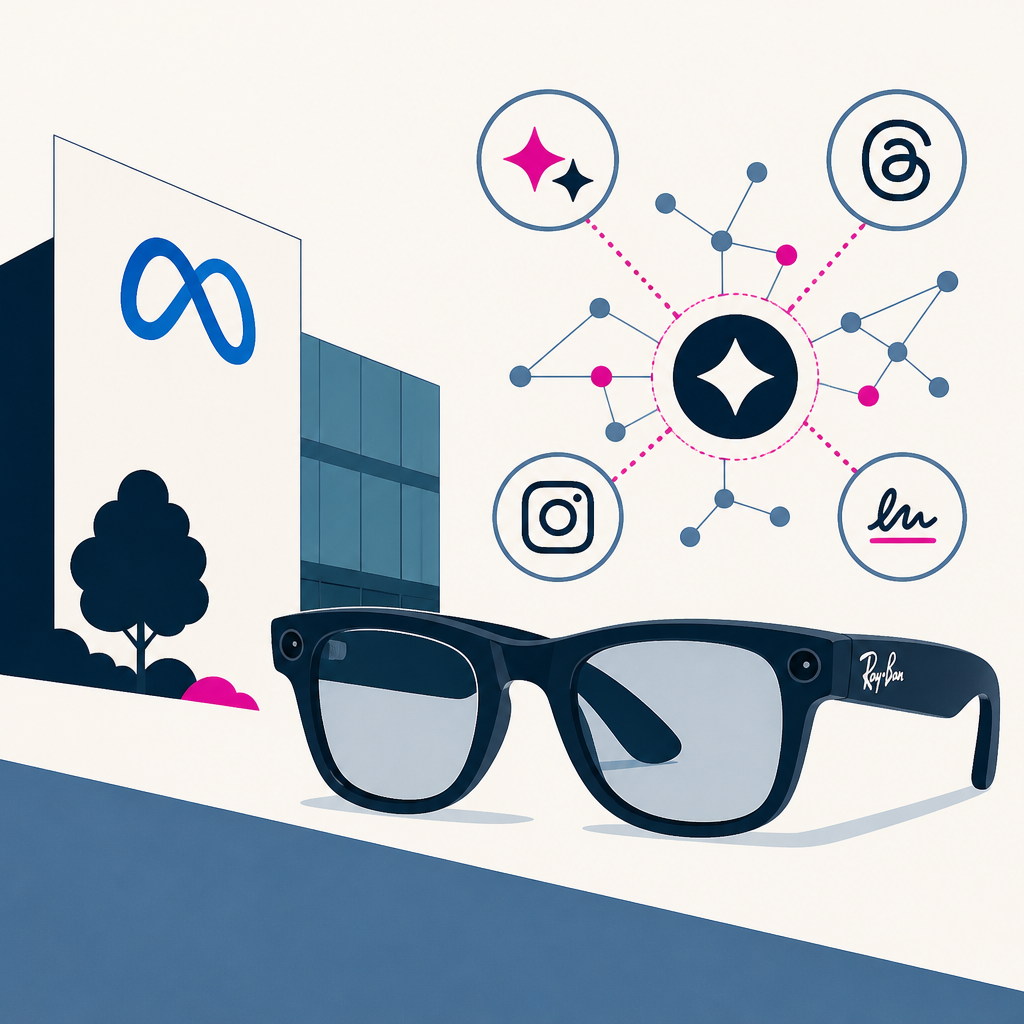
Meta introduces camera-free AI glasses
TechCrunch Sarah Perez ● Covered by 4 sources
Meta unveiled audio-only AI glasses that skip the camera. It’s a direct fix for the creepy recording problem, and starts at $349.
Based on reporting by TechCrunch, Sarah Perez — read the original for the full story.
Summary, retelling and take written by AI under human oversight; images are AI-generated illustrations. How we work · Report an error
Meta used its Connect 2026 stage on Wednesday to show off a new answer to one of the ugliest complaints about AI glasses: the camera. The Ray-Ban Meta Audio, the company’s first camera-free pair, strip the product down to music, podcasts, calls, speech translation and Meta’s AI assistant, Muse.
That omission is the whole point. Meta has been taking heat for the way some people, often men, used its glasses to record others without consent, earning the devices the kind of nickname no brand wants. The company had already tried to blunt that backlash with a software update that would shut off the camera if the recording light was tampered with. Apparently, that still wasn’t enough.
So now Meta is betting on a different pitch: glasses people actually want to wear because they sound good and don’t make everyone nearby feel watched. Mark Zuckerberg called high-quality audio something people get used to and then want all the time. He also said the company realized it could build a whole new category around audio glasses. Fair enough. Cameras bring ambition; they also bring suspicion.
The new pair is lighter and slimmer than Meta’s camera models because, well, there’s no camera to cram in. Meta says they weigh 43 grams, last up to 12 hours on a charge, and up to 48 hours with the charging case. They also come with adjustable temple tips, swappable nose pads and overextension hinges, and will be sold in 23 color and lens combinations across two new styles: a retro Clubmaster and a more classic rectangle shape called Burbank. Preorders open on October 13.
Meta also announced the next Ray-Ban Meta glasses with cameras, called Gen 3. Those will add the Wayfarer, Aviator and Zena styles, a 12 MP camera that can shoot 3K Ultra HD video, a six-mic array and up to nine hours of battery life. Separately, Meta said its existing glasses line will expand to more countries, add a partnership with singer Lisa, and get more features down the road, including Dolby Atmos Capture, better photo selection, landscape or portrait options, hearing help, richer replies, custom controls and “private processing,” which Meta says will keep it from seeing your data.
My take — AI-written commentary, not fact-checked reporting
This is Meta quietly admitting that “smart glasses” are better when they act less smart and a lot less creepy. The camera-free version looks like the first honest product in the category: useful, wearable, and not asking strangers to trust a little lens on your face. That’s a refreshing change from the usual Silicon Valley ritual of calling surveillance convenience.
Read more about this at: TechCrunch