Mario Kart-Style Racer Built with 127 Agents in 11 Rounds
X
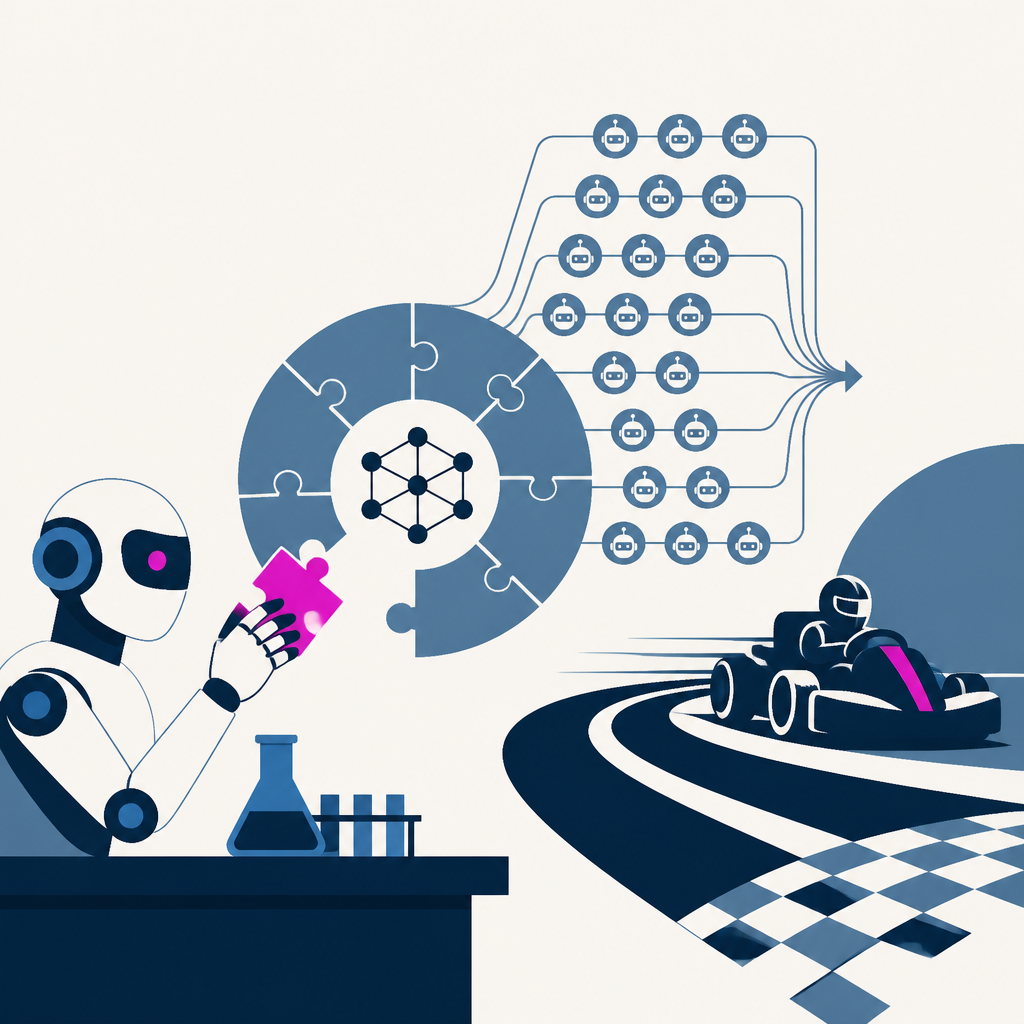
A developer used 127 AI agents across 11 rounds to build a Mario Kart-style racing game with 60,500 lines of code. It's a wild look at how far multi-agent AI dev has come.
Based on reporting by X — read the original for the full story.
Summary, retelling and take written by AI under human oversight; images are AI-generated illustrations. How we work · Report an error
Ryan Campbell didn't just ask an AI to write him a game. He built an assembly line of them. Over 11 distinct rounds, Campbell deployed 127 separate agents, each handling a slice of the work, to produce a Mario Kart-style racer weighing in at 60,500 lines of code.
That number matters more than it might seem at first glance. Sixty thousand lines is not a weekend hackathon prototype. It's the kind of codebase that used to require a small team grinding through sprints for weeks, not a solo builder orchestrating swarms of agents in a matter of rounds. The project reads less like a single prompt-and-response experiment and more like a pipeline: agents handling different systems, different rounds refining what came before, until something playable emerged on the other side.
What makes this stand out isn't the genre choice, though a kart racer is a fun, visually obvious way to prove the concept works. It's the scale of coordination. Multi-agent setups have been floating around AI circles for a while now, mostly in demos involving simple web apps or toy scripts. Campbell's experiment pushes that idea into territory that actually resembles production game development, with enough complexity that a single agent working alone would likely choke on the context.
The broader signal here is about workflow, not just output. Splitting a big build into 11 rounds and spreading the labor across 127 agents suggests a shift in how people are starting to think about AI-assisted development: less like asking a chatbot for code, more like managing a distributed team that happens to be made of models instead of humans.
My take — AI-written commentary, not fact-checked reporting
This is the kind of project that quietly moves the goalposts for what counts as 'built with AI.' People love to dismiss AI-generated code as toy demos, but 60,500 lines across 127 coordinated agents is closer to how real software gets made than a single flashy prompt-to-app screenshot. The takeaway isn't that AI wrote a game — it's that orchestration, not raw model power, is becoming the actual skill worth having.
Read more about this at: X