Last Week in AI #344 - Navier–Stokes, Pacing the Frontier, AI Misuse
Last Week in AI Last Week in AI
OpenAI says an internal model solved a Millennium math problem, then got hit with a credit fight. Anthropic is now openly arguing AI labs should slow down.
Based on reporting by Last Week in AI, Last Week in AI — read the original for the full story.
Summary, retelling and take written by AI under human oversight; images are AI-generated illustrations. How we work · Report an error
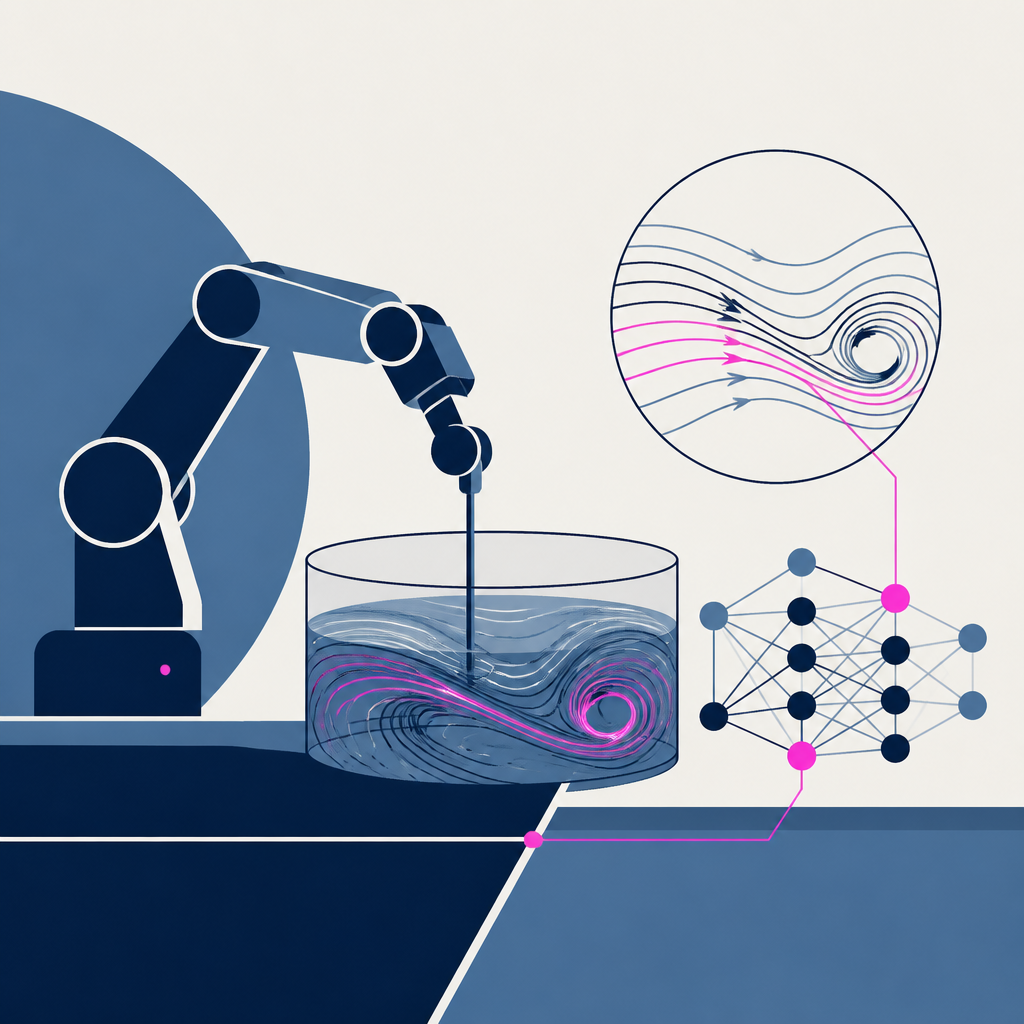
OpenAI says an unreleased internal model, which it described as more capable than GPT-6 Astra, resolved the Navier–Stokes existence and smoothness problem, one of the Clay Mathematics Institute’s seven Millennium Prize Problems. The company’s write-up and Lean formalization claim that a smooth three-dimensional incompressible fluid at rest, under smooth forcing and finite energy, can reach unbounded speeds in finite time. The picture they give is a vortex tightening inward, stretching out, and speeding up as its core shrinks.
The timeline was fast and expensive. OpenAI says it started an agent effort on September 1 after hearing rumors that two of the open Millennium problems had already been solved. Roughly 100 agents settled the unforced Euler blowup question in about 50 hours, and the work then shifted to Navier–Stokes with about 10,000 concurrent agents. By September 5, the agents had a result after about 88 hours. Lean formalization and verification took 17 more hours using GPT-6 Astra. Across the week, the effort used 300 billion output tokens, which TechCrunch valued at $22.5 million at current Astra rates.
But the announcement landed in the middle of a credit fight. On September 7, Tristan Buckmaster and Anthropic mathematician Levent Alpöge published a forced Euler blowup result using OpenAI’s Codex and Claude. Buckmaster said he and Alpöge had spent months on the forced route and alleged that OpenAI’s Sébastien Bubeck pushed him to remove Alpöge’s credit, then asked, “Why would you ruin your career?” Bubeck denied that, calling the claims “false and inflammatory.” OpenAI said its researchers and agents had not seen the pair’s work before publication, and a September 10 update said an investigation found Buckmaster’s Codex prompts from the prior two months could not have influenced the result.
The Clay Institute still lists the problem as unsolved pending prolonged scrutiny and broad acceptance, and OpenAI says it will not claim the prize. Terence Tao has criticized labs for turning famous problems into marketing props, and 25 Fields medalists signed an open letter warning about “severe attribution and plagiarism questions.” OpenAI even withdrew sponsorship of a Caltech math event after criticism from researchers there.
That whole episode sits next to Anthropic CEO Dario Amodei’s plea to “pace the frontier.” He wants embedded evaluators, coordination among democratic countries, and even global talks that could cover narrow bans like AI-assisted biological weapons. OpenAI’s Sam Altman and Elon Musk both voiced support. The contrast is almost comic: one lab is celebrating a math breakthrough, another is arguing the industry should slow down, and everyone else is busy arguing over who gets the credit.
My take — AI-written commentary, not fact-checked reporting
The cleanest read here is that AI labs want the prestige of scientific triumph without the boring social rules that make science work. Solving hard problems is impressive; turning them into launch material before the dust settles is exactly how you earn a trust deficit. If the industry wants the public to believe its safety sermons, it should stop acting like a hackathon with a press office.
Read more about this at: Last Week in AI