Kinematic Trees raises £585K to scale nature-inspired robotics software
Tech.eu Tamara Djurickovic
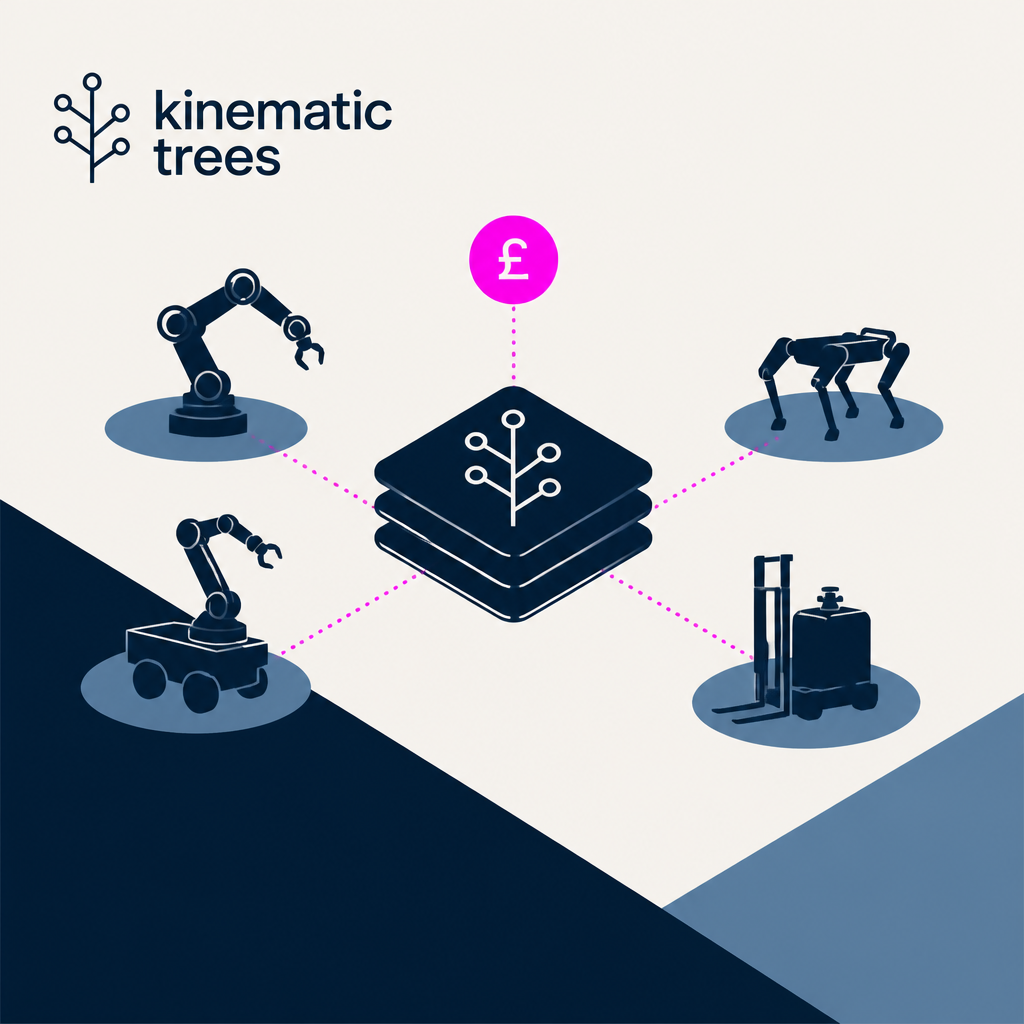
UK startup Kinematic Trees just raised £585K to build software that lets any robot brain run on any robot body. Robots are getting cheaper, but the software gluing them together is still the bottleneck—this bet is on fixing that.
Based on reporting by Tech.eu, Tamara Djurickovic — read the original for the full story.
Summary, retelling and take written by AI under human oversight; images are AI-generated illustrations. How we work · Report an error
Robotics has a hardware problem that isn't really about hardware anymore. Arms, sensors and actuators have gotten dramatically cheaper over the past few years, thanks to advances trickling down from AI research and manufacturing scale. What hasn't kept pace is the software that makes a robot actually useful once it's out of the box. That's the gap Kinematic Trees, a UK startup founded in 2025 by Dr Stuart Wilson and Daniel Camilleri, is trying to plug — and investors just handed it £585,000 in pre-seed funding to prove it can.
The pitch is straightforward, even if the underlying tech isn't. Instead of building bespoke control systems for every robot a client owns, Kinematic Trees wants to create a reusable software layer — modular components that capture specialist robotics know-how and can be swapped between machines. Train a capability once, deploy it on a warehouse arm today and a completely different robot tomorrow. The company says its approach draws on principles of natural intelligence, which is a nod to cognitive architecture research rather than marketing fluff — Wilson and Camilleri are also pursuing work on embodied AI alongside the commercial product.
The money came from Haatch's SEIS Fund, the D2N2 Early-Stage Angel Investment Fund, and the British Business Bank Syndicate Fund — a very British mix of regional and early-stage capital rather than a splashy Silicon Valley round. It's a small check by robotics standards, but it's meant to stretch across hiring in London, Nottinghamshire and Sheffield, plus product work aimed at manufacturing, healthcare, education and creative-industry clients.
Wilson's framing is blunt: robots got cheap, software stayed the bottleneck. Camilleri's version of the same argument is that the industry has been betting on hardware standardization when it should be betting on software portability — building an ecosystem of capabilities that outlive any single robot model. Whether that's true at scale is the real test here, and the company isn't shy about setting a public deadline for it. Kinematic Trees says it plans to announce its first factory deployments and new partnerships sometime in the second half of 2026, which gives the market a concrete moment to check whether the pitch survives contact with an actual production line.
My take — AI-written commentary, not fact-checked reporting
I like this bet more than most seed-stage robotics stories because it's not chasing a flashier humanoid demo — it's going after the boring, unglamorous layer that actually determines whether robots get adopted at scale. Software portability is the unsexy problem everyone in robotics complains about privately and nobody funds properly, so a UK team building exactly that, backed by regional capital instead of hype money, is refreshing. The real question is whether £585K buys enough runway to reach that 2026 factory deployment before a better-funded competitor in the US or China ships the same idea first.
Read more about this at: Tech.eu