
It's official: EU will force Google to share search data and open up AI on Android
Ars Technica Ryan Whitwam ● Covered by 2 sources
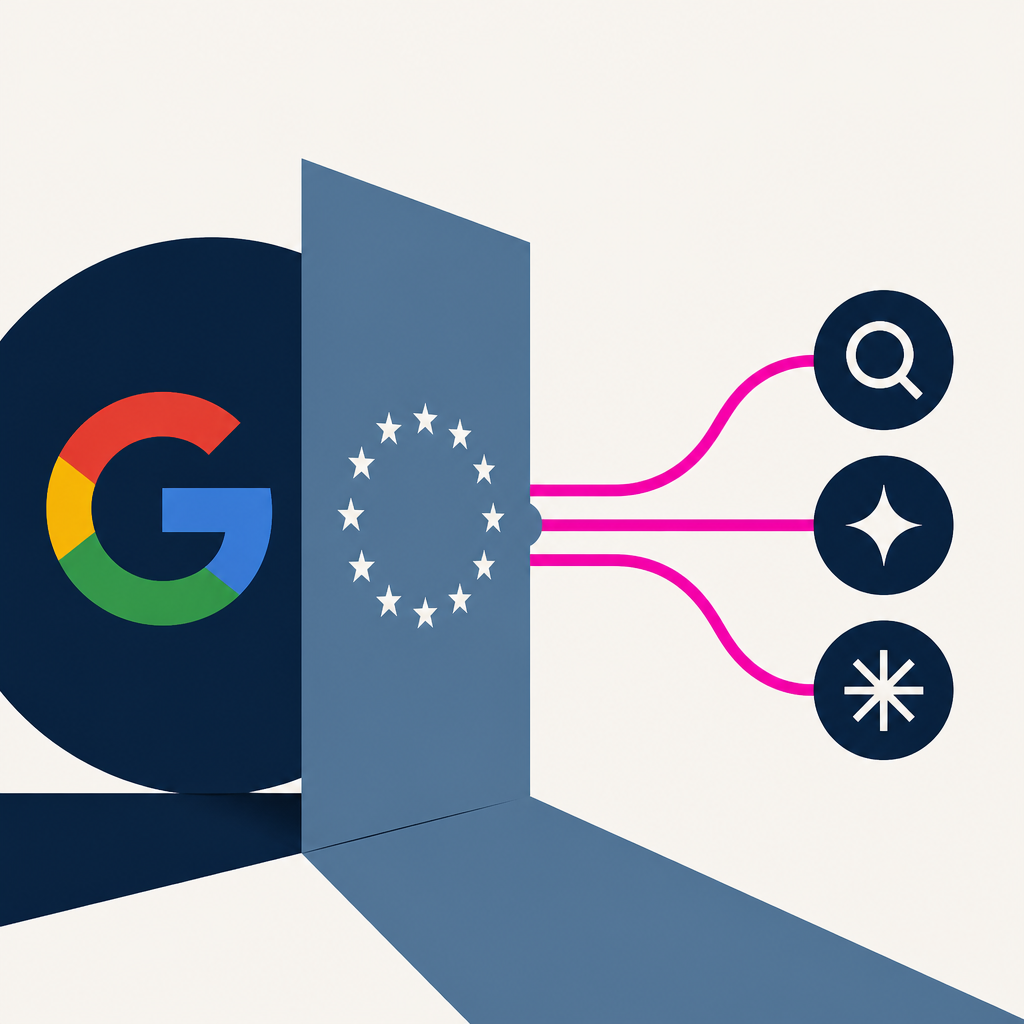
The EU just ordered Google to share search data with rivals and open Android to outside AI assistants. That's a direct hit on Google's grip over both search and mobile AI.
Based on reporting by Ars Technica, Ryan Whitwam — read the original for the full story.
Summary, retelling and take written by AI under human oversight; images are AI-generated illustrations. How we work · Report an error
Brussels has made its long-simmering fight with Google official. The European Commission's latest ruling under the Digital Markets Act tells Google it must hand over search data to competing search providers, and do it transparently, at a reasonable fee, rather than through whatever limited access Google has offered up until now. Regulators say those earlier offers simply didn't cut it, so this time the mandate is more sweeping: rival firms should get a look at search metrics closer to what Google itself sees, which the Commission views as the only realistic way a smaller competitor could ever dent Google's dominance in web search.
The order doesn't stop at search engines in the traditional sense, either. Google will also have to treat AI chatbots as search services under these same data-sharing rules, a move that acknowledges how much AI assistants are starting to function like search tools in their own right. And that's paired with a second front in the ruling, one aimed at Android, where Google will need to let outside AI platforms integrate more deeply with the operating system.
Google isn't taking this quietly. Kent Walker, the company's president of global affairs, argues Google had already proposed more measured alternatives that could have satisfied the DMA's underlying goals without going this far. He's framing the decision as a threat to privacy and security for millions of users in Europe, and he specifically pushes back on the Android piece, insisting that AI tools already have broad support and that phone makers currently play a meaningful role vetting them before they get access. Loosen that gatekeeping, he warns, and the safeguards phone makers rely on could get circumvented.
On the search-data side, Google's objection centers on user privacy. The Commission has told Google to anonymize the shared data using a layered approach, and it's said it remains open to amending the decision if there are legitimate concerns about identifiable data slipping through. Walker acknowledges that flexibility exists, but he's still characterizing the ruling as a risk to privacy, to business trade secrets, and, in his framing, even to national security.
None of this happens overnight. Google gets until January 2027 to start actually sharing search data with competitors, and until July 2027 to rework Android for deeper AI integration. That's a fairly generous runway for a company that spent the lead-up to this decision arguing the whole approach was wrong. Whether Google spends that time building genuinely open access or engineering the narrowest compliance it can get away with is the question worth watching.
My take — AI-written commentary, not fact-checked reporting
Google crying about privacy and national security here rings a little hollow coming from the company that built its entire business on hoovering up user data for itself. Regulators clearly don't trust Google's past 'sharing' offers, and given how long Google has sat on its search advantage, that skepticism seems earned. The real test isn't the ruling itself but whether Google's 2027 compliance actually opens the door for competitors or just technically satisfies the letter of the law while changing nothing that matters.
Read more about this at: Ars Technica