Iranian influence nexus: Cross-platform activity
OpenAI ● Covered by 4 sources

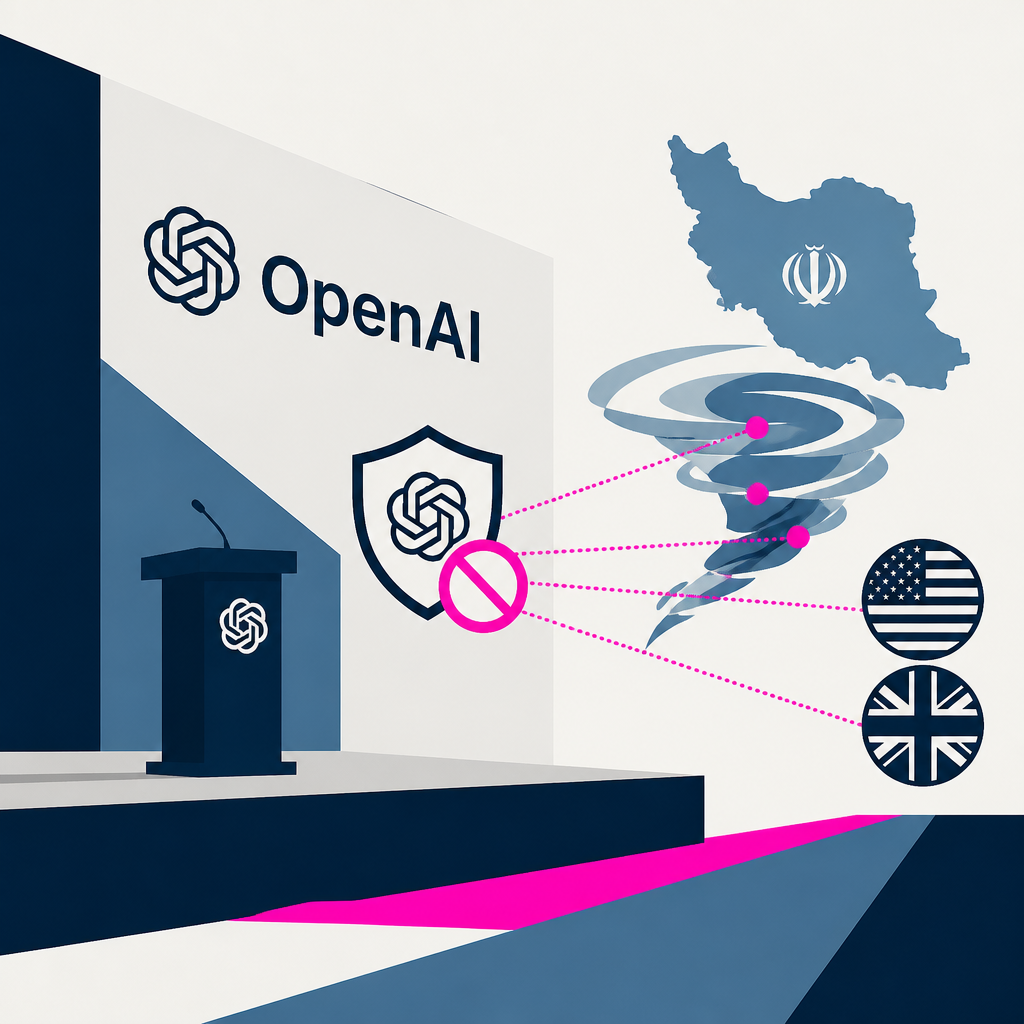
OpenAI shut down Iranian accounts using its AI to churn out propaganda articles and social posts.
Based on reporting by OpenAI — read the original for the full story.
Summary, retelling and take written by AI under human oversight; images are AI-generated illustrations. How we work · Report an error
OpenAI's latest threat report puts a name to a familiar pattern: accounts tied to Iran's IUVM network and the previously tracked STORM-2035 operation were caught using ChatGPT to mass-produce political content, then banned. This wasn't a one-off. IUVM has been flagged by researchers for years as a hub for pro-Iranian government messaging dressed up as independent journalism, and STORM-2035 showed up in earlier Meta and OpenAI takedowns targeting US and other Western audiences.
What's notable here is the workflow, not the ideology. The operators leaned on AI to draft articles and social posts across multiple platforms simultaneously, treating the model less like a novelty and more like an editorial assistant that never gets tired and never asks questions about the client. That's the actual shift influence operations have gone through in the last two years: less about inventing new lies, more about producing existing ones faster and in greater volume.
OpenAI says it caught the activity through its own abuse-detection systems and cut off the accounts, which is the standard response at this point — identify, ban, publish a report, repeat. The company has done this now for networks linked to Russia, China, and Iran, and the reports read similarly each time: covert accounts, AI-generated text, a push across several social platforms to make the operation look bigger and more organic than it is.
The report doesn't claim these campaigns were especially effective, and that's worth sitting with. Volume isn't the same as impact, and there's no evidence here that this content moved public opinion in any measurable way. But the fact that state-linked operators keep returning to the same commercial AI tools, despite the risk of getting caught and named in a public report, suggests they think the tradeoff is still worth it.
My take — AI-written commentary, not fact-checked reporting
I'll say the obvious thing nobody likes saying: banning accounts after the fact is janitorial work, not prevention. OpenAI deserves some credit for publishing these reports instead of quietly sweeping accounts under the rug, but the real story is that state propaganda shops now treat commercial LLMs as standard-issue equipment, the same way they treat Twitter bots or fake news domains. Until platforms and model providers coordinate before publication rather than after, this is a permanent game of whack-a-mole, and I don't think anyone's pretending otherwise.
Read more about this at: OpenAI