
Interhuman AI wants to teach AI what humans say without words
Tech.eu Cate Lawrence
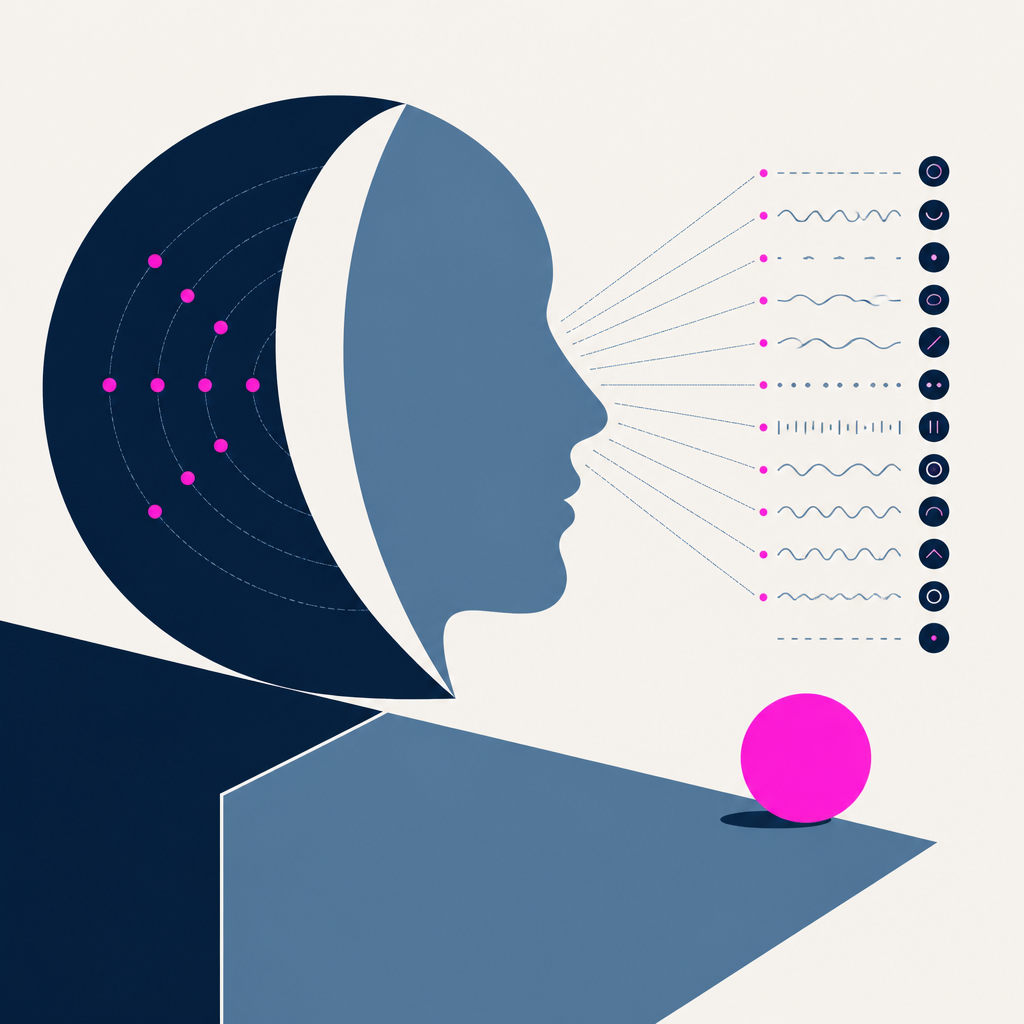
Interhuman AI is building models that read tone, gaze and body language, not just words. It says that extra context could make AI safer, smarter and a lot less creepy.
Based on reporting by Tech.eu, Cate Lawrence — read the original for the full story.
Summary, retelling and take written by AI under human oversight; images are AI-generated illustrations. How we work · Report an error
Copenhagen startup Interhuman AI thinks today’s chatbots have a blind spot. They can parse text just fine, but they miss the hesitation in a voice, the pause before an answer, the tiny shift in posture that tells you a person is unsure, engaged, or already checked out.
That’s the problem the company is aiming at with Inter-2, the first model in a new family. The system reads facial expressions, tone of voice, body language and behavioural cues like gaze, posture and head movements, then tries to detect 12 social signals in real time. Interhuman says it can do that with up to four times faster inference, while also improving benchmark performance.
The company’s pitch started to take shape when mainstream LLMs arrived. CEO Paula Petcu says the idea came from asking whether large language models could be paired with video and audio analysis to understand what a user is actually communicating. She was then working in pharmaceuticals, thinking about AI in clinical trials. Later, through an Antler matchmaking programme, the team brought in COO Frederik Sally, who says the user experience of AI depends heavily on how well the model understands the person in front of it.
Interhuman is framing all of this as “Artificial Social Intelligence” — software that gives AI some of the perceptual ability people use every day. That sounds abstract until the company starts naming the use cases. In healthcare triage, a frustrated or distressed caller could be misread. In robotics, missing a cue to stop could have physical consequences. In sales training, coaching, market research and digital health, the idea is more obvious: the AI can respond not only to what someone said, but how they said it.
But the hard part is that people are messy. A pause might mean uncertainty. It might also mean someone is simply thinking. So Interhuman is trying to make its outputs traceable, showing which cues led to a conclusion. It is also building its own data pipeline, using public data, its own recordings and external providers, with expert annotators including psychologists and behavioural scientists. The company says that work is a major part of the business, which is probably the least glamorous way of saying that teaching machines human behaviour is mostly tedious, careful labour.
There’s also a clear line around misuse. Interhuman says it turned down an investor interested in defence applications, and it is wary of tools like AI-enabled smart glasses that could be used to analyse strangers on the street. The company is GDPR-compliant, undergoing security certification audits, and already talking to customers about the EU AI Act and data privacy. It plans to announce two additional models in October.
My take — AI-written commentary, not fact-checked reporting
This is the rare AI startup that seems to understand the real product is restraint. Europe does not need another company pretending surveillance is empathy; it needs systems that can say no, especially when the use case smells like manipulation in a smart-glasses wrapper. Interhuman’s bet is sensible: if AI is going to read people, it had better explain itself and stay in its lane.
Read more about this at: Tech.eu