
Import AI 473: The US's superintelligence strategy; human brain in a mouse skull; and machine hermeneutics
Import AI Jack Clark
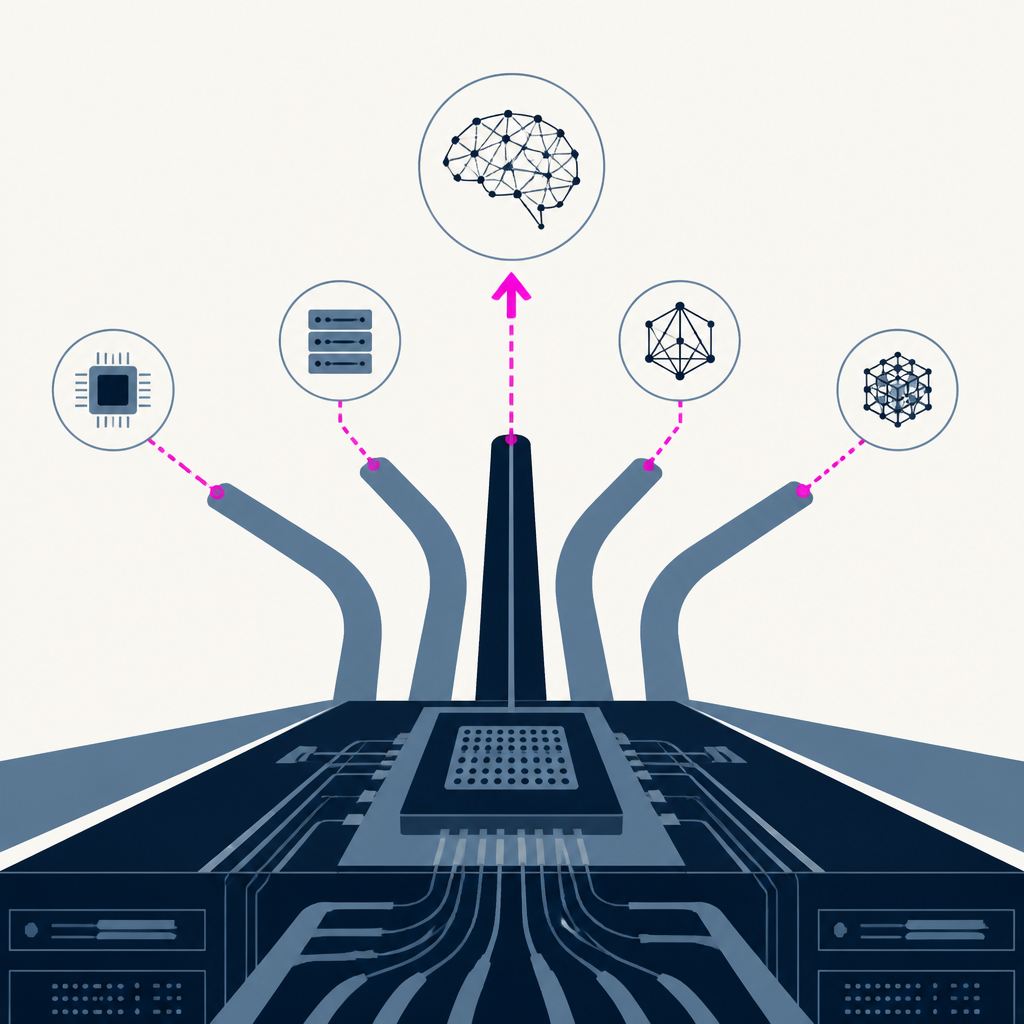
RAND says the US should keep all AI options open and spend now to preserve them. It also argues for human-mouse brain chimeras and a new push to slow AI more deliberately.
Based on reporting by Import AI, Jack Clark — read the original for the full story.
Summary, retelling and take written by AI under human oversight; images are AI-generated illustrations. How we work · Report an error
RAND’s big idea is that the US should stop pretending it already knows the right answer on superintelligence. Its new paper argues for a “Freedom of Action” strategy: spend now, keep options open, and preserve the ability to steer events if AI gets stranger and riskier than expected. The goal is bluntly framed around geopolitical advantage and human survival with agency through the transition to superintelligence.
The paper lays out four parts to that strategy. Build a human-AI ecosystem. Build an AI-security architecture. Adapt legacy national security institutions. Invest in the capacity of citizens, firms, and governments to respond. That means everything from AI safety work and break-glass plans to better visibility into frontier systems, including underlying compute, and more regulatory expertise.
RAND also sketches seven archetypal strategies, grouped into coexistence, denial, and acceleration. On one end are ideas like co-development with shared governance and monitoring; on the other are moratoriums, deterrence, and even a “Continuity of Society” fallback where the remaining goal is survival in biologically self-sustaining settlements hardened against AI-enabled threats. The paper’s point is not that any one of these is correct. It’s that the right answer depends on five giant unknowns: how close danger is, whether humans and AI can coexist, whether restraint is feasible, whether one actor can get decisive advantage, and whether suppression actually works.
The tone of the piece is a warning shot at present-day policy. If the US wants optionality later, RAND says it will need to spend real money now, not just talk about it. The newsletter’s author reads that as the country mostly living inside the “acceleration” logic already: pouring effort into making the engine faster while neglecting seatbelts, headlights, and brakes.
On the biology side, researchers have pushed human brain tissue into baby mice with depleted mouse brains. The human cortical organoids integrated with the mouse nervous system, formed electrically active networks, and in a maze test the mice with human grafts performed above chance, unlike the mice without that tissue. The work is being pitched as a way to study human brain disease in animals, but it also underlines how far chimera research can go.
A third paper tries to make sense of pacing AI progress as a real research field rather than a vague slogan. The authors argue the world will pace AI one way or another, so the question is whether it does so deliberately or by sloppy reaction. They list arguments for and against pacing, dig into incentives for governments and infrastructure providers, and suggest that future work needs to cover the full lifecycle of an intervention, from the signals that trigger it to enforcement and compliance.
My take — AI-written commentary, not fact-checked reporting
The most honest part of this whole debate is the bit everyone keeps trying to dodge: if AI is dangerous enough to justify control, then control costs money, coordination, and political pain. That’s why pacing is harder than hype and harder than panic; both are cheap. The industry-friendly default is to call that “innovation,” which is a lovely word for hoping the brakes install themselves.
Read more about this at: Import AI
Related stories
 Import AI 468: 23 RSI ideas; PostTrainBench+; and how trust and transparency interplay with AI racing
Import AI · 1 month ago ·
32
Import AI 468: 23 RSI ideas; PostTrainBench+; and how trust and transparency interplay with AI racing
Import AI · 1 month ago ·
32