
I helped invent the smartphone camera. It could have died in the lab
Fortune Eric Fossum
Opinion — commentary, not a factual news event.
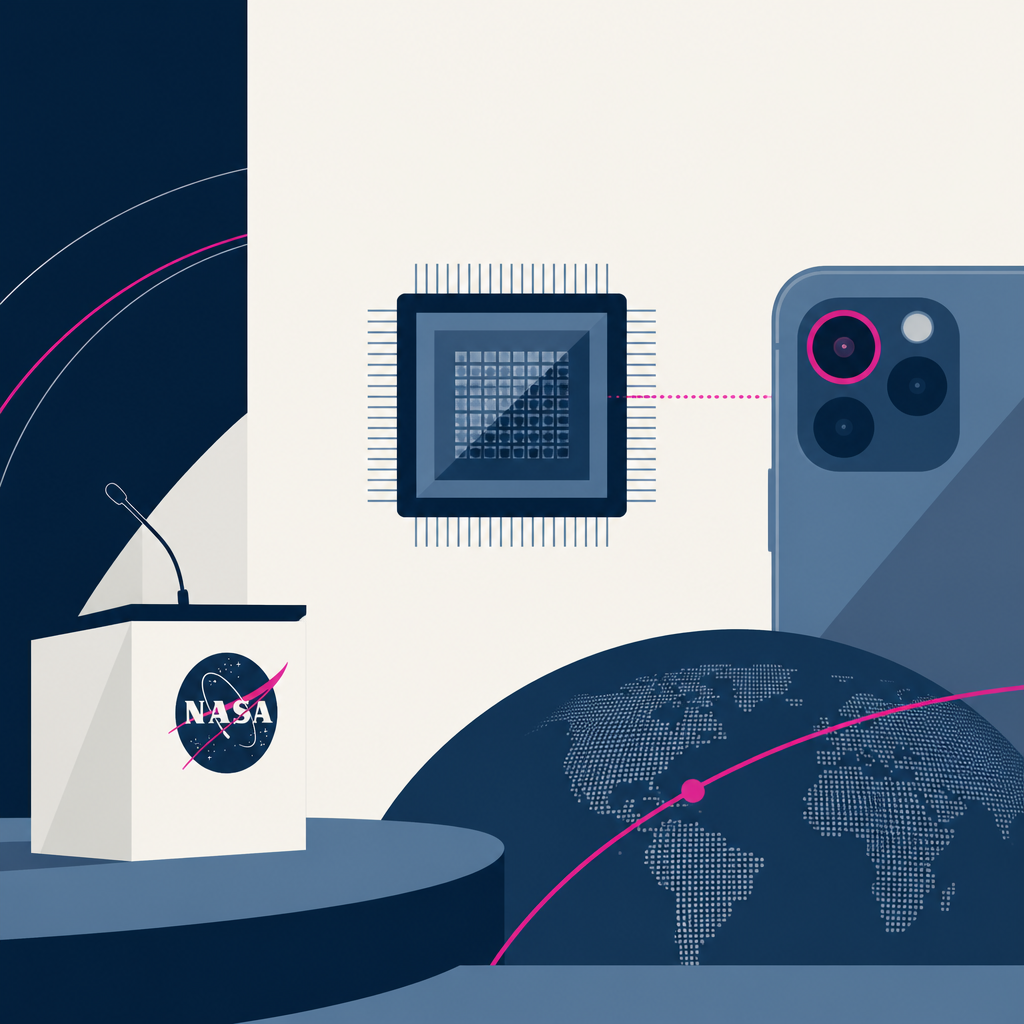
The smartphone camera came from a NASA lab breakthough that nearly stayed there. Now Washington may make it harder to turn public research into products.
Based on reporting by Fortune, Eric Fossum — read the original for the full story.
Summary, retelling and take written by AI under human oversight; images are AI-generated illustrations. How we work · Report an error
Every phone photo carries a little bit of a near-miss. In the 1990s, while working at NASA’s Jet Propulsion Laboratory, the author helped build the “camera-on-a-chip,” the CMOS image sensor that swapped bulky camera parts for a tiny semiconductor chip. That idea now sits inside smartphone cameras, laptops, autonomous vehicles, and a huge range of other products. The scale is hard to ignore: roughly seven billion CMOS image sensors are made each year.
The bigger lesson, though, is not about the sensor itself. It is about what happened after the lab work was done. The Bayh-Dole Act, passed in 1980, let universities, nonprofits, research labs, and small businesses keep patent rights to inventions from federally funded research. Before that, the government usually owned those inventions outright, and by 1980 fewer than 5% of the roughly 28,000 patents it held had been licensed for commercial use. Plenty of good ideas, in other words, were stuck in the government drawer.
The author says Bayh-Dole changed that by making commercialization possible. Since it became law, university tech transfer has helped start more than 21,000 technology companies, produced over 200 new drugs and vaccines, and contributed nearly $2 trillion to the U.S. economy. In the author’s own case, an exclusive license from the California Institute of Technology gave Photobit Corporation the confidence to raise investment and push the sensor beyond the research stage. The chip had to be refined, and electronics companies had to be persuaded that it could challenge the dominant imaging tech.
That, really, is the point of the piece: invention is not the finish line. After Photobit, the author went on to Dartmouth and later co-founded Gigajot Technology Inc., while helping dozens of faculty and PhD students turn their own ideas into businesses. The warning is that current federal proposals could make this path less predictable, with one agency eyeing more control over licensing and another proposal going so far as to scrap the Bayh-Dole framework. For technologies that can take years to mature, predictability is not bureaucracy. It is the difference between a paper and a product.
My take — AI-written commentary, not fact-checked reporting
This is the rare tech-policy fight where the boring part is the whole point. Bayh-Dole sounds like paperwork until you notice it helped turn a lab chip into the camera in your pocket. Washington should be careful with a system that actually moves inventions into the real world instead of just filing them neatly away.
Read more about this at: Fortune