How to Build Complex Websites with Kimi K3 Prompts
X
A Kimi K3 prompt shows devs how to build full websites in stages instead of vague style requests. Structured prompting beats "make it pretty" vibes when the build gets complicated.
Based on reporting by X — read the original for the full story.
Summary, retelling and take written by AI under human oversight; images are AI-generated illustrations. How we work · Report an error
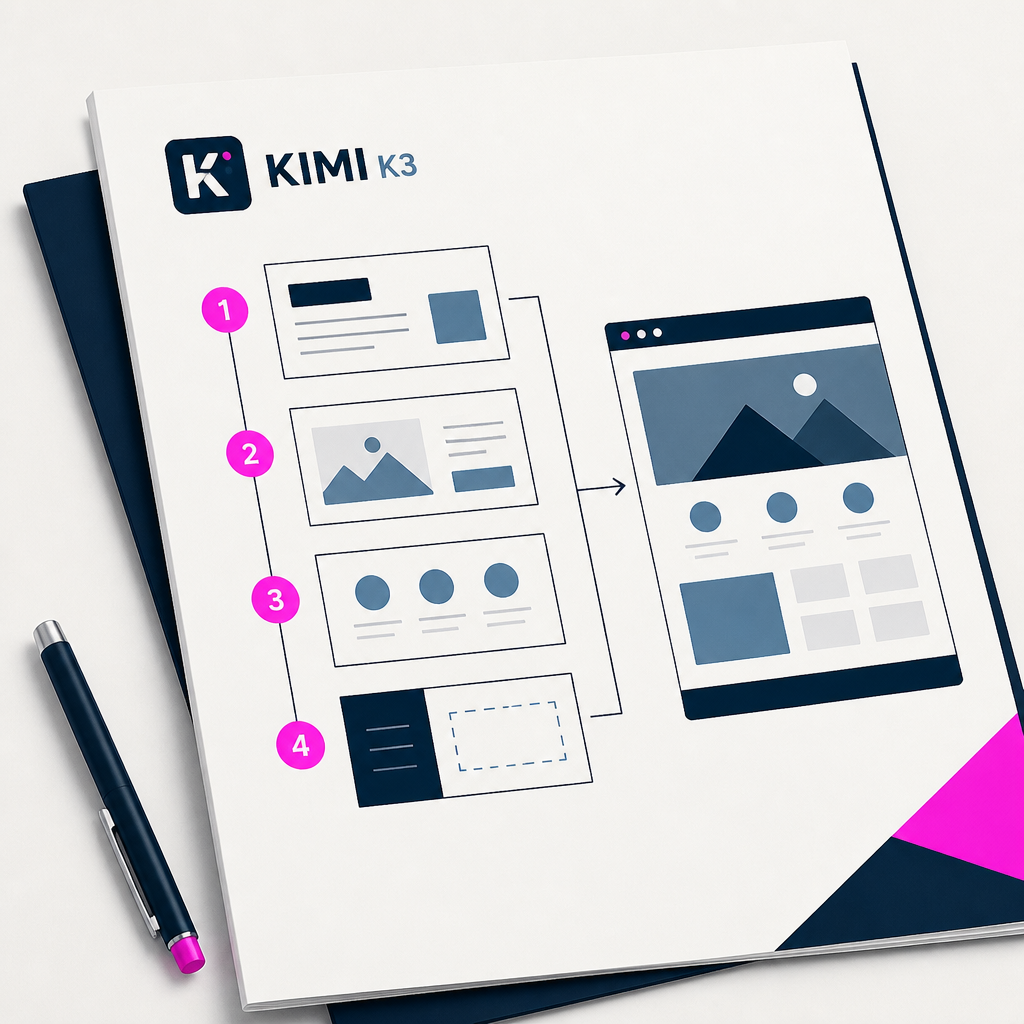
There's a pattern quietly taking over AI-assisted coding, and this Kimi K3 prompt is a clean example of it. Instead of asking a model to "build me a sleek landing page" and hoping for the best, the prompt breaks the job into defined screens, specific interactions, and a sequence of progressive stages. It reads less like a mood board and more like a spec sheet.
That distinction matters more than it sounds. Vague aesthetic language — sleek, modern, clean — gives a language model almost nothing to grab onto. It fills the gaps with whatever training data it has seen most often, which is why so many AI-generated sites look interchangeable. A prompt that instead names the screens a site needs, describes how each element should respond to user input, and lays out the build in stages gives the model actual constraints to work within.
The progressive-stage part is the real trick here. Rather than demanding a finished product in one shot, the approach walks the model through incremental builds — get the skeleton right, then the interactions, then the polish. Anyone who has tried to one-shot a complex app with a chatbot knows how fast things fall apart once you ask for revisions on a giant blob of generated code. Staging the work mirrors how a human developer actually approaches a project, and it plays to what long-context reasoning models like Kimi K3 are built to do: hold a plan across multiple steps without losing the thread.
None of this is exotic engineering. It's closer to writing a decent product brief than writing code. But that's exactly the point — the bottleneck in AI-assisted development is shifting away from raw model capability and toward how clearly a person can specify what they actually want.
My take — AI-written commentary, not fact-checked reporting
This is basically prompt engineering rediscovering project management, and I'm fine with that. The people getting the best output from these coding models aren't the ones with the fanciest model access, they're the ones who stopped talking to AI like it's a mind reader and started talking to it like a junior dev who needs a real spec. Kimi K3 didn't unlock this trick, good instructions did — the model was just finally patient enough to follow them.
Read more about this at: X