
Google ordered to open Android and Search to rivals in Europe
The Verge Robert Hart ● Covered by 2 sources
EU regulators just ordered Google to let rival AI assistants and search engines onto Android and Search. Google has until 2027 to comply, or face fines up to 10 percent of its global revenue.
Based on reporting by The Verge, Robert Hart — read the original for the full story.
Summary, retelling and take written by AI under human oversight; images are AI-generated illustrations. How we work · Report an error
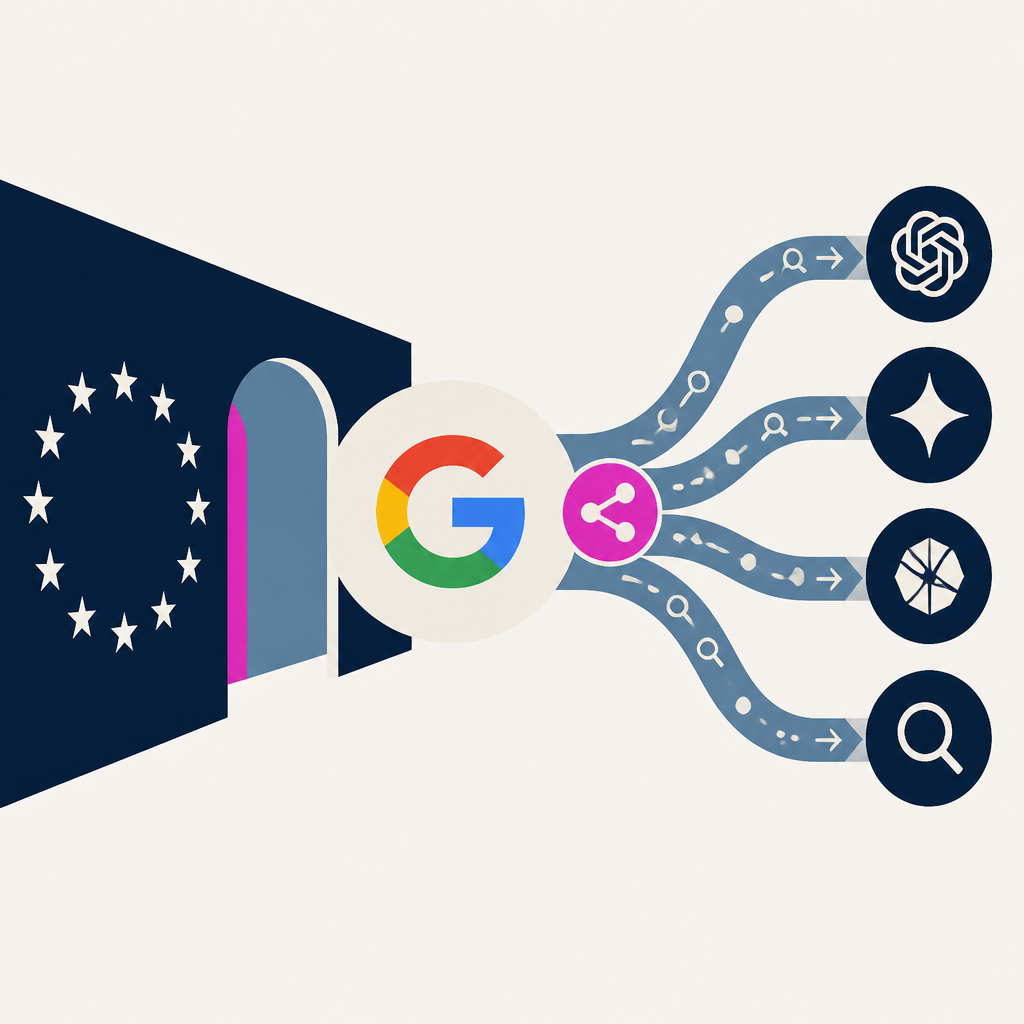
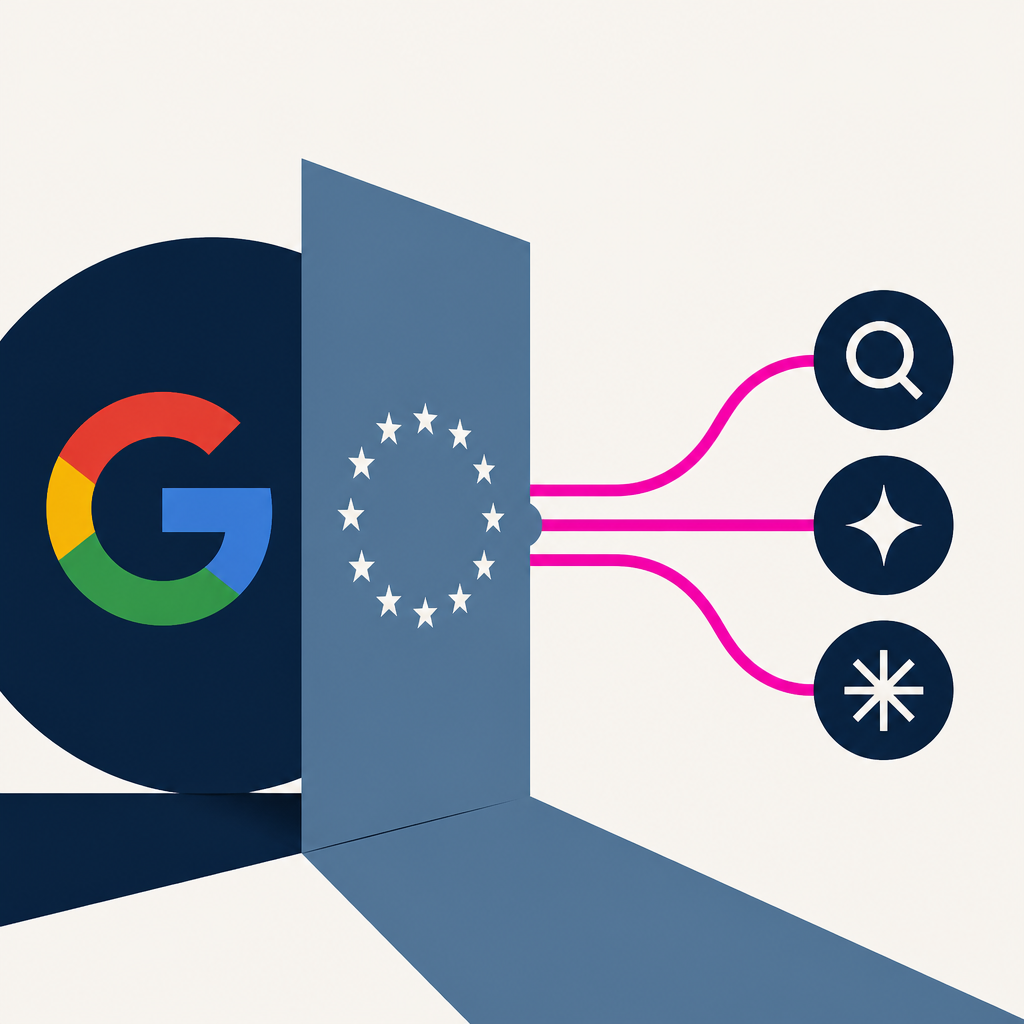
Brussels dropped two decisions on Google Thursday, and together they chip away at the walls around some of the company's most valuable real estate. One order forces Google to give competing AI assistants the same kind of system access on Android that Gemini enjoys. The other requires Google to share data generated by Search with rival search engines and AI chatbots. Neither is a fine. Both are structural fixes demanded under the EU's Digital Markets Act, which treats Google as a gatekeeper obligated to play fair with smaller rivals.
The Android piece is the more visible one for ordinary users. Right now Gemini gets privileged access to things like voice commands, app interactions, and hardware features. Under the new rules, that access has to become optional and user-controlled rather than something Google simply grants itself. In practice, someone could eventually set ChatGPT, Claude, or Perplexity as their default system assistant on an Android phone, responding to a wake word and tapping into the same device capabilities Gemini currently monopolizes. Google gets to implement this by July 2027.
The Search decision, due by January 2027, cuts in a different direction. It opens up the data Google Search has accumulated over years to competing search engines and, notably, to AI chatbots that increasingly behave like search engines themselves. The European Commission drew an explicit line to the US antitrust case, where Google was already ordered to hand over search data to rivals. This is Brussels applying a similar remedy on its own turf.
Google isn't taking either decision quietly. Kent Walker, the company's president of global affairs, argued the rulings undermine privacy and security protections for millions of European users and ignore evidence of harm the company says it's presented. The EU's response is that there will be limits on how shared search data can be used, and that Google retains the ability to vet which services get deeper Android access to keep things safe. Whether that satisfies Google's objections is unclear, but the clock is now running toward two hard deadlines.
There's a wider signal here too. The EU pointed to Apple's decision to withhold Siri's AI features from Europe, which Apple has blamed directly on DMA interoperability rules, as an example of the tension these mandates create. Today's rulings against Google look like a preview of how Brussels intends to handle that fight and others like it as AI assistants become the next battleground for platform control.
My take — AI-written commentary, not fact-checked reporting
Google built Search and Android into gates nobody else could open, so a forced remodel was always coming eventually. The EU's timeline gives Google years to comply, which is generous, and the privacy objections deserve some skepticism given how convenient they are for the incumbent. Apple's Siri standoff shows exactly how this plays out when a gatekeeper decides slow-walking beats compliance, and Brussels clearly noticed.
Read more about this at: The Verge
Related stories
 EU forces Google to share its toys with the other AI and search kids
The Register · 2 months ago ·
30
EU forces Google to share its toys with the other AI and search kids
The Register · 2 months ago ·
30
 It's official: EU will force Google to share search data and open up AI on Android
Ars Technica · 2 months ago ·
14
Brussels orders Google to share Android's AI sandbox with the other kids
The Register · 4 months ago ·
39
It's official: EU will force Google to share search data and open up AI on Android
Ars Technica · 2 months ago ·
14
Brussels orders Google to share Android's AI sandbox with the other kids
The Register · 4 months ago ·
39