Generative UI: A rich, custom, visual interactive user experience for any prompt
Google Research
Google's Gemini now builds custom apps and interfaces on the fly for whatever you ask, instead of just spitting out text. Ask about the microbiome and get a mini-lesson; ask about a trip and get a planner — no app store required.
Based on reporting by Google Research — read the original for the full story.
Summary, retelling and take written by AI under human oversight; images are AI-generated illustrations. How we work · Report an error
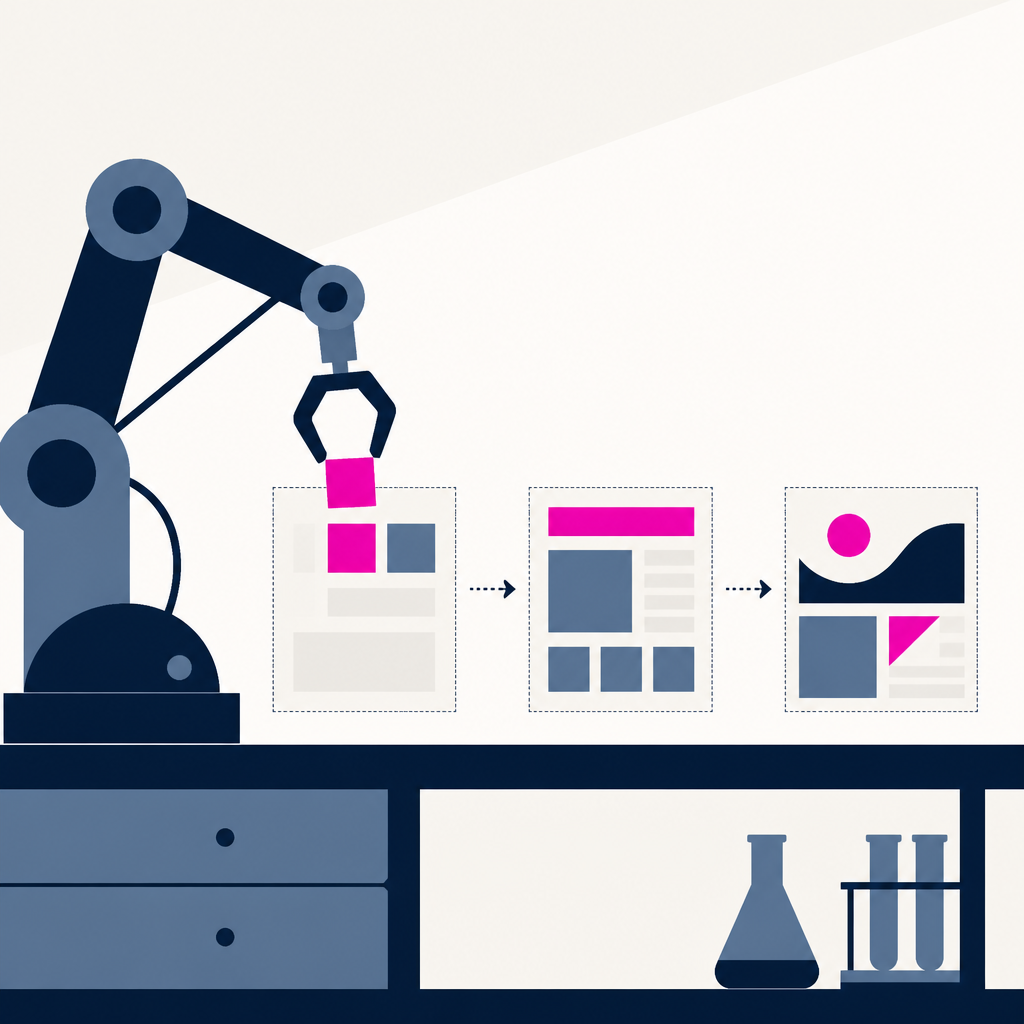
Google Research just published a paper with a blunt thesis: large language models are good enough now to stop just answering questions and start building the software that answers them. The implementation, called generative UI, takes a prompt — anything from one word to a paragraph of instructions — and has Gemini 3 Pro design, code, and render a fully custom interface in response. Not a formatted paragraph. An actual interactive tool, game, or webpage, assembled on the spot for that specific question.
The idea is already shipping, not just theorized. Google is rolling it into the Gemini app as two experiments, dynamic view and visual layout, and into AI Mode in Google Search for Google AI Pro and Ultra subscribers in the US. Explain the microbiome to a five-year-old and you get one kind of interface; ask the same thing as an adult and Gemini builds something entirely different, because the system is reasoning about what content and features actually fit the task, whether that's planning a trip, giving fashion advice, or teaching probability.
Under the hood it's Gemini 3 Pro plus three deliberate additions: access to tools like image generation and web search, a dense set of system instructions covering formatting and common failure modes, and a post-processing layer that cleans up the model's raw output. Google also built its own benchmark, PAGEN, made of human-expert-designed websites, to score these generated interfaces against alternatives. In blind preference tests, human-crafted sites still won overall, but Google's generative UI came in a close second — clearly ahead of standard markdown, raw text, or even the top organic Search result for the same query. Notably, that ranking ignored generation speed entirely, which matters because right now the system can take a minute or more to produce a result, and errors still crop up.
That speed caveat is the honest part of the paper, and it's worth sitting with. Google is essentially saying: this works, users prefer it, but it's slow and occasionally wrong, and we're publishing anyway because the direction is right. The framing as a 'magic cycle' — research to product to new problems to more research — is corporate-speak for 'we shipped something half-finished on purpose to learn from real usage.' Which, to be fair, is how most useful AI features get better.
My take — AI-written commentary, not fact-checked reporting
This is the most interesting UI idea out of Google in a while, mostly because it admits its own weaknesses instead of hiding them behind a demo reel — a minute-long generation time and occasional inaccuracies is refreshingly honest for a launch post. The real test isn't whether raters prefer a bespoke interface to plain markdown, obviously they will, it's whether anyone wants to wait a minute for an app that a human designer would've nailed in one tenth the time. I'd bet this becomes genuinely useful once latency drops below ten seconds, and mostly a novelty until then.
Read more about this at: Google Research