
Generative UI
boda.sh
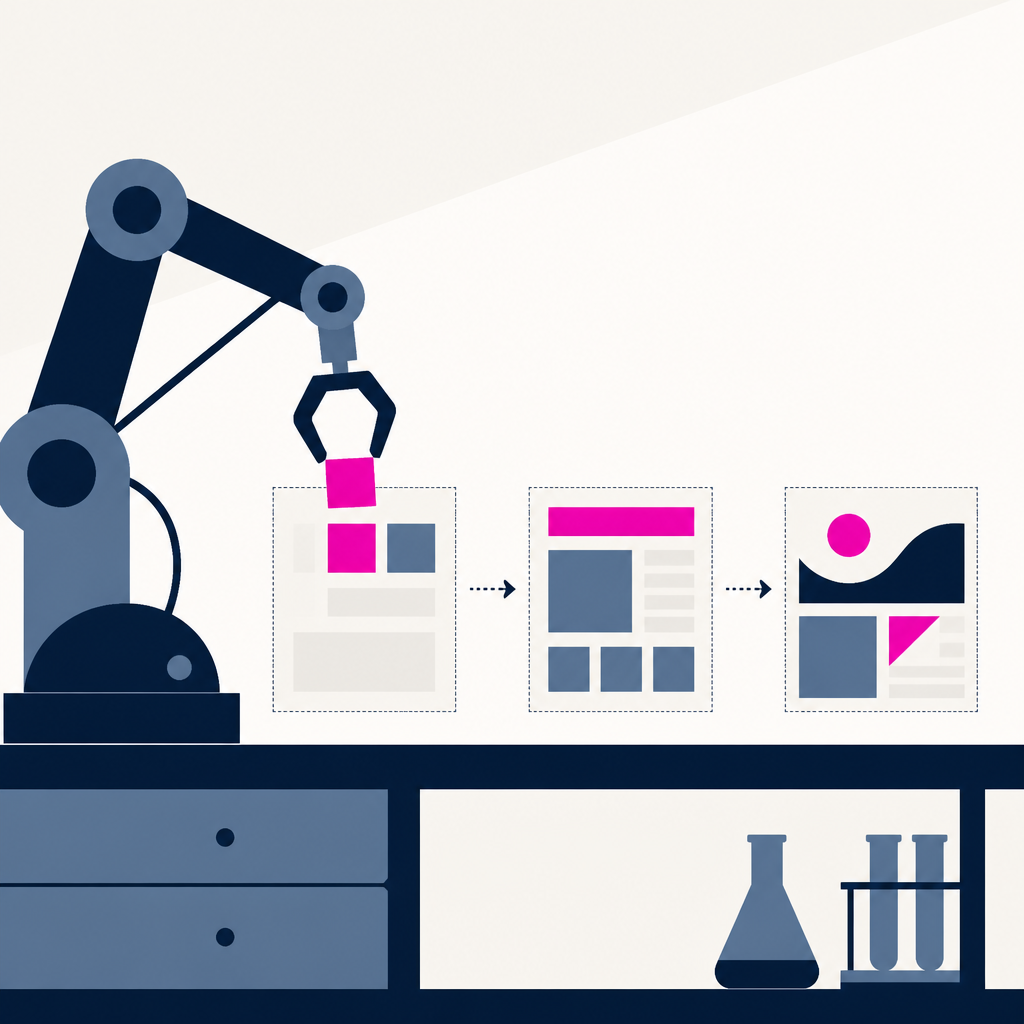
A Pixelmatters talk mapped out how AI can now build live app interfaces instead of just spitting out text. Think WeChat's billion-user mini-app trick, but powered by open AI standards instead of QR codes.
Based on reporting by boda.sh — read the original for the full story.
Summary, retelling and take written by AI under human oversight; images are AI-generated illustrations. How we work · Report an error
The pitch behind Generative UI sounds simple until you try to pin it down. Ask Figma or Claude Design to draw a screen and that's GenUI. Ask ChatGPT to write HTML and host it and that's also GenUI. Animate a slide deck with AI and, technically, still GenUI. The Pixelmatters talk from July 22 narrows the scope to something more specific: AI that sits between a server and an interface, deciding what gets rendered in real time. The immediate motivation is obvious to anyone who has stared at a wall of chatbot text. Gemini threads now drop in maps and images mid-conversation. Claude can spin up interactive flashcards instead of a bullet-pointed study guide. Less scrolling, more UI generated on the fly to match what the user actually asked for.
The more interesting argument is about scale, not aesthetics. Companies with big product surfaces end up drowning in first-party features and third-party integrations, and each new one multiplies the complexity of everyone that came before it. That's the problem WeChat solved back in 2017 with Mini Programs, and it solved it well enough that the feature now serves roughly one billion monthly active users doing everything from ordering food to filing tax declarations inside a single chat app. Elon Musk's fascination with rebuilding that model at OpenAI isn't subtle. But the starting points are different. WeChat's entry points were deterministic — scan a QR code, get a fixed experience. AI chat interfaces are intent-based: type whatever you want, and standards like MCP are supposed to let the response adapt. Without that shift, Western apps would probably still be stuck scanning codes too.
OpenUI's State of Generative UI report splits the field into two axes: where the UI lands (your app via AG-UI, or someone else's surface via MCP Apps) and how much creative freedom the model gets, which breaks into three camps. Open-ended generation — just asking a model to write raw HTML, CSS and JavaScript — is the intuitive first move for most developers, and it's fine for internal dashboards. Shipping arbitrary generated code to a real customer's browser is a different story, security-wise, which is why MCP Apps leans on sandboxed iframes. Declarative approaches sidestep that risk by sending JSON instead of code, governed by specs like A2UI, OpenUI Lang, or Vercel's json-render, each competing partly on how few tokens they burn. Static or controlled generation is the cautious middle ground: the model just picks arguments for a tool call, and existing app components render the result.
The talk backs this up with two working demos. A places-listing app uses the static/controlled pattern: a Mastra-based agent picks search filters, a tool called recommendPlaces runs deterministic ranking logic in app code, and the frontend maps the result onto pre-built components like PlaceCard or EmptyMatch depending on match count. A trip-planning demo goes further into declarative territory — type
My take — AI-written commentary, not fact-checked reporting
The Silicon Valley obsession with rebuilding WeChat's playbook, nine years late, says less about AI ambition than about how few genuinely new distribution ideas Western tech has had since 2017. Open protocols like MCP, A2UI and AG-UI at least mean nobody has to rebuild China's walled garden to get there, which is the one part of this story worth rooting for. Everyone fixating on how flashy the model-generated dashboards look is missing the real chokepoint: the component catalog is doing all the security work, and a sloppy Zod schema will cause more damage than any hallucinated layout ever could.
Read more about this at: boda.sh