
Frontier Diffusion & Control
X
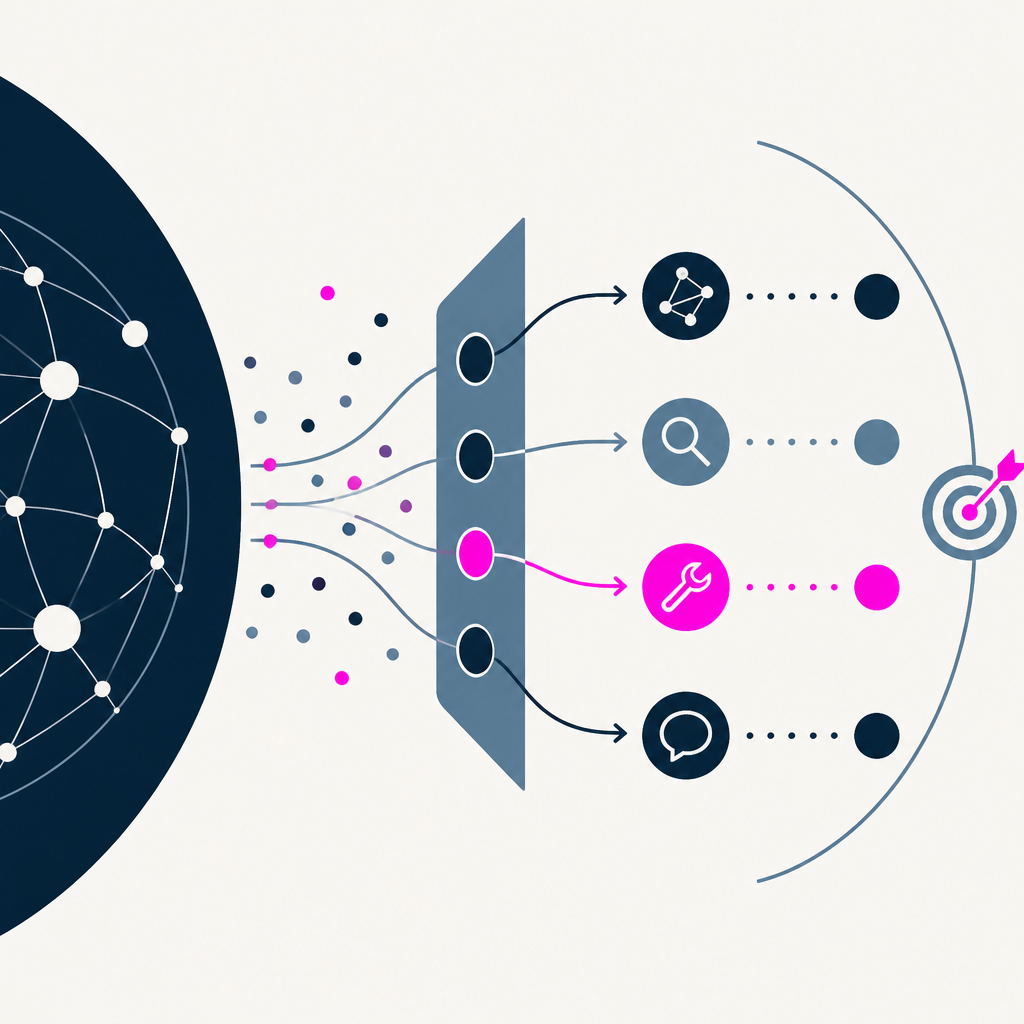
The smart move in AI right now isn't chasing the biggest model. It's picking the right-sized one and building better scaffolding around it.
Based on reporting by X — read the original for the full story.
Summary, retelling and take written by AI under human oversight; images are AI-generated illustrations. How we work · Report an error
There's a shift happening in how serious AI teams think about cost versus results, and it has little to do with which lab just shipped the newest flagship model. The idea getting traction is what you might call the cost-to-outcome frontier: instead of routing every task to the priciest, most capable model available, you match the model to the job, then spend your engineering effort on everything surrounding it.
That surrounding stuff turns out to matter more than people assume. Context management, the specific skills you bolt onto a model, the tools it can call, and the agent harness that orchestrates all of it — these are the levers that actually move performance and cost together. A well-tuned smaller model with tight context and the right tool access can outperform a frontier model used carelessly, and it will cost a fraction as much doing it.
This is a quiet correction to a year or two of frontier-model worship, where the assumption was simple: bigger and newer always wins, so just use GPT-5 or Claude Opus or Gemini's top tier for everything and worry about the bill later. Teams running real production workloads at scale don't have that luxury. They're finding that a task-specific router, paired with disciplined context engineering, gets them 90 percent of the outcome at 20 percent of the cost — and sometimes the full 100 percent, because a cluttered context window full of irrelevant tokens can actually degrade a frontier model's output.
The practical upshot is that the real skill in building AI products is shifting away from prompt tricks and toward systems design. Knowing which model handles which task, how to keep context lean and relevant, which tools to expose and when, and how the agent harness stitches multi-step reasoning together — that's the craft now. Frontier models remain useful, even necessary for the hardest cases. But treating them as the default for every request is starting to look like the expensive, lazy option rather than the sophisticated one.
My take — AI-written commentary, not fact-checked reporting
I've said for a while that model-of-the-month hype is a distraction from the actual engineering problem, and this is exactly the correction I expected. Betting everything on whichever lab has the loudest launch this quarter is not a strategy, it's a subscription. The teams that win here are the ones treating orchestration, routing, and context as the product, not the model card.
Read more about this at: X