
DiffuseDrive is filling the data gaps holding back Physical AI
Tech.eu Cate Lawrence
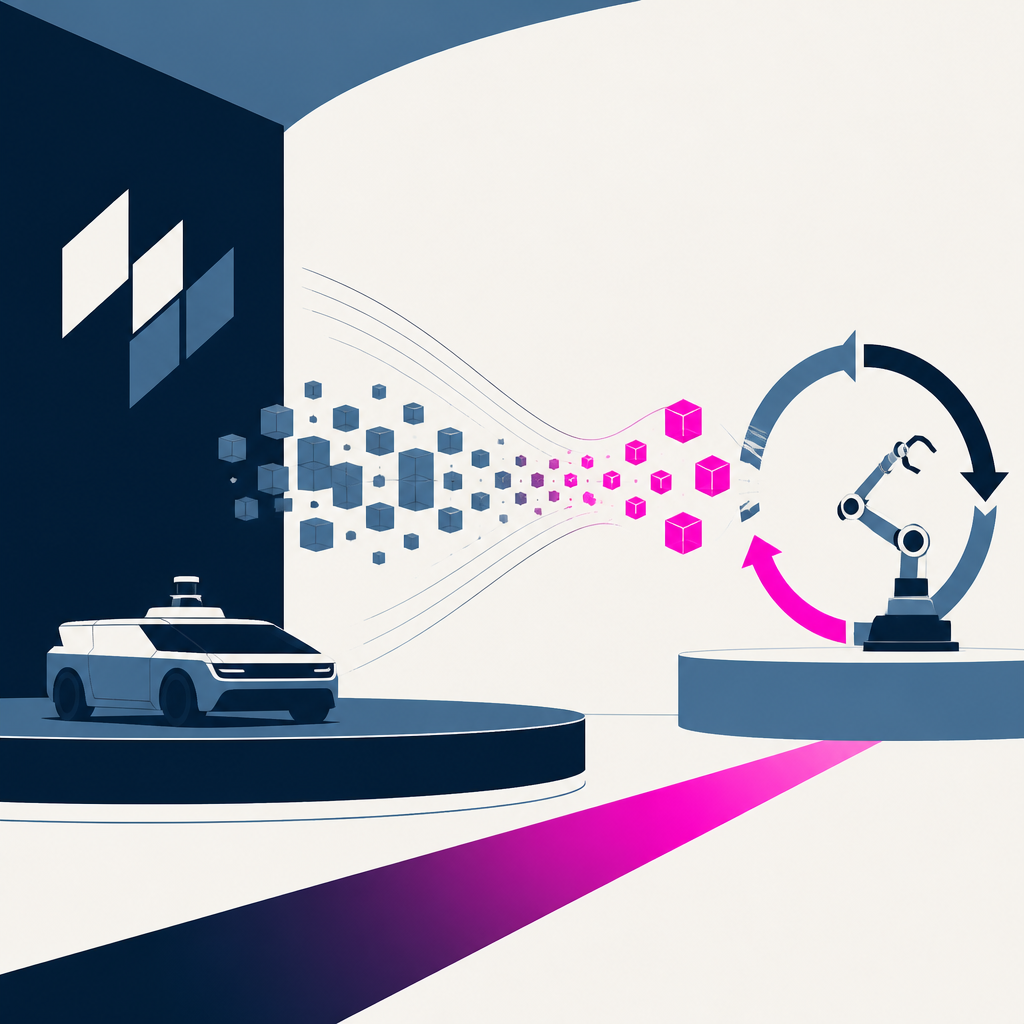
DiffuseDrive is generating synthetic data for physical AI. It fills rare, dangerous gaps models never see in the real world.
Based on reporting by Tech.eu, Cate Lawrence — read the original for the full story.
Summary, retelling and take written by AI under human oversight; images are AI-generated illustrations. How we work · Report an error
Physical AI has a simple problem and a nasty one: the data it needs is scarce. Hungarian startup DiffuseDrive is trying to plug that hole by generating synthetic training data for systems used in defence, aerospace, mining and autonomous vehicles, then dropping that data into customers’ existing datasets.
The company’s pitch is less “make more data” than “find the missing bits.” Its platform looks at a customer’s current dataset and the model built from it, spots what’s absent, and then creates targeted examples for the edge cases that matter. For a coastline-monitoring defence system, that could mean scenarios a camera sweep would almost never catch on its own. For an autonomous mining setup, it might be wildlife or cattle.
That focus on the gap is the real point. DiffuseDrive says customers may already have 100 images, a few thousand data points, or a trained neural network they have evaluated. The company works from there, analyses what is present, extrapolates what is missing, adds synthetic samples, retrains, and repeats. It also adapts output to the customer’s sensors, camera characteristics and data types, because a generic answer is not the job here.
The technical trick is control. A standard generative model can place an object in a scene, but DiffuseDrive says it can do much finer work: put an object in the far distance, shrink it to just 10 pixels, or position it in an awkward corner of the frame. That matters for perception systems, especially in defence, where the object may be tiny, distant or oddly placed and still needs to be recognised.
The company also tries to keep its synthetic data honest. It uses humans in the loop and automated checks to reject unrealistic outputs, and it has an air-gapped system for customers who want to run it on their own infrastructure. DiffuseDrive says it has seen performance gains of more than 10 per cent when synthetic and real data are combined, but it is arguing that raw volume is the wrong metric. The better question is whether the model gets safer and more reliable when the weird cases finally show up.
My take — AI-written commentary, not fact-checked reporting
DiffuseDrive’s argument is the sane one: stop worshipping giant piles of data and start fixing the holes. A lot of AI teams still behave like hoarders with servers, and then act surprised when the system falls apart on the one thing nobody photographed. That is very on brand for the industry.
Read more about this at: Tech.eu