
Developing an End-to-End Document Intelligence Pipeline with docTR for OCR, Layout Analysis, KIE, Benchmarking, and Searchable PDFs
MarkTechPost Sana Hassan
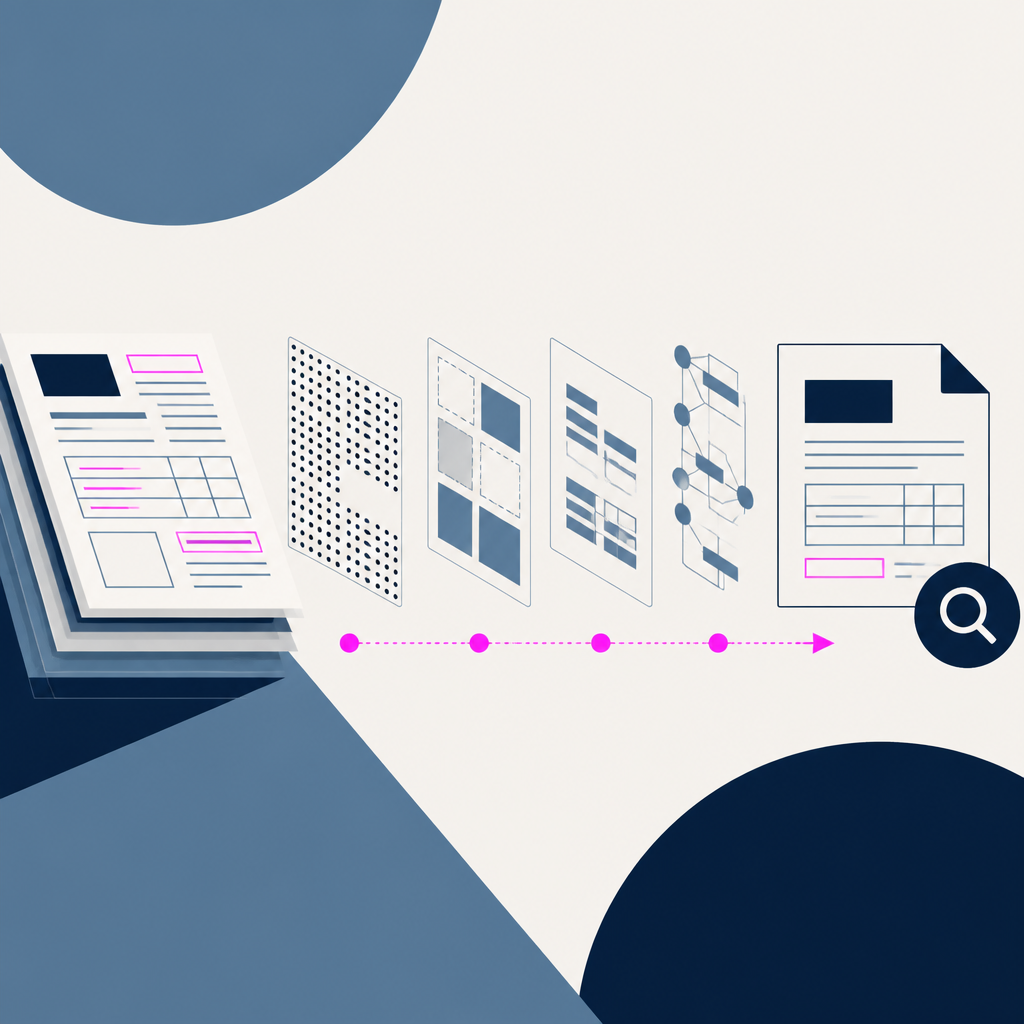
docTR gets turned into a full invoice OCR pipeline here. It doesn’t just read text; it handles layout, KIE, PDFs, and searchable exports too.
Based on reporting by MarkTechPost, Sana Hassan — read the original for the full story.
Summary, retelling and take written by AI under human oversight; images are AI-generated illustrations. How we work · Report an error
MarkTechPost’s tutorial turns docTR from a neat OCR demo into something much closer to a document pipeline you could actually use. It starts with synthetic invoice pages, then pushes them through DocumentFile from images and PDFs, so the same workflow can handle clean scans, noisy pages, and a rotated 13-degree image without changing the overall approach.
The core move is a GPU-aware OCR predictor built from a detection model and a recognition model. The tutorial compares several pairings, including db_mobilenet_v3_large with crnn_mobilenet_v3_small, fast_base with crnn_vgg16_bn, db_resnet50 with crnn_vgg16_bn, and db_resnet50 with parseq. The point isn’t just accuracy; it’s the tradeoff. Detection mostly affects how many words you find, while recognition affects how well you read them. On clean pages, the lighter mobilenet options are presented as cheaper choices that give up only a little.
It also digs into the Document object itself, which is where the tutorial gets more useful than a standard OCR walkthrough. You see pages, blocks, lines, and words, along with relative geometry, confidence scores, and objectness scores. That matters because the tutorial treats bad detector boxes and uncertain recognition differently: one filters hallucinated text regions, the other flags words for review. There’s even a second pass for low-confidence words, plus hooks for box filtering and padding.
From there, the tutorial moves into the parts people usually skip until they have a mess on their hands. It handles rotation and skew, adds layout detection and KIE, reconstructs reading order and table structure, and pulls out invoice fields. Then it exports the result as text, JSON, hOCR, synthesized images, and searchable PDFs. That is the real goal here: not “OCR works,” but “the document is now usable.”
The final stretch is practical, which is refreshing. It talks about benchmarking, batching, fine-tuning, and deployment, so the reader gets a sense of what changes when this stops being a notebook toy and starts becoming a pipeline.
My take — AI-written commentary, not fact-checked reporting
This is the right way to talk about OCR: not as a magic button, but as a chain of annoyingly specific decisions. People love to pretend one model will solve documents; in practice, the detector, recognizer, layout logic, and export format all get a vote. Open tooling like docTR is useful exactly because it makes those tradeoffs visible instead of hiding them under a glossy demo.
Read more about this at: MarkTechPost
Related stories
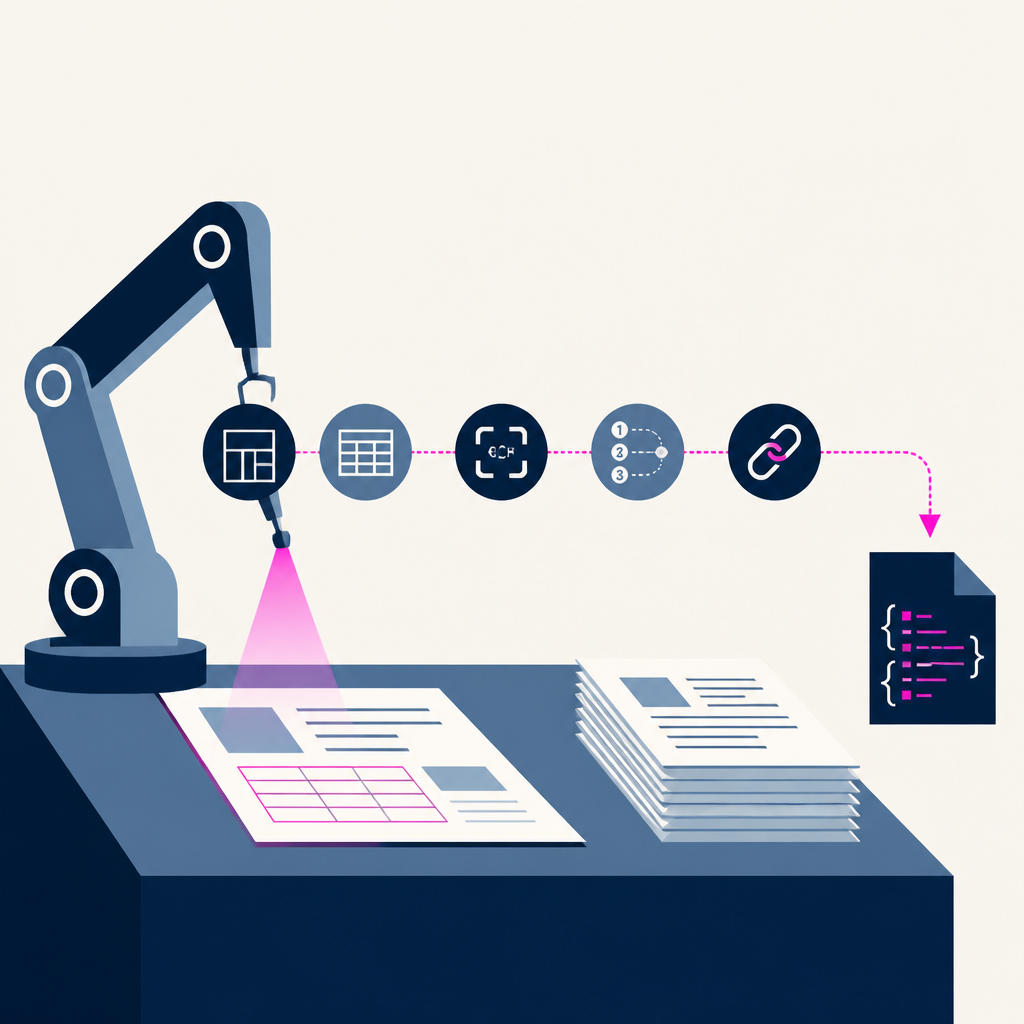 Building an End-to-End Document Intelligence Pipeline with deepDoctection
MarkTechPost · 3 weeks ago ·
46
Building an End-to-End Document Intelligence Pipeline with deepDoctection
MarkTechPost · 3 weeks ago ·
46
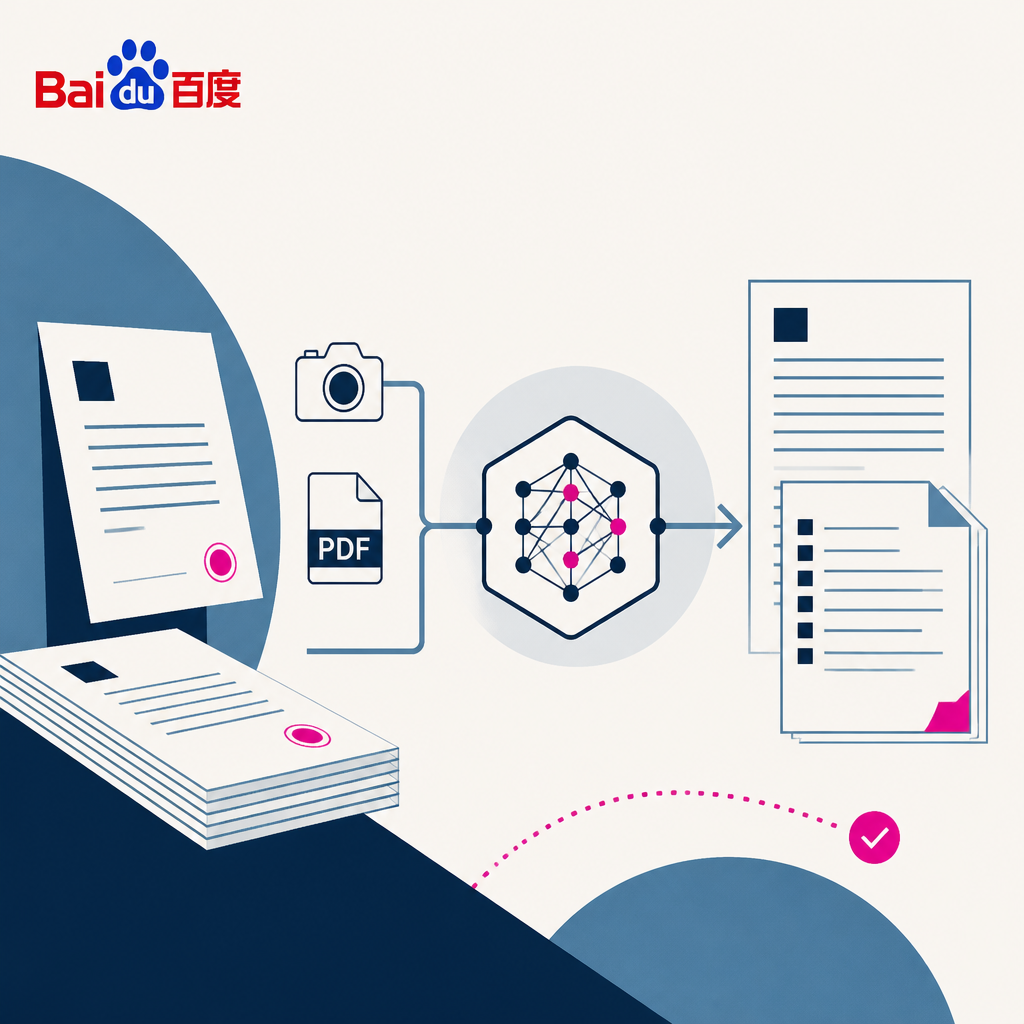 How to Build an End-to-End OCR Pipeline with Baidu’s Unlimited-OCR for High-Resolution Images and Multi-Page PDF Parsing
MarkTechPost · 1 month ago ·
25
How to Build an End-to-End OCR Pipeline with Baidu’s Unlimited-OCR for High-Resolution Images and Multi-Page PDF Parsing
MarkTechPost · 1 month ago ·
25
 Building a Multimodal RAG Pipeline with NVIDIA NeMo Retriever, Hosted NIMs, LanceDB, Reranking, and Grounded Generation
MarkTechPost · 1 month ago ·
41
Building a Multimodal RAG Pipeline with NVIDIA NeMo Retriever, Hosted NIMs, LanceDB, Reranking, and Grounded Generation
MarkTechPost · 1 month ago ·
41