Covert influence operation: Ghana election activity
OpenAI ● Covered by 4 sources
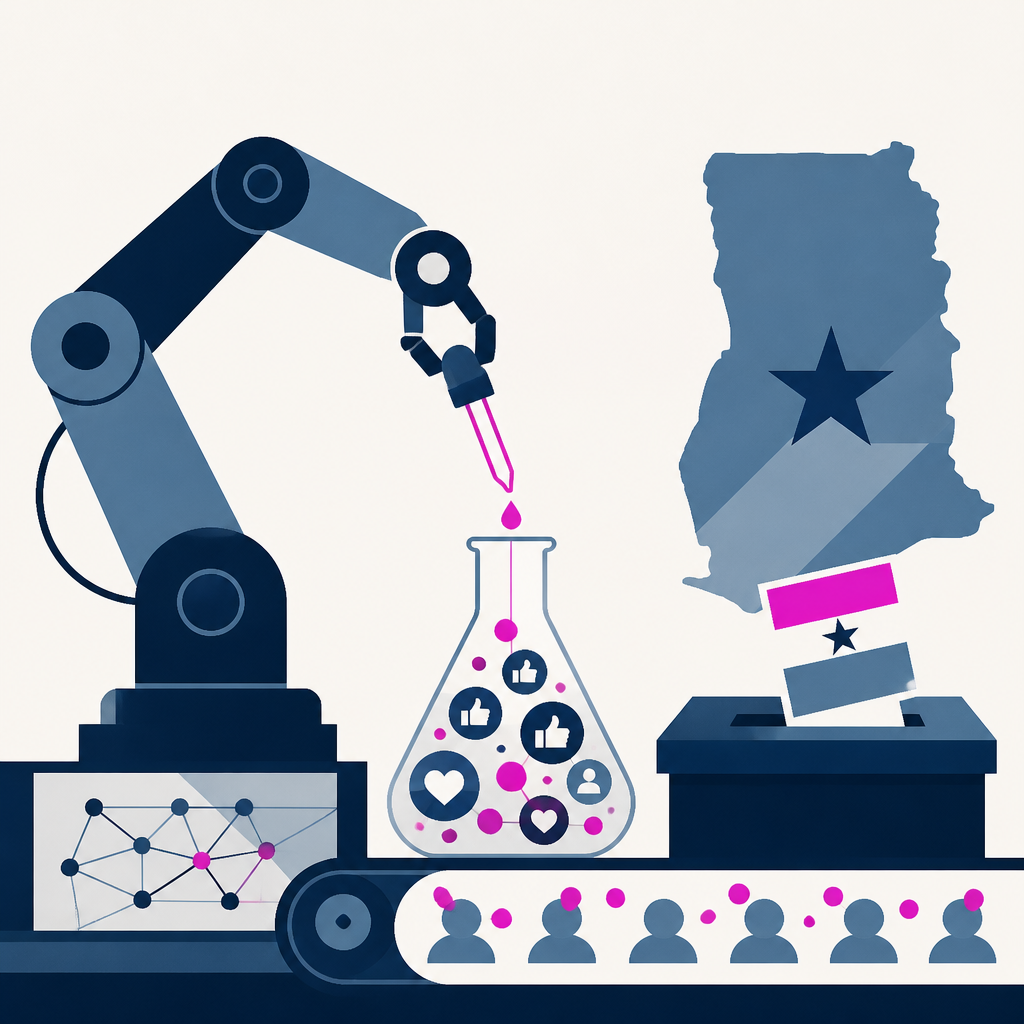
OpenAI banned a cluster of accounts caught using ChatGPT to write fake news articles and social posts tied to Ghana's presidential election. It's another sign AI tools are being weaponized to fake grassroots support at scale.
Based on reporting by OpenAI — read the original for the full story.
Summary, retelling and take written by AI under human oversight; images are AI-generated illustrations. How we work · Report an error
OpenAI says it pulled the plug on a network of accounts that had been using its models to manufacture political content around Ghana's December 2024 presidential vote. The operation wasn't subtle in intent, even if it tried to look organic: accounts generated articles, social posts, and replies designed to look like the work of real citizens and local outlets, then used that content to inflate engagement around specific candidates and narratives.
What makes this case notable isn't the country — it's the method. Instead of hiring a room full of writers, whoever ran this operation could lean on ChatGPT to churn out dozens of variations on the same talking points, tuned to sound like different authors, different outlets, different everyday voices. That's the real shift generative AI brings to influence campaigns: not new ideas, just a much cheaper assembly line for old ones.
OpenAI has flagged similar takedowns tied to elections elsewhere over the past year, and the company frames this as part of an ongoing pattern rather than an isolated incident. Bad actors test these tools against smaller or lower-scrutiny elections first, refine the playbook, and then look to scale it. Ghana's vote, watched less closely by international media than a US or EU election, made a plausible testing ground.
The company's response followed its now-familiar script: detect the coordinated prompting behavior, trace it to a set of accounts, and shut them down under policies banning covert influence operations. OpenAI didn't name who was behind the campaign, and that's usually the case — attribution is hard, and the company's disclosures tend to focus on behavior patterns rather than pointing fingers at specific governments or groups.
What's left unresolved, as always, is scale. A ban confirms an operation existed and got caught; it says very little about how much fake content actually reached voters, or how many similar efforts are still running undetected somewhere else in the world.
My take — AI-written commentary, not fact-checked reporting
I'll say the obvious thing nobody wants to say out loud: catching one influence op after the fact is not a security strategy, it's a press release. OpenAI deserves credit for looking and for publishing what it finds, but the incentive structure is backwards — model providers profit from usage growth while carrying the PR cost of abuse, and that mismatch isn't going away with better detection alone. If we care about elections in places the international press barely covers, the fix has to be upstream, not a ban notice after the votes are counted.
Read more about this at: OpenAI