
Compound Engineering v3.20 Routes Planning Across Multiple AI Models
X
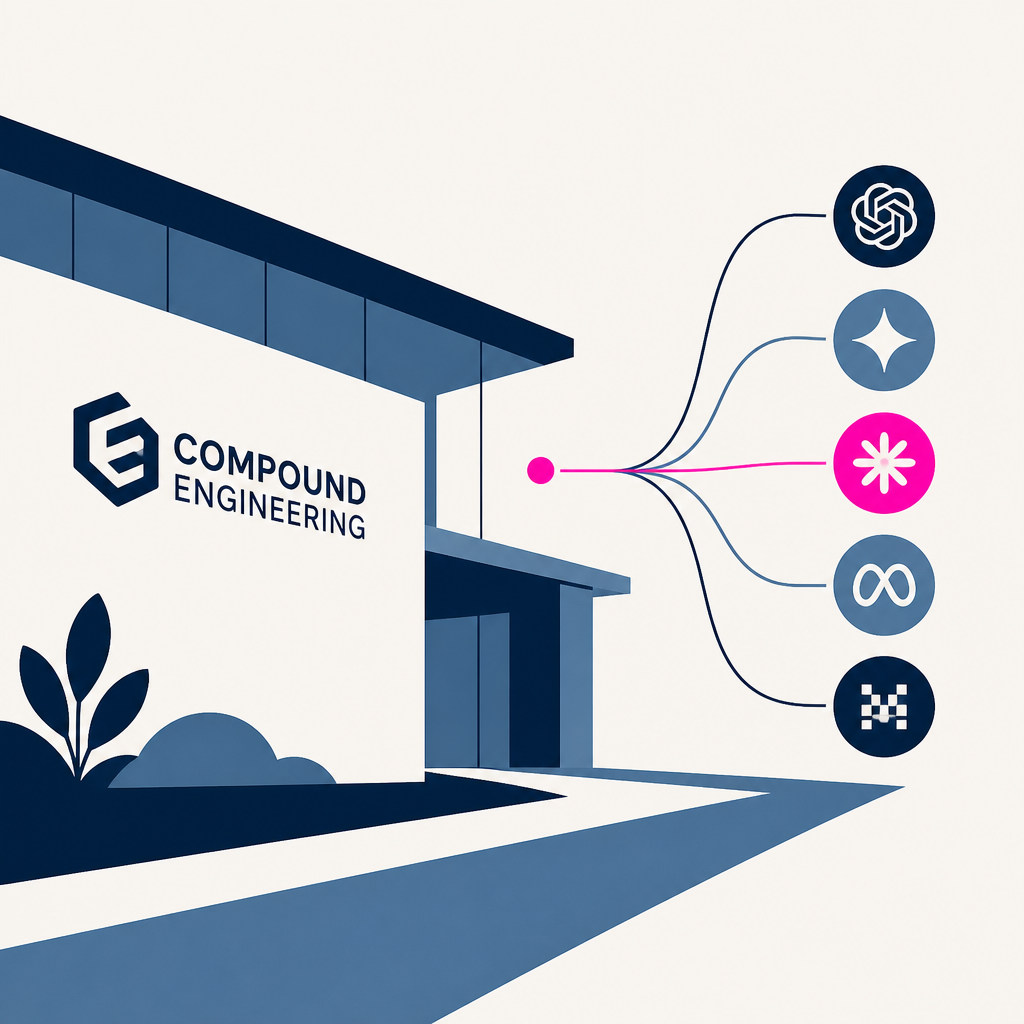
A new open tool called Compound Engineering v3.20 splits AI coding work across different models—one plans, another builds, a third checks the work. It's free, and it keeps context flowing between sessions so agents don't forget what they're doing.
Based on reporting by X — read the original for the full story.
Summary, retelling and take written by AI under human oversight; images are AI-generated illustrations. How we work · Report an error
Most AI coding setups still treat a single model as judge, jury, and executioner: same brain plans the feature, writes the code, and grades its own homework. Compound Engineering v3.20 breaks that habit on purpose. Instead of one model doing everything, the tool routes planning to one AI, implementation to another, and adversarial review to a third, treating the whole process more like a small team with checks and balances than a solo act.
The adversarial review piece is the interesting part. Rather than asking a model to critique its own output — which tends to produce polite agreement more than real scrutiny — v3.20 hands that job to a separate model whose only task is to find problems. Different training data, different blind spots, theoretically catches more bugs than a single model reviewing itself ever would.
The other quiet upgrade is context that survives between agent sessions. Long-running coding tasks tend to fall apart the moment an agent loses track of earlier decisions, forcing developers to re-explain constraints every few prompts. Carrying that context forward means the planning model's decisions actually inform what the implementation model builds, and what the reviewer checks against, instead of each stage starting from a blank slate.
And it's free and open tooling, which matters more than it might seem. Multi-model orchestration has mostly lived in expensive enterprise platforms or research demos. Putting a working version of it into open tooling lowers the bar for smaller teams and solo developers to experiment with the same idea — specialized models handling specialized jobs — without needing a six-figure AI budget to try it out.
My take — AI-written commentary, not fact-checked reporting
This is the correct instinct even if v3.20 itself doesn't end up being the tool that sticks. Single-model self-review has always been a bit of a joke — asking GPT to grade GPT is not meaningfully different from asking a student to grade their own exam. Splitting planning, building, and criticizing across different models is basic organizational sense applied to AI workflows, and I'd bet within two years this pattern is the default rather than the novelty.
Read more about this at: X