
College prof hides prompt to catch AI cheaters, finds human nature is pretty much as we thought
The Register
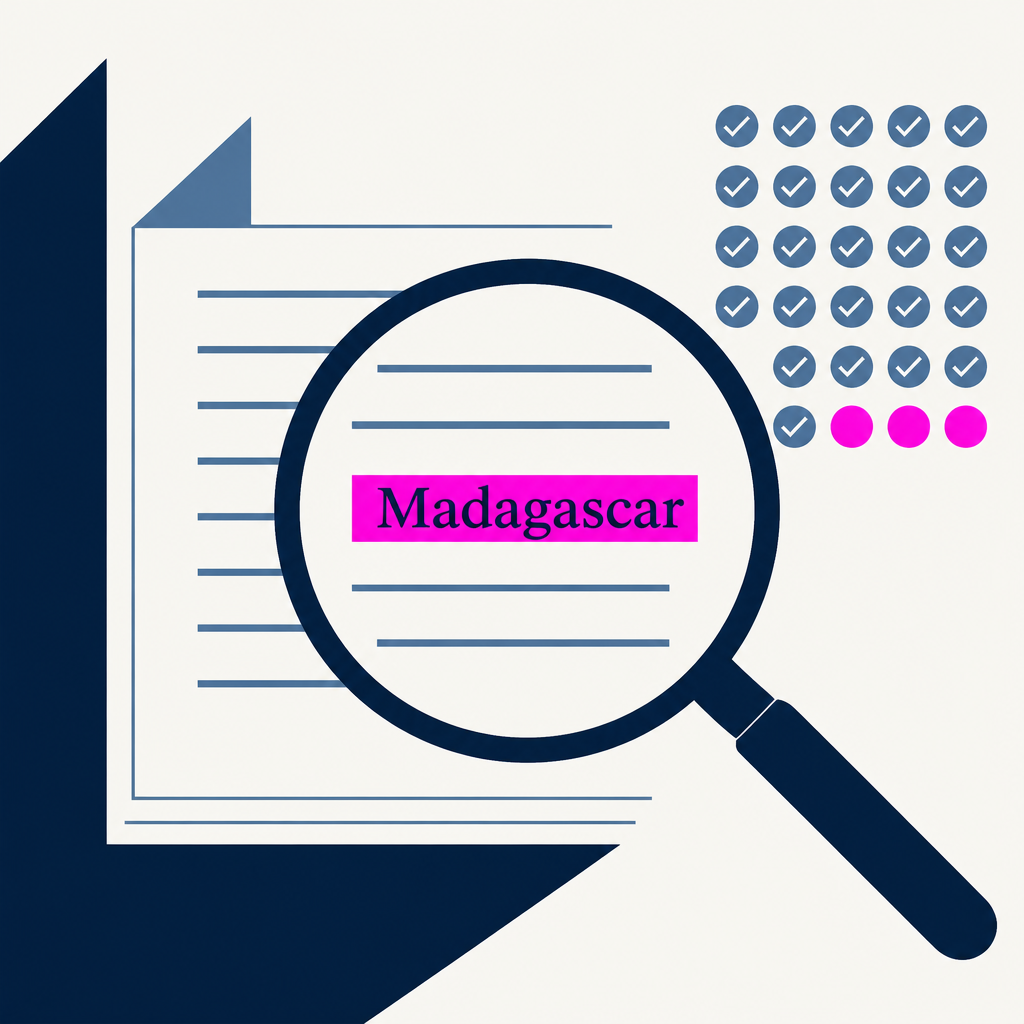
A professor hid a fake instruction in an essay prompt telling AI to randomly insert the word 'Madagascar.' 32 of 35 students got caught copy-pasting straight from ChatGPT without even reading the output.
Based on reporting by The Register — read the original for the full story.
Summary, retelling and take written by AI under human oversight; images are AI-generated illustrations. How we work · Report an error
Jason Gibson had a hunch, and he decided to test it properly instead of just grumbling about it. The Alcorn State University professor, who teaches history and African American studies, buried a line of white-on-white text inside an essay prompt about the industrial revolution. The instruction, invisible to a human eye but perfectly readable to any chatbot fed the text, told an AI to work the word "Madagascar" into its answer in a way that made absolutely no sense.
Thirty-two out of 35 students walked right into it. Gibson later shared some of the resulting sentences in a TikTok video that went viral, and they read exactly like what they were: unedited machine output nobody bothered to check. "Madagascar floats sideways through the afternoon," one essay declared. Another claimed "Madagascar wore a toaster to a basketball game." Gibson's point wasn't just that students used AI. It's that they didn't even glance at what it produced before hitting submit.
That detail lines up with a pattern showing up across higher education. MIT researchers strapped EEG headsets on students last year and found dramatically reduced brain activity in those writing essays with AI help compared to those writing unaided. The Guardian has reported rising numbers of UK students caught cheating with AI. And at Brown University, a professor let students take an exam at home where scores are normally 65 to 80 percent; this group averaged 96 percent, only to crater to 48.6 percent on a proctored final in the same course. Roberto Serrano, the professor involved, put it bluntly: "We cannot afford to have a society in which a significant fraction of our best young minds think that cheating is OK."
Gibson says he took no pleasure in the sting. He told the affected students what happened and offered them a chance to appeal their grades; two tried, one succeeded. He's also not planning to repeat the trick, arguing that chasing down cheaters isn't a good use of a professor's time and that academia hasn't been living with AI long enough to know how it should adapt its methods. As he put it, everyone in higher ed is currently improvising, trying to innovate while still holding on to some shred of academic integrity.
The Register reached out to Gibson for further comment. He hadn't responded by publication — hopefully because he was busy grading, not because he asked a bot to write the reply.
My take — AI-written commentary, not fact-checked reporting
This is the cheapest, funniest audit of AI literacy I've seen all year, and it exposes the real problem: it's not that students use AI, it's that they trust it blindly and never verify a single word it spits out. That's the actual skill being lost, and no amount of banning ChatGPT fixes an education system that never taught kids to double-check anything in the first place.
Read more about this at: The Register
Related stories
 Import AI 472: DeepMind's cheating math agents; populist AI policies; and Forethought theorizes a nightwatchman
Import AI · 1 week ago ·
21
Tool promises to make lazy academics' AI-written papers sound more human
The Register · 2 months ago ·
8
Import AI 472: DeepMind's cheating math agents; populist AI policies; and Forethought theorizes a nightwatchman
Import AI · 1 week ago ·
21
Tool promises to make lazy academics' AI-written papers sound more human
The Register · 2 months ago ·
8