Atlas Motion AI Cuts Motor Design to 20 Minutes
Forbes
Atlas Motion says its AI, Vector, can design a new drone or robot motor in about 20 minutes instead of months. It just raised $11.5 million and is already shipping thousands of motors monthly.
Based on reporting by Forbes — read the original for the full story.
Summary, retelling and take written by AI under human oversight; images are AI-generated illustrations. How we work · Report an error
Atlas Motion just stepped out of stealth with $11.5 million in funding and a claim that sounds almost too tidy: it can go from a blank spec to a finished motor design in five to ten minutes, with minor tweaks after that. CEO Christian Mochen, a Tesla and Shield AI alum, says the company has already turned that speed into real output — 10,000 motors a month today, with a target of 40,000 by December.
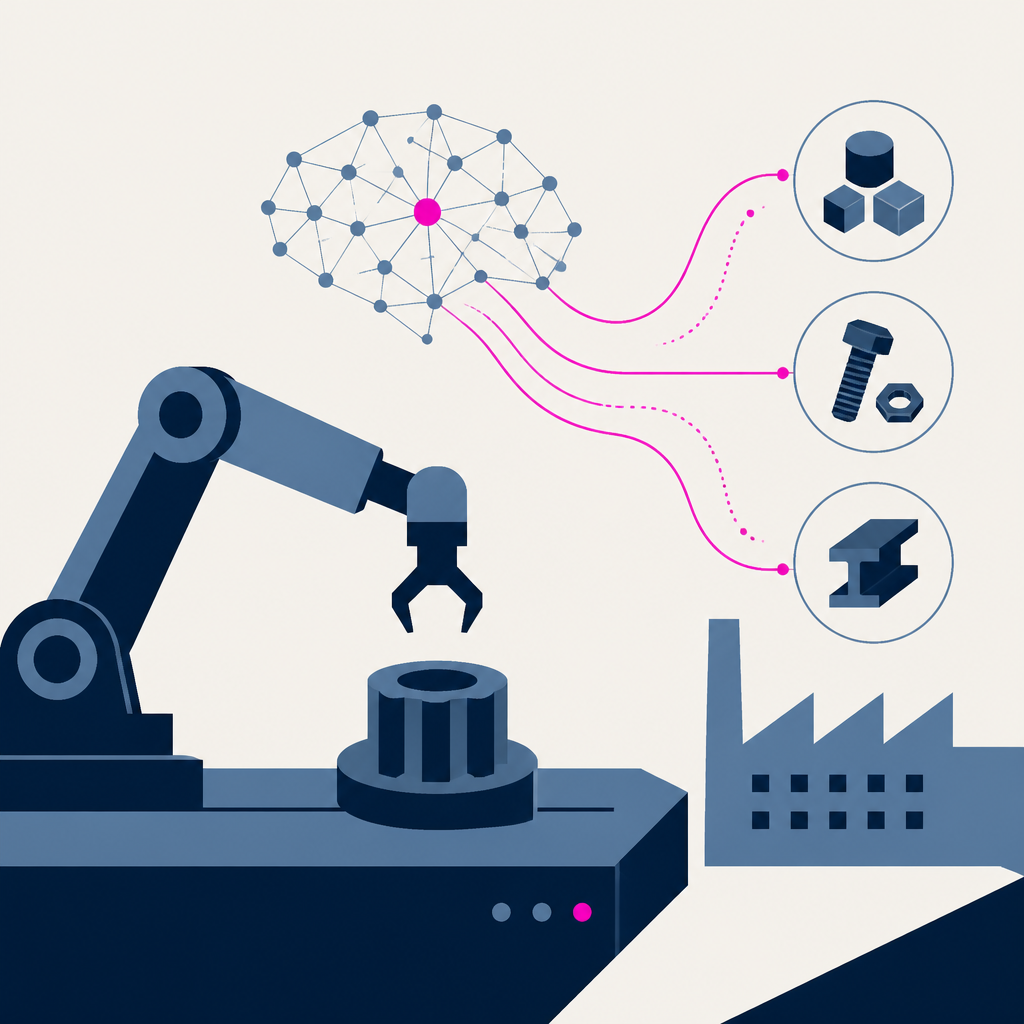
The engine behind the claim is Vector, Atlas's in-house engineering AI, which Mochen says he modeled loosely on Odin, the system Tesla uses to run self-testing across its car production lines. Vector takes in a design's requirements, runs simulations engineers would normally handle by hand, and spits out the manufacturing package needed to actually build the thing. Mochen says the gap between what Vector predicts and what shows up on the factory floor is down to about one percent. He's careful to frame this as orchestration, not replacement — Atlas doesn't even call its engineers engineers anymore. They're architects, he says, people who set up the inputs and let the software handle the grinding first-principles work.
What makes this interesting beyond the speed number is the economics behind it. Atlas says it's pushing the cost of changing a design on its line close to zero, which matters because most component suppliers get boxed into rigid catalog products precisely because retooling is expensive. Cheap iteration, Mochen argues, is why customers in places like India, Poland and parts of Africa are choosing Atlas over Chinese suppliers — they're getting custom specs built fast rather than picking off a shelf.
There's also a supply-chain pitch baked into the pitch. Mochen frames the dominance of Chinese-made motors and actuators in drones and robots as a real vulnerability, and says Atlas wants to bring that manufacturing capability back under American control — without leaning on government subsidies to do it. It's a good story, though Atlas's own production actually happens in the Philippines, with engineering based in Long Beach, California. Mochen points to the Philippines' status as a U.S. treaty ally and the company's trade accreditations as reassurance, but shipping finished goods across borders still means some exposure to tariffs and the very geopolitical mess the pitch is aimed at solving.
The company incorporated in February and shipped its first motor within 60 days, which is genuinely fast for hardware. But Atlas hasn't named a single customer — its buyers are in defense — so there's no independent way to check the demand numbers it's citing. The funding round was led by Greycroft, with Also Capital, Enea Capital, Mana Ventures, Sunflower Capital and a couple of named angels joining in. Whether Atlas is actually compressing motor design the way it says, or just compressing the sales pitch, is something only time and real customer names will settle.
My take — AI-written commentary, not fact-checked reporting
A twenty-minute motor design sounds great in a podcast, but zero named customers and zero third-party verification is a big asterisk on numbers this bold, especially in defense where nobody's obligated to confirm anything. The sovereignty pitch is the more interesting thread — moving motor and actuator supply away from Chinese manufacturing is a real problem worth solving — but building the actual production in the Philippines while claiming to fix single-source dependency is a bit of a stretch, treaty ally or not. Worth watching, not worth believing yet.
Read more about this at: Forbes