
AI That Rides Along With Truck Drivers
YouTube ● Covered by 4 sources
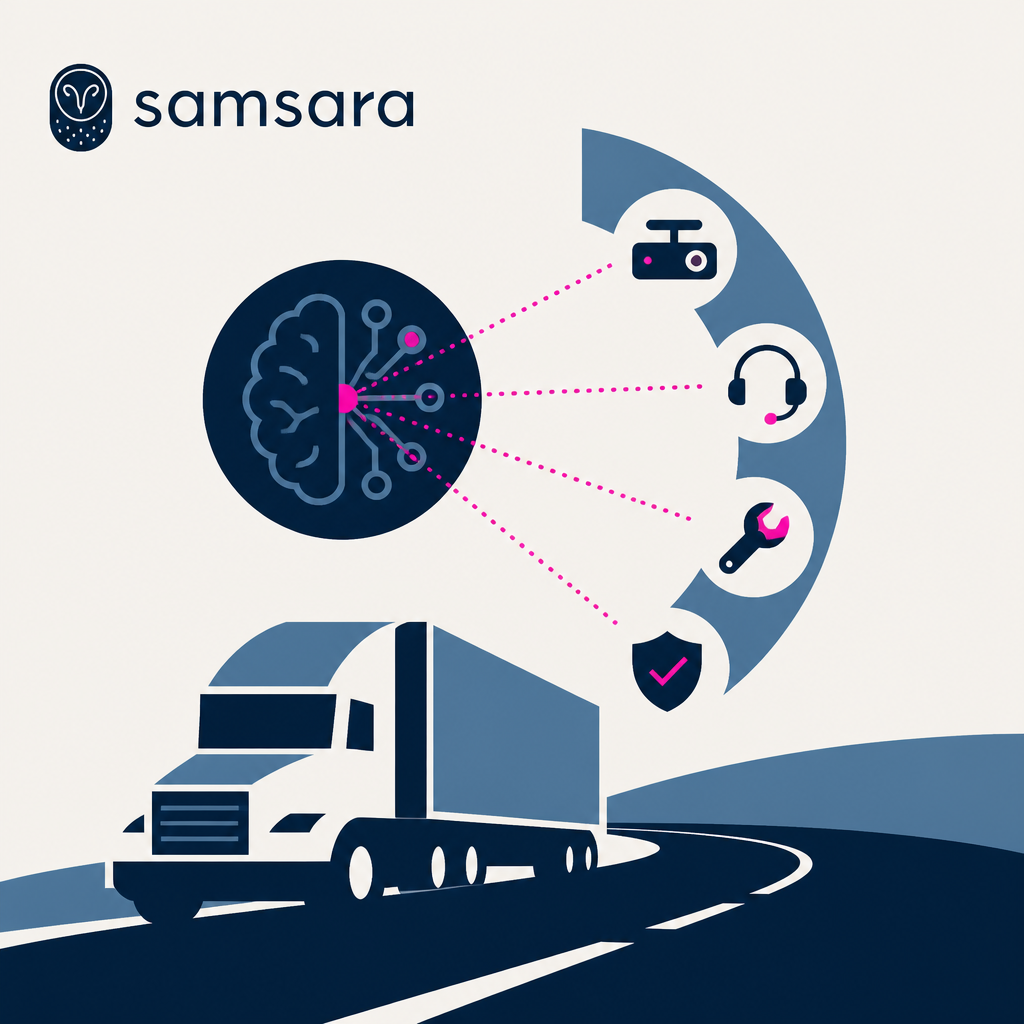
Samsara's CTO John Bicket laid out how AI is now riding shotgun in trucks, dash cams, and dispatch centers. Unlike office chatbots, a bad call here can crash a truck, not just a spreadsheet.
Based on reporting by YouTube — read the original for the full story.
Summary, retelling and take written by AI under human oversight; images are AI-generated illustrations. How we work · Report an error
Most AI demos live in a browser tab. Samsara's don't. John Bicket, the company's cofounder and CTO, spent this episode walking through how AI agents have quietly worked their way into the unglamorous machinery of fleet management: dash cams that watch for drowsy drivers, dispatch software that reroutes trucks on the fly, maintenance systems that flag a failing brake line before it becomes a breakdown on the interstate.
What makes this interesting isn't the novelty of AI in trucking — sensors and telematics have been creeping into fleets for a decade. It's the shift in what the AI is actually allowed to do. Bicket describes agents that don't just flag anomalies for a human to review later; they make calls in something close to real time, adjusting routes, alerting supervisors, sometimes intervening directly in a workflow that used to require a dispatcher on the phone.
That's a very different risk profile than a customer-support bot getting a return policy wrong. A hallucinated maintenance alert either gets ignored, costing money, or gets acted on, pulling a truck off the road for nothing. A missed fatigue signal, on the other hand, can end badly on a highway at 70 miles an hour. Samsara's pitch, as Bicket lays it out, is that physical-world AI needs a different design philosophy than software-world AI — more conservative defaults, tighter human oversight loops, and a much lower tolerance for confidently wrong answers.
It's a useful corrective to the current AI conversation, which is dominated by chatbots, coding copilots, and image generators — tools where a mistake costs you a few minutes and an eye-roll. Fleets, warehouses, and industrial equipment are where a chunk of the economy actually runs, and Samsara's bet is that this is where AI agents will have to grow up fastest, because the margin for error is thinner and the stakes are literally on the road.
My take — AI-written commentary, not fact-checked reporting
This is the AI story nobody's hyping enough: not another chatbot demo, but agents making decisions where a mistake means a jackknifed truck instead of a bad Yelp response. I'd rather see ten more companies like Samsara sweating over edge cases in braking systems than another founder promising AGI by Christmas.
Read more about this at: YouTube