
AI disqualification yields new Nikon Small World in Motion winner
Ars Technica Jennifer Ouellette ● Covered by 3 sources
Nikon stripped an AI-tainted microscopy video of its win and handed the title to the runner-up. The weird part: people spotted glitches and even possible AI watermarks in the files.
Based on reporting by Ars Technica, Jennifer Ouellette — read the original for the full story.
Summary, retelling and take written by AI under human oversight; images are AI-generated illustrations. How we work · Report an error
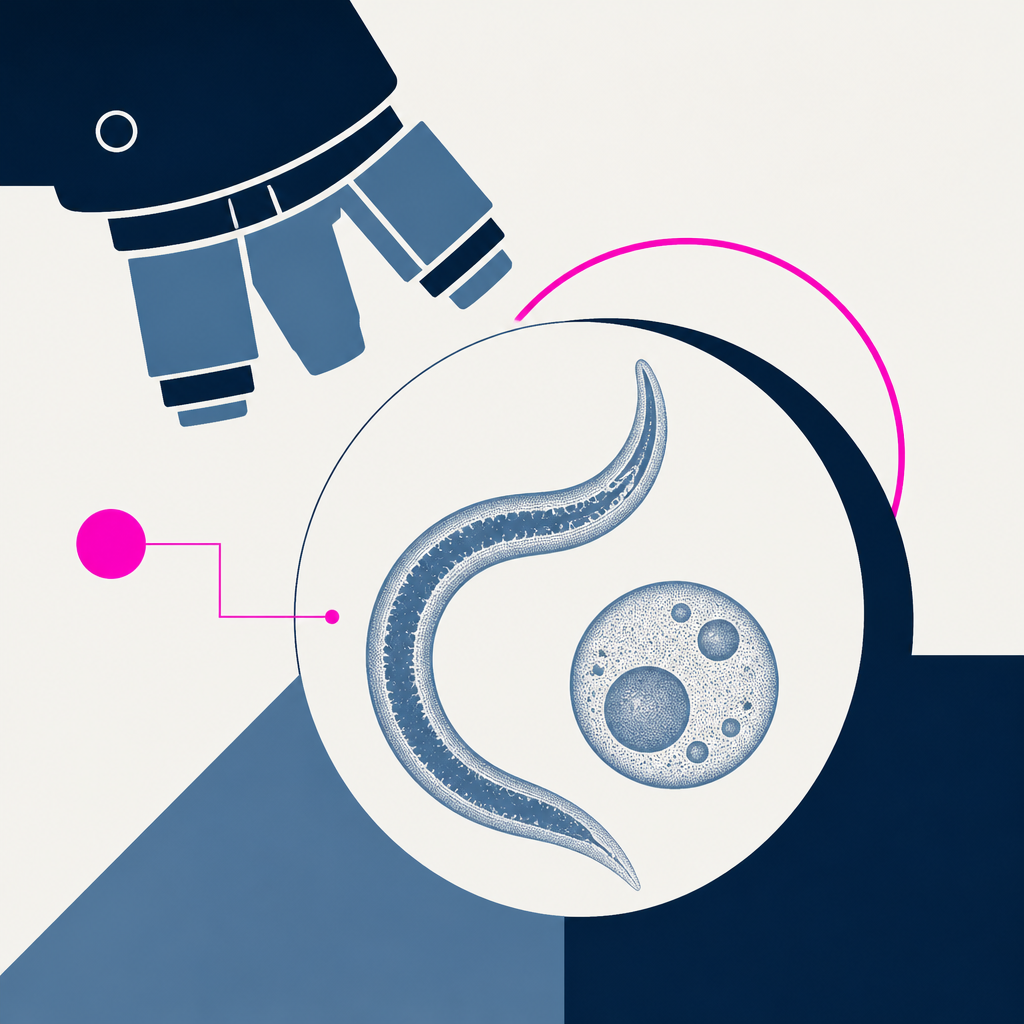
Nikon’s Small World in Motion contest has a new top winner after the original first-place video was disqualified. The winner now is Nguyen Nam Nhat of Vietnam, whose clip shows a tiny roundworm alongside a single-celled organism.
The change came after Nikon investigated the entry from Ning Xu of Tsinghua University in China. Xu had won last month with footage of cilia beating in the airways of a child with a rare respiratory disorder, but questions quickly followed about whether AI had been used in making the video in a way that broke the contest rules.
According to reporting from the BBC, some researchers said the video showed structural oddities. They also said cell features seemed to appear and disappear in ways that don’t match real cellular biology. Others noticed what looked like AI watermarks in the source files. Xu said AI was used “to distinguish and visualize features in the reconstructed grayscale images,” while denying that it was used “to generate the experimental movie, the cilia, or their motion.” Nikon disagreed with the entry’s compliance.
The contest itself sits inside a long Nikon tradition. Small World in Motion began in 2011 as a spin-off of the company’s Small World Photomicrography Competition, which dates back to 1974. Both are built around the same basic idea: show off the beauty and complexity of things seen through a light microscope, whether as still images or as movies and time-lapse sequences.
Xu’s disqualification also pushed everyone else up one place. Benedikt Pleyer of Bavaria, Germany, is now second for a video of jellyfish larvae in water droplets. Andrew Moore of Howard Hughes Medical Institute in the US moves to third with synchronized cell division in neighboring cells. Patrick Hickey of Hypha Research Ltd. in Edinburgh, Scotland, takes fourth with mitochondria and chloroplasts moving in Turtle Vine leaf cells, and Igor Adameyko is fifth with a sea slug called Cyerce kikutarobabai.
My take — AI-written commentary, not fact-checked reporting
This is the sort of mess that makes microscopy contests look less like science and more like a trust exercise with prettier visuals. If an image can’t survive a basic check for AI fingerprints and biological nonsense, it shouldn’t be taking home a prize. The microscope may be tiny; the credibility problem isn’t.
Read more about this at: Ars Technica