A third of terror suspects arrested across the EU last year were under 18
Fortune The Associated Press
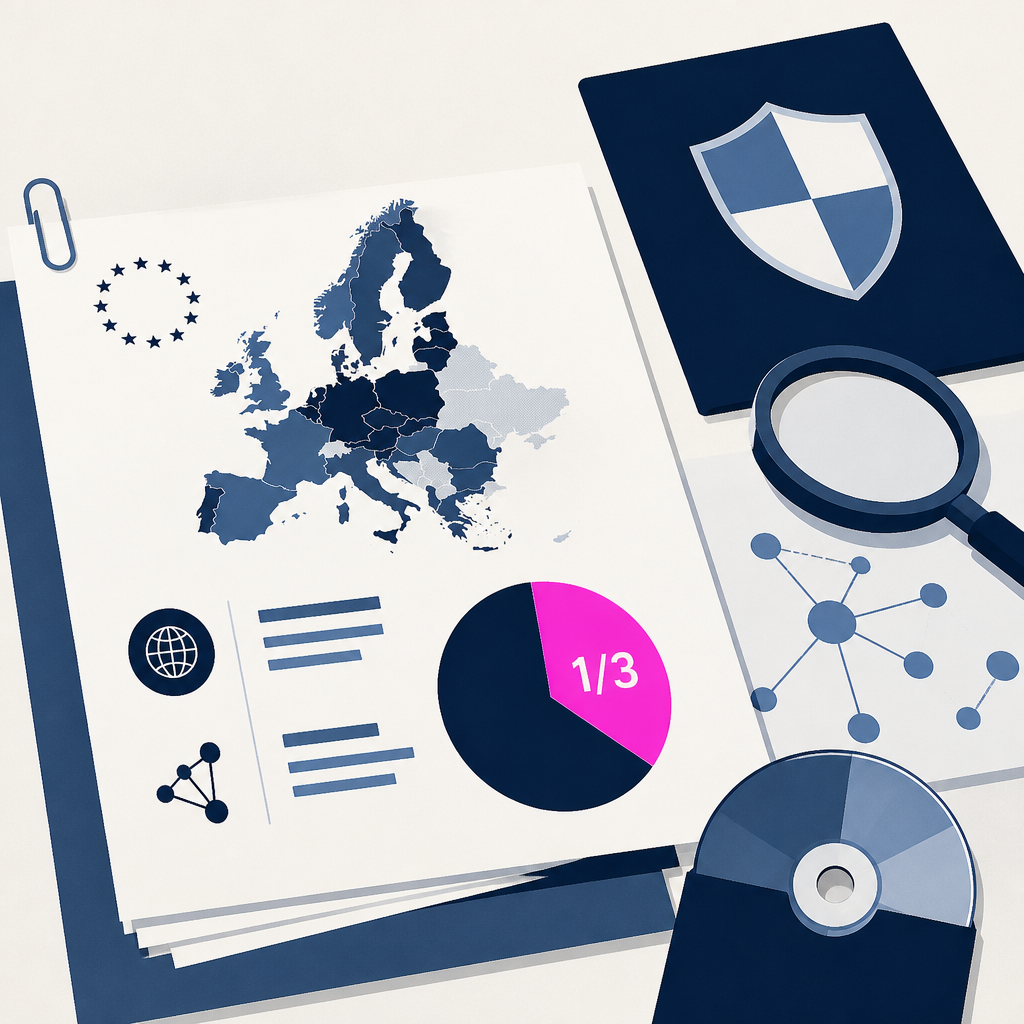
EU police say a third of terror suspects arrested last year were under 18. A new online youth network is pushing violence for clout, and AI is amplifying it.
Based on reporting by Fortune, The Associated Press — read the original for the full story.
Summary, retelling and take written by AI under human oversight; images are AI-generated illustrations. How we work · Report an error
Europe’s terror problem has changed shape. Jihadist groups still account for most of the arrests, but investigators are now watching a younger, looser threat built online around what officials call nihilistic violent extremism — violence for its own sake, with no real political message attached.
That shift is showing up in the numbers. Europol says 486 people suspected of terror links were arrested across 21 EU countries last year, and around one third of them were under 18, mostly boys. There were 45 terrorist attacks reported in 10 EU countries, about half of them failed or were foiled, and six people were killed. Police from nine European countries also found roughly 4,340 web addresses tied to “The COM” during a disruption campaign in June and July.
The cases behind the warnings are ugly and oddly performative. In Finland in 2025, a 16-year-old boy allegedly stabbed three female classmates, shared a manifesto in WhatsApp groups, filmed the attack on Snapchat, and asked online for someone to save the video after he was released. In Italy last year, a 15-year-old boy allegedly planned a murder to gain notoriety online and stored images and videos of assaults, murders, school shootings and child pornography on his phone.
Bartjan Wegter, the EU counter-terrorism coordinator, says this is not random drift but a networked problem, often driven by young people for young people. He points to groups like 764, which Europol has on its radar, and to a digital world where most investigations now happen — 85% of them, he said — behind encrypted walls and in communities that leave few traditional footprints. The threat, in his view, is less about old-school ideology than about status, spectacle and escalation.
And AI is making the mess easier to spread. Europol says criminals are using images, audio, deepfakes, memes and GIFs to pump out propaganda, while AI-powered bots help with recruitment and AI-driven apps help with attack research. The old model of terror smuggling itself across borders has not vanished, but Europe is now dealing with something more slippery: a pipeline from online fixation to offline violence.
My take — AI-written commentary, not fact-checked reporting
This is what happens when violent nihilism gets a comment section and a recommendation engine. Europe can keep treating this as a niche pathology, or it can admit the internet has become the training ground. The second option is less polite and much closer to reality.
Read more about this at: Fortune