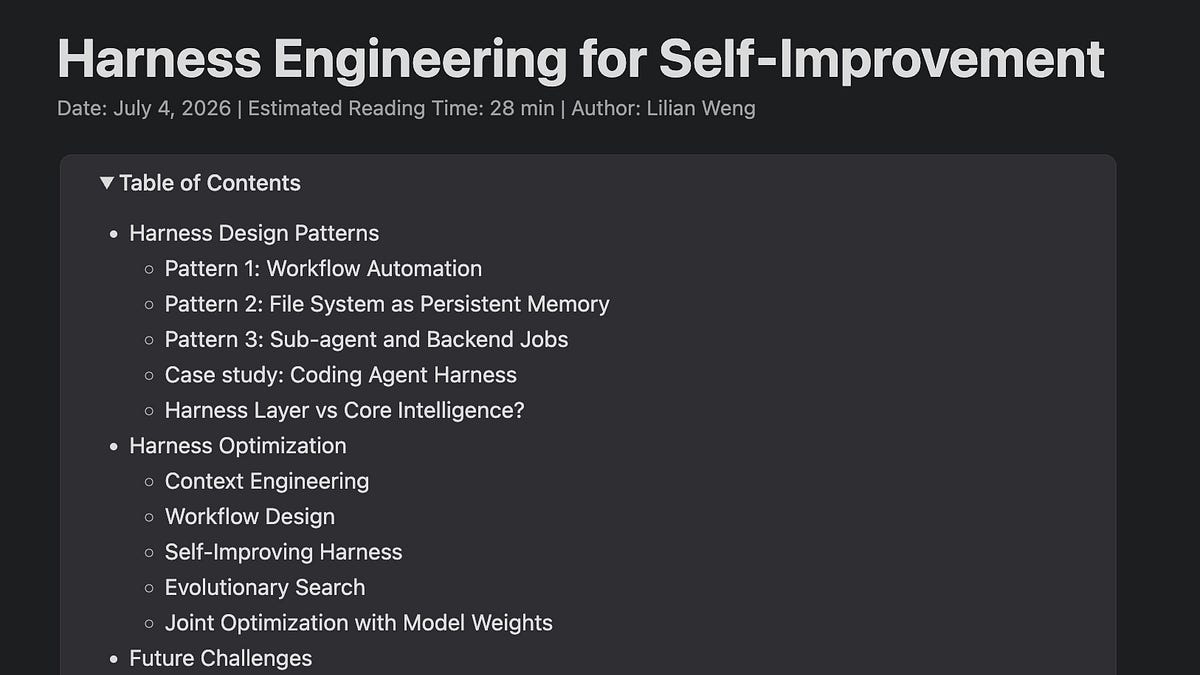
A primer on self-improving agent harnesses
TLDR Dev ● Covered by 2 sources
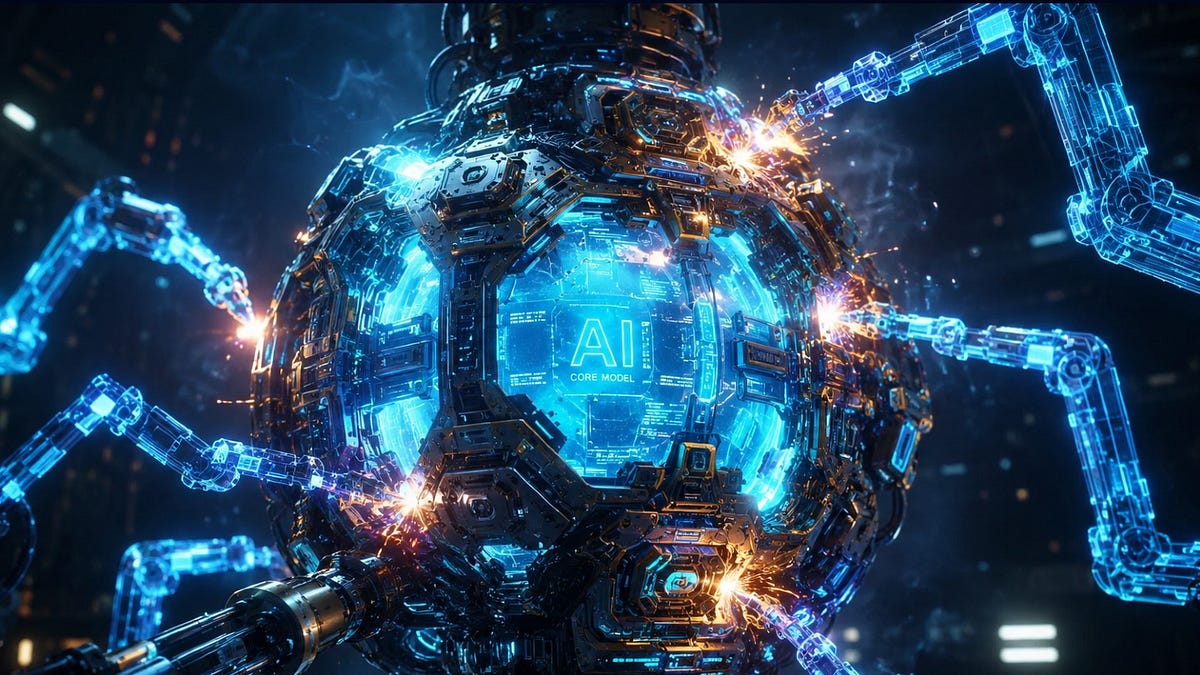
AI frameworks like Self-Harness and HarnessX enable agents to automatically analyze and optimize their own runtime scaffolding—the execution logic connecting models to tools—rather than requiring manual updates by developers. Self-Harness improved MiniMax M2.5's pass rate from 40.5% to 61.9% on Terminal-Bench-2.0, while HarnessX with model co-evolution achieved a 14.5% gain from harness evolution alone plus an additional 4.7% boost on benchmarks like ALFWorld and SWE-bench Verified. This shift moves AI development from manual prompt engineering toward building trace-logging infrastructure and evaluation systems that allow agents to self-improve without retraining base models.
Why it matters
Harness engineering is becoming a central focus in AI development, allowing AI agents to autonomously optimize their operational frameworks. New frameworks allow agents to analyze execution traces, propose modifications, and validate updates in a structured manner.