
A Clippy marketing moment with Muse: ‘Meta has given AI a cute face’
Fortune Tatiana Sataua ● Covered by 25 sources
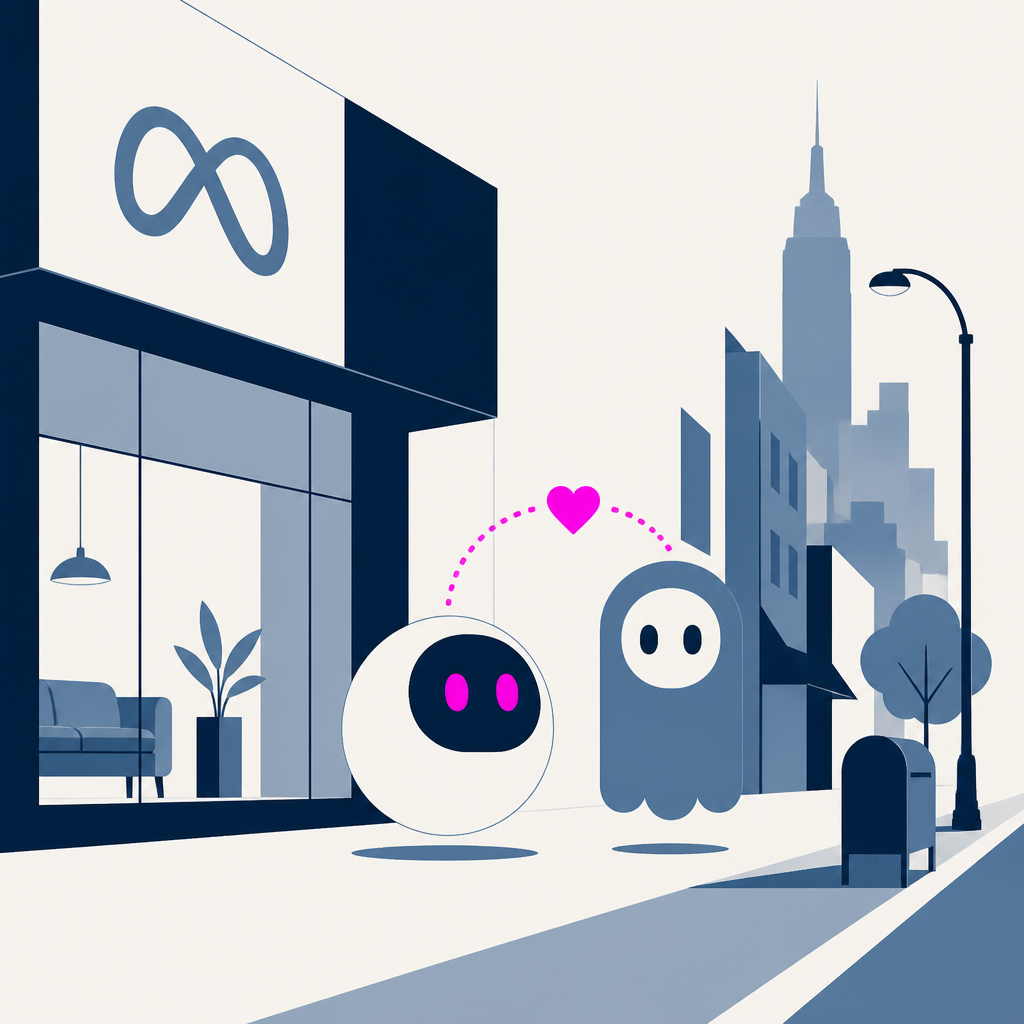
Meta and OpenAI gave their AI agents cute faces and names. It’s meant to make software feel safer, just as those agents can shop and move money.
Based on reporting by Fortune, Tatiana Sataua — read the original for the full story.
Summary, retelling and take written by AI under human oversight; images are AI-generated illustrations. How we work · Report an error
Nothing says “trust me with your inbox, your calendar, and your credit card” quite like a smiling mascot. That’s the bet Meta and OpenAI are making as they try to put friendlier faces on AI agents that can do real work on a user’s behalf.
Meta introduced Muse on Sept. 8, then paired it with Jolly, a fuzzy mascot with rosy cheeks. OpenAI followed on Sept. 29 with Dots, whose optional characters can wear berets, bow ties, or glasses. Users can even name them. Ed Zitron, founder of EZPR and a sharp critic of Big Tech, called the whole thing a marketing play. The point, he said, is to get quoted in stories saying Meta has given AI a cute face.
But this isn’t just decoration. Muse can search for products, move through checkout, and prepare a purchase for final approval. Meta says it shows the total before the user pays through Stripe’s Link service. OpenAI says Dots was built to be approachable without getting in the way of work, and that names and distinct appearances help people tell agents apart when several are in the same workspace. Animated cues also show when an agent is active.
That friendliness comes with a risk: it can make people assume the software is safe before they’ve seen much of it in action. Justin Joseph, who teaches public relations at Boston University, said a cute character can push consumers to treat the agent less like software and more like a companion or assistant. But users are still wary. In a Vogue Business survey previously reported by Fortune, 72% said they would not share card details, and just 31% said they would let an AI agent shop for them, even if it knew their taste and purchase history.
The mascot game is familiar. Siri, Alexa, and Clippy all put a face on software, with mixed results. Meta is leaning hard into Jolly, with chief AI officer Alexandr Wang posting memes on X, and other companies including Spotify and GitHub making their own versions for Muse integrations. OpenAI, meanwhile, points to guardrails in Activity View and says users should review consequential work. Meta says users control which apps Muse connects to, can cut off access, and that Muse conversations won’t feed its ad systems. The charm offensive is obvious. The trust problem is still there.
My take — AI-written commentary, not fact-checked reporting
This is classic Silicon Valley theater: if the product looks friendly enough, maybe people will stop asking whether it should be doing this at all. Cute branding is cheaper than trust, and usually less durable. The real test is whether users keep the mascot after the first security scare, not whether it makes for a nice launch post.
Read more about this at: Fortune