A business that scales with the value of intelligence
OpenAI ● Covered by 3 sources
OpenAI says its money-maker isn't just ChatGPT subscriptions anymore—it's betting on ads, commerce, and API access too. The pitch: the smarter the models get, the more ways there are to charge for them.
Based on reporting by OpenAI — read the original for the full story.
Summary, retelling and take written by AI under human oversight; images are AI-generated illustrations. How we work · Report an error
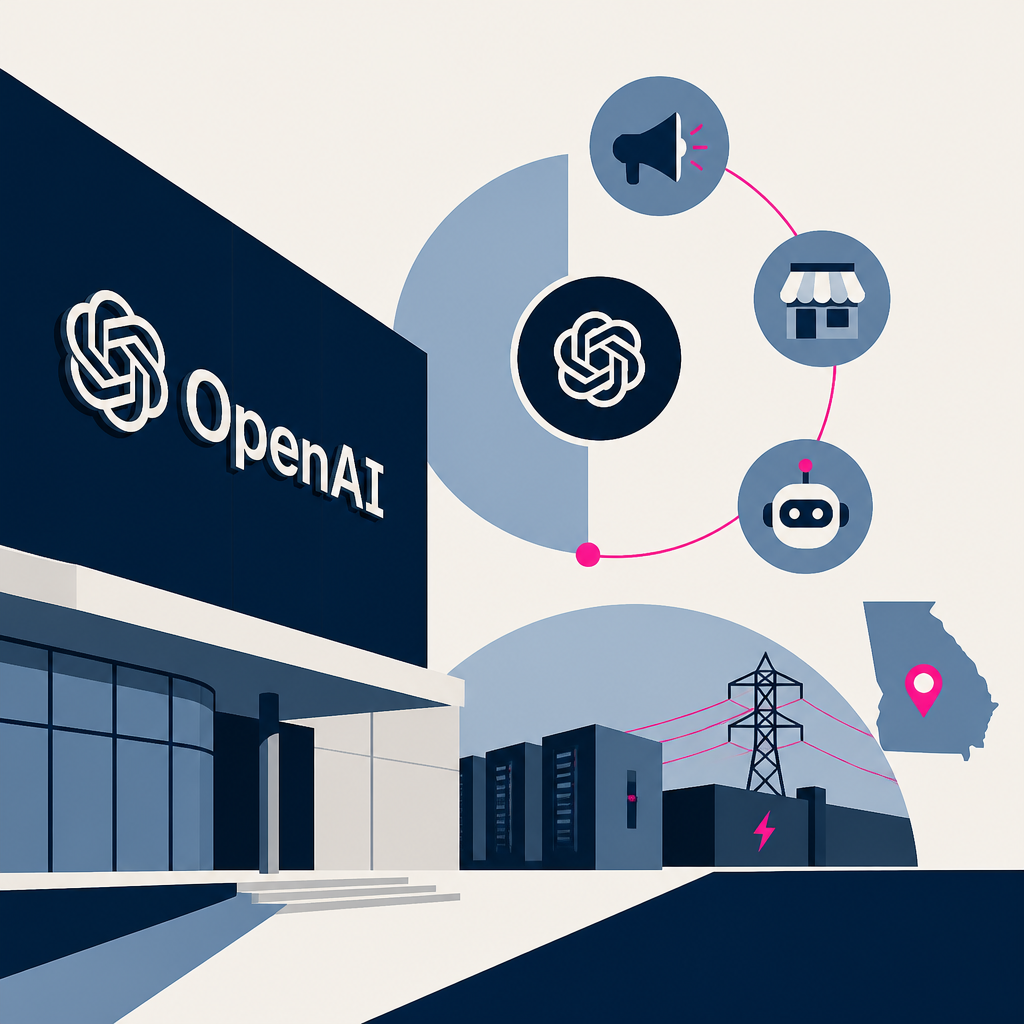
OpenAI dropped a short manifesto this week laying out how it actually plans to make money, and the framing is telling. Instead of leaning on a single product like ChatGPT Plus subscriptions, the company describes a business built to expand alongside the capability of its models — subscriptions, API access, advertising, commerce, and compute all sitting under one roof.
That's a notably broader net than what OpenAI talked about even a year ago, when the story was mostly "pay us monthly for GPT access" or "pay per token through the API." Now ads and commerce get explicit mention, which tracks with reporting that ChatGPT has been quietly testing shopping features and sponsored placements. Compute is in there too, hinting at ambitions well beyond software — infrastructure deals, potentially even OpenAI selling raw processing power the way cloud giants do.
The underlying logic is straightforward: as models get better, they become useful for more things, and each new use case is a new revenue lever. A smarter model doesn't just answer questions faster, it can plausibly broker a purchase, summarize a contract, or run an agent that does hours of work unattended. OpenAI is betting that ChatGPT's adoption curve — hundreds of millions of weekly users at this point — gives it enough surface area to monetize in five different directions at once rather than relying on one.
There's an obvious tension here, though. Ads and commerce inside a chatbot people trust for unbiased answers is a minefield that Google spent two decades navigating, not always gracefully. OpenAI folding commerce into the same interface people use for medical questions or homework help invites the same scrutiny Google Search has faced for years about whose interests actually get served.
Still, the strategic point stands: OpenAI is no longer positioning itself as just a model provider charging by the API call. It's describing itself as something closer to a platform company, one where intelligence itself is the raw material and everything else — search, shopping, subscriptions — is just a distribution channel for it.
My take — AI-written commentary, not fact-checked reporting
I'll say the quiet part: this is OpenAI admitting subscriptions alone won't cover the eye-watering compute bills, so ads and commerce are coming to ChatGPT whether users love the idea or not. It's the same playbook every free-ish consumer tech company eventually runs, and the fact that OpenAI is being upfront about it doesn't make the incentive problems disappear — it just means we should watch closely whose answers get quietly nudged once sponsors are in the room.
Read more about this at: OpenAI