
AI in Manufacturing
Discrete and process manufacturers using AI for quality inspection, predictive maintenance and increasingly autonomous factories.
Use cases
AI agents for production scheduling and combinatorial optimization Experimental
- Problem:
- Optimizing complex factory scheduling, layout, and logistics problems (e.g., job-shop scheduling, cutting-stock, routing) is NP-hard and typically relies on hand-tuned heuristics that struggle to adapt to changing conditions.
- Capability:
- Autonomous optimization agents (LLM-driven algorithm engineering)
- Value:
- Better-than-heuristic solutions to scheduling and resource-allocation problems, potentially improving throughput and reducing waste, as demonstrated by agents like Sakana AI's ALE-Agent placing competitively on hard optimization benchmarks.
Barriers: Still largely research-stage for real factory constraints; requires validation against domain-specific rules and integration with production planning systems before trust is established.
Automated visual quality inspection Proven
- Problem:
- Manual inspection of parts and products on the line is slow, inconsistent, and struggles to catch subtle defects at production speed, leading to costly recalls or scrap.
- Capability:
- Computer vision / defect detection
- Value:
- Higher and more consistent defect-catch rates, reduced scrap and warranty costs, and faster line throughput since inspection no longer bottlenecks production.
Barriers: Requires large labeled defect datasets per product line and integration with existing line control systems; lighting and camera variability can hurt accuracy.
Dexterous robotics for flexible assembly automation Experimental
- Problem:
- Many assembly and material-handling tasks still require human dexterity and adaptability that traditional fixed-function industrial robots cannot replicate, limiting automation of variable, low-volume, or delicate tasks.
- Capability:
- Physical AI / robotic manipulation with multimodal training data
- Value:
- Potential to automate previously manual assembly steps, increasing flexibility and reducing labor dependency on repetitive or ergonomically difficult tasks, as shown by early demos like 1X's dexterous robotic hands and robot-agnostic control software from startups like Kinematic Trees.
Barriers: High cost and scarcity of dense manipulation training data, immature hardware reliability, and lack of standardized software across robot platforms.
Predictive maintenance for production equipment Proven
- Problem:
- Unplanned downtime from equipment failure disrupts production schedules and is expensive to diagnose and fix reactively.
- Capability:
- Sensor-based forecasting / anomaly detection
- Value:
- Reduced unplanned downtime and maintenance costs by scheduling repairs before failure, and extended equipment lifespan through condition-based servicing.
Barriers: Needs reliable historical failure data and sensor instrumentation on legacy machines, plus trust from maintenance teams to act on model alerts.
Leading vendors
Companies appearing most often in our recent Manufacturing coverage.
Recent developments
 Unauthorized artifactory writes and cross-sample communication
OpenAI · 23 hours ago ·
24
Noetive launches with $41M to bring self-improving AI to factories and logistics
SiliconANGLE · 1 day ago ·
15
CADDi raises $114M at $1.2B valuation to bring manufacturing AI to North America
SiliconANGLE · 1 day ago ·
39
SK Hynix reportedly in talks with Intel to build memory chips in US
TechCrunch · 1 day ago ·
17
Factory jumps to $5B in 5 months with $200M for its AI ‘Droids’
Tech Funding News · 1 day ago ·
46
Unauthorized artifactory writes and cross-sample communication
OpenAI · 23 hours ago ·
24
Noetive launches with $41M to bring self-improving AI to factories and logistics
SiliconANGLE · 1 day ago ·
15
CADDi raises $114M at $1.2B valuation to bring manufacturing AI to North America
SiliconANGLE · 1 day ago ·
39
SK Hynix reportedly in talks with Intel to build memory chips in US
TechCrunch · 1 day ago ·
17
Factory jumps to $5B in 5 months with $200M for its AI ‘Droids’
Tech Funding News · 1 day ago ·
46
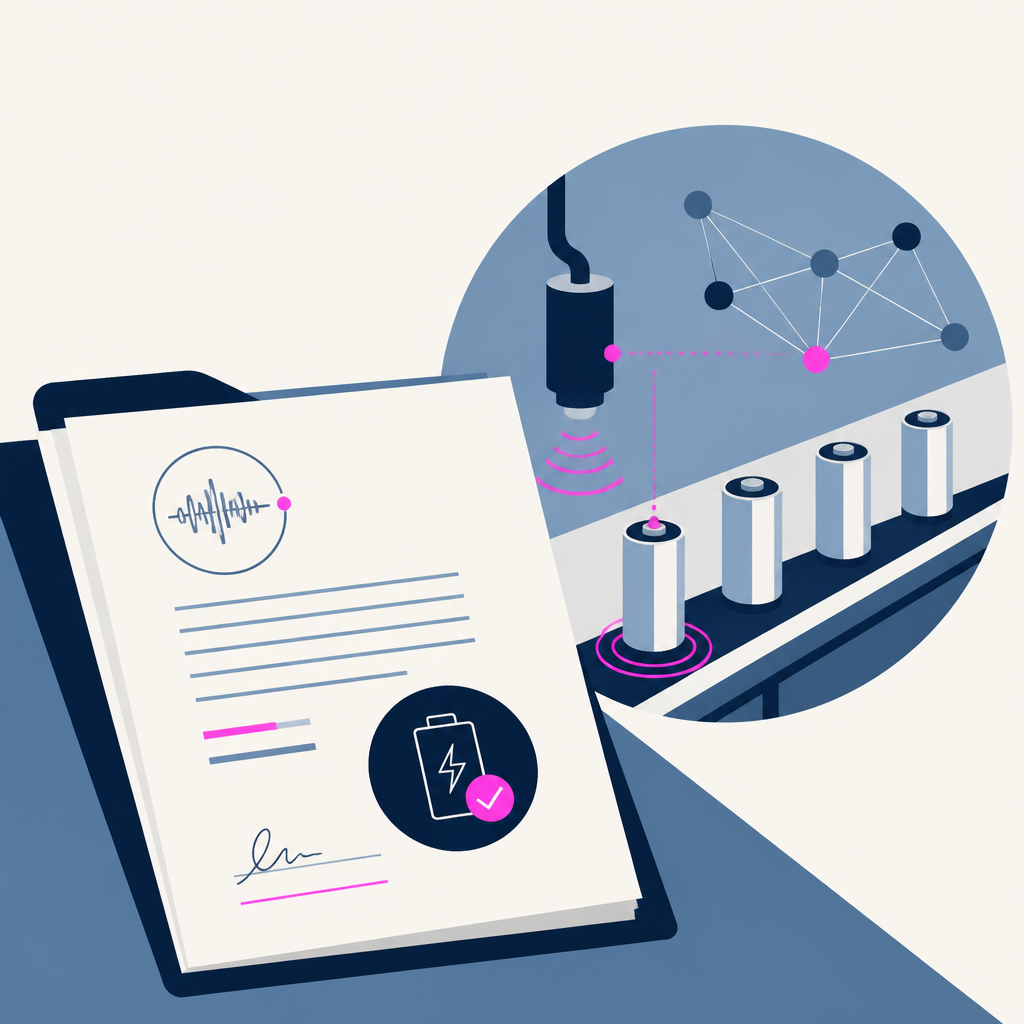 AcouBatt raises £1.1M to improve battery manufacturing safety and reliability
Tech.eu · 2 days ago ·
45
Factory raises $200M for its self-improving software development platform
SiliconANGLE · 2 days ago ·
50
AcouBatt raises £1.1M to improve battery manufacturing safety and reliability
Tech.eu · 2 days ago ·
45
Factory raises $200M for its self-improving software development platform
SiliconANGLE · 2 days ago ·
50
 Agility’s new humanoid robot will stop, squat to avoid harming human coworkers
Ars Technica · 2 days ago ·
20
From Megawatts to Tokens: How NVIDIA Maximizes AI Factory Production
NVIDIA Blog · 2 days ago ·
17
AI Infra Summit: NVIDIA Vera Rubin and DSX Platform Advancements Showcase Energy Efficiencies of Optimizing Tokens Per Watt for AI Factories
NVIDIA Blog · 2 days ago ·
21
Agility’s new humanoid robot will stop, squat to avoid harming human coworkers
Ars Technica · 2 days ago ·
20
From Megawatts to Tokens: How NVIDIA Maximizes AI Factory Production
NVIDIA Blog · 2 days ago ·
17
AI Infra Summit: NVIDIA Vera Rubin and DSX Platform Advancements Showcase Energy Efficiencies of Optimizing Tokens Per Watt for AI Factories
NVIDIA Blog · 2 days ago ·
21