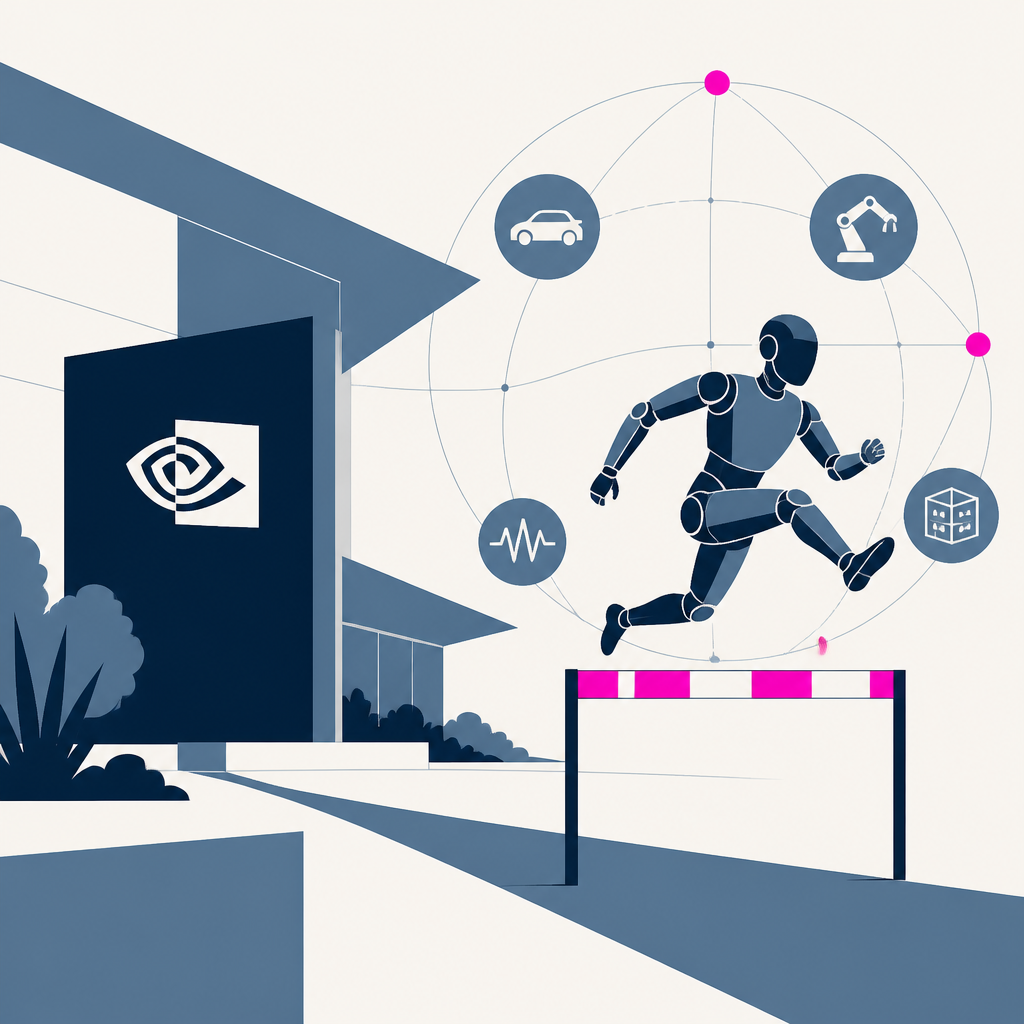
NVIDIA developers used frontier AI agents with NVIDIA Omniverse libraries to turn simulation concepts into interactive applications for robotics, autonomous driving, digital twins, and 3D/telemetry viewers. In one Robo Olympics experiment, the simulated Unitree G1 humanoid cleared a single hurdle in 64 of 100 simulation trials. The workflow shifts from manual scene setup to agent-directed asset connections, staged integration checks, and iterative simulation validation that improves designs based on measured results.
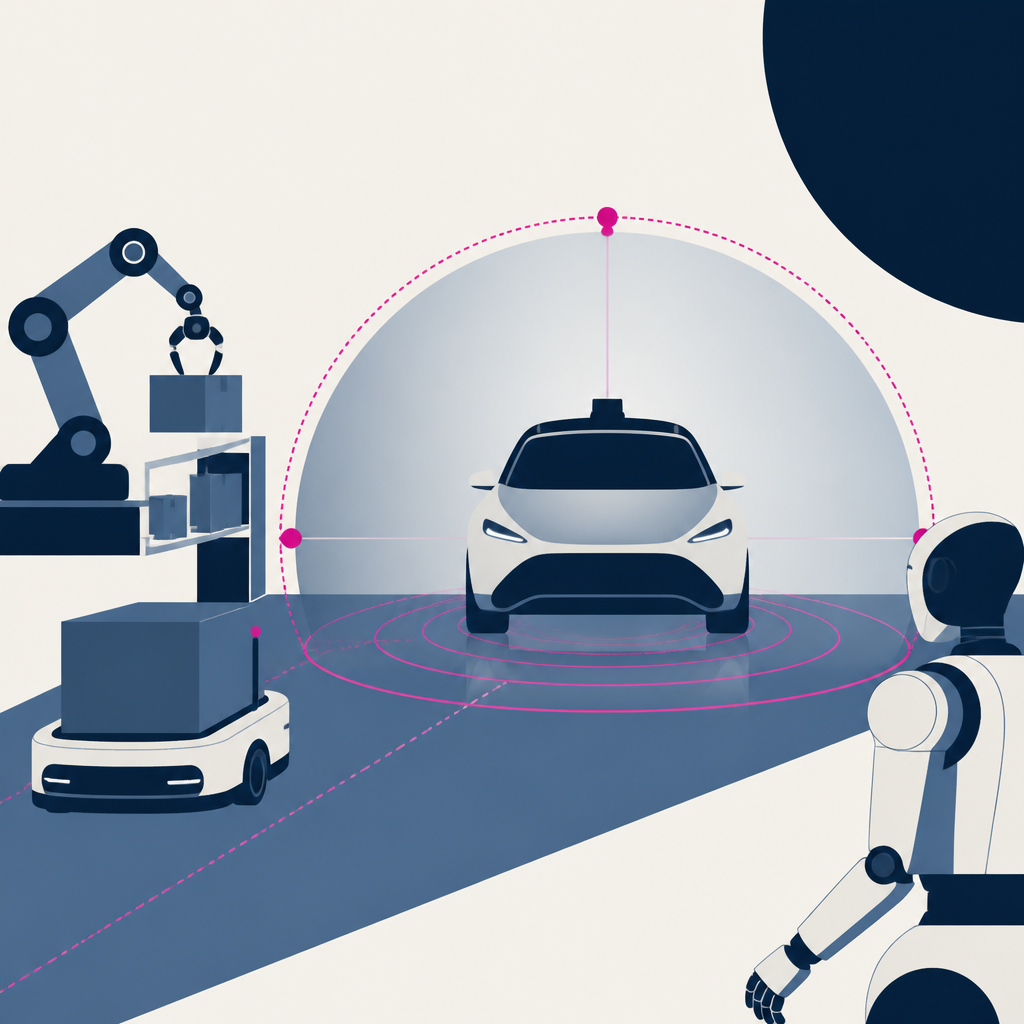
Nvidia expanded its Halos safety platform from self-driving vehicles to include robotics, aiming to add guardrails for autonomous robots operating around people.
Nvidia Halos for Robotics was announced in June 2026.
Companies can build safer deployments for use cases like warehouse robots and factory humanoids by using Nvidia’s added robotics safety architecture.
Odyssey 3 is being launched as a foundation world model that generates interactive environments from a prompt and predicts their changes as an agent acts. Its Pro version reports a Physics-IQ Verified video-to-video score of 66.1 (best-of-8). Access shifts by offering a research preview and API access for developers, plus adapted uses for robot arms, humanoids, and driving.
Tesla’s Optimus humanoid robot became a central focus of robotics hype, with Tesla’s CEO predicting public sales by the end of 2027 and arguing it could automate most human labor for about $20,000 per robot. Researchers pushed back that today’s language- and vision-based AI still can’t reliably handle the real world’s variability, citing the gap between making a robot that looks human and making one that moves with comparable physical skill. The debate is shifting robotics development toward evaluating approaches like robot policies trained with vision-language-action systems and alternatives such as “world model” methods to improve generality and reliability rather than relying on timelines alone.
Every AI story that matters,
in your inbox by 8am.
TLDRocket reads all relevant sources, removes duplicate coverage, and summarises the
day in two minutes. Follow companies and topics for alerts, or get the
briefing in Slack. Free, no spam, unsubscribe anytime.
Reading TLDRocket needs no cookies, and the readership counts we rely on come from
our own cookieless analytics. Google Analytics is the exception: it sets cookies and
reports to Google, so it stays switched off until you allow it. You can change your
mind any time from “Cookie settings” in the footer.
Strictly necessary
Session security and form protection (tldrocket-session,
XSRF-TOKEN, 2 hours). The site cannot work without them,
so they need no consent.
Always on
Google Analytics 4 (_ga,
_ga_<id>, up to 2 years). Measures which
stories and sections readers use. Google acts as a third-party processor and may
store the data outside the EU. No advertising, no profiling, no data sold.