AI Snake Oil
·
2 days ago
A researcher at Princeton delivered a keynote at the International Conference on Machine Learning arguing that AI should be understood through the "AI as Normal Technology" framework, which predicts gradual economic adaptation over decades rather than sudden job displacement. The speaker emphasized that adaptation—the slowest phase of technological impact—has barely begun in fields like software engineering, drawing parallels to how factories took 40 years to reorganize around electricity rather than adopting it as a drop-in replacement. The future will require building skills complementary to AI, organizational restructuring, and humility about deployment challenges beyond raw capability metrics like reliability and robustness.

404 Media
·
3 days ago
404 Media published a collection of poorly designed ChatGPT-generated flyers submitted by readers who found them appearing across social media, bulletin boards, storefronts, and signage worldwide. The publication received numerous reader responses expressing frustration with the proliferation of AI-generated promotional materials, particularly over the past several months in affected communities. The prevalence of low-quality AI flyers reflects broader adoption of generative AI for marketing and promotional purposes despite widespread aesthetic and quality concerns.

The Algorithmic Bridge
·
3 days ago
An AI newsletter argues that as artificial intelligence commoditizes intelligence and ability, success in the AI age now depends on imagination, agency, and taste rather than raw cognitive talent. The author draws a parallel to the Industrial Revolution's decoupling of physical strength from economic value, suggesting AI similarly decouples cognitive labor from cognitive output. The shift means winners will be those who can exercise judgment about what to create rather than those who can create anything.
Exponential View
·
3 days ago
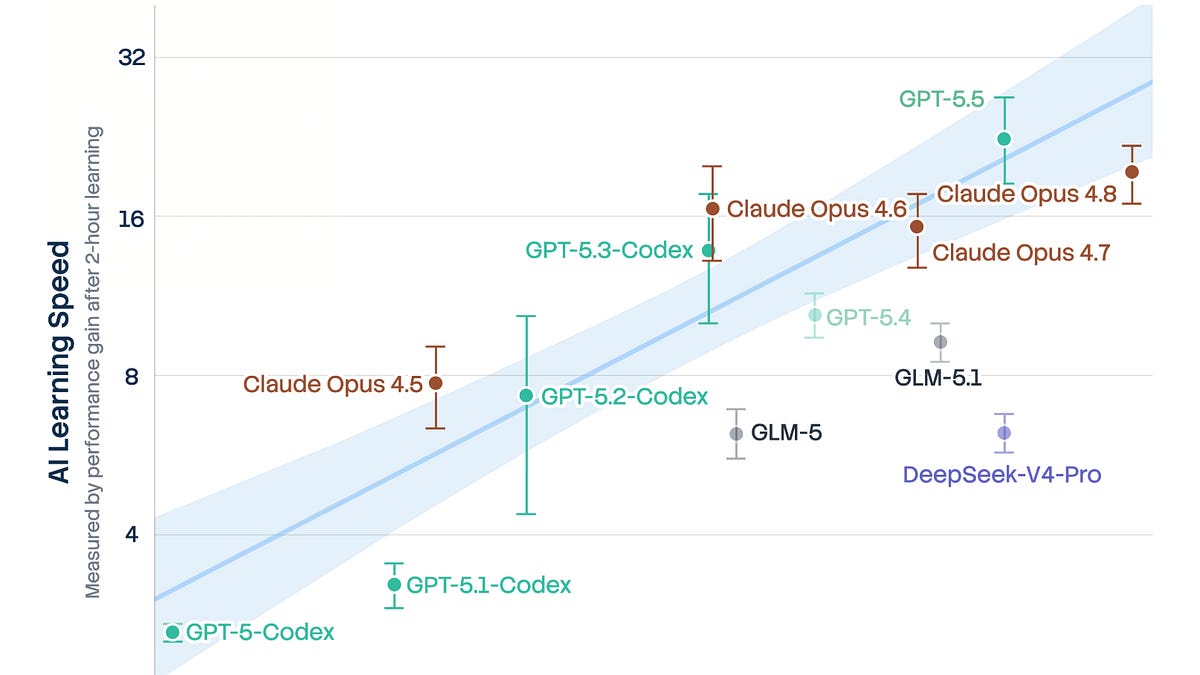
ByteDance researchers discovered a new scaling law showing that AI models trained in 2026 learn approximately twice as fast as models from three months prior. CEO expectations for significant AI-driven job cuts declined from 46% in January 2025 to 20% in May 2026. The shift in job loss expectations suggests organizations are adapting to AI integration without mass workforce reductions.
